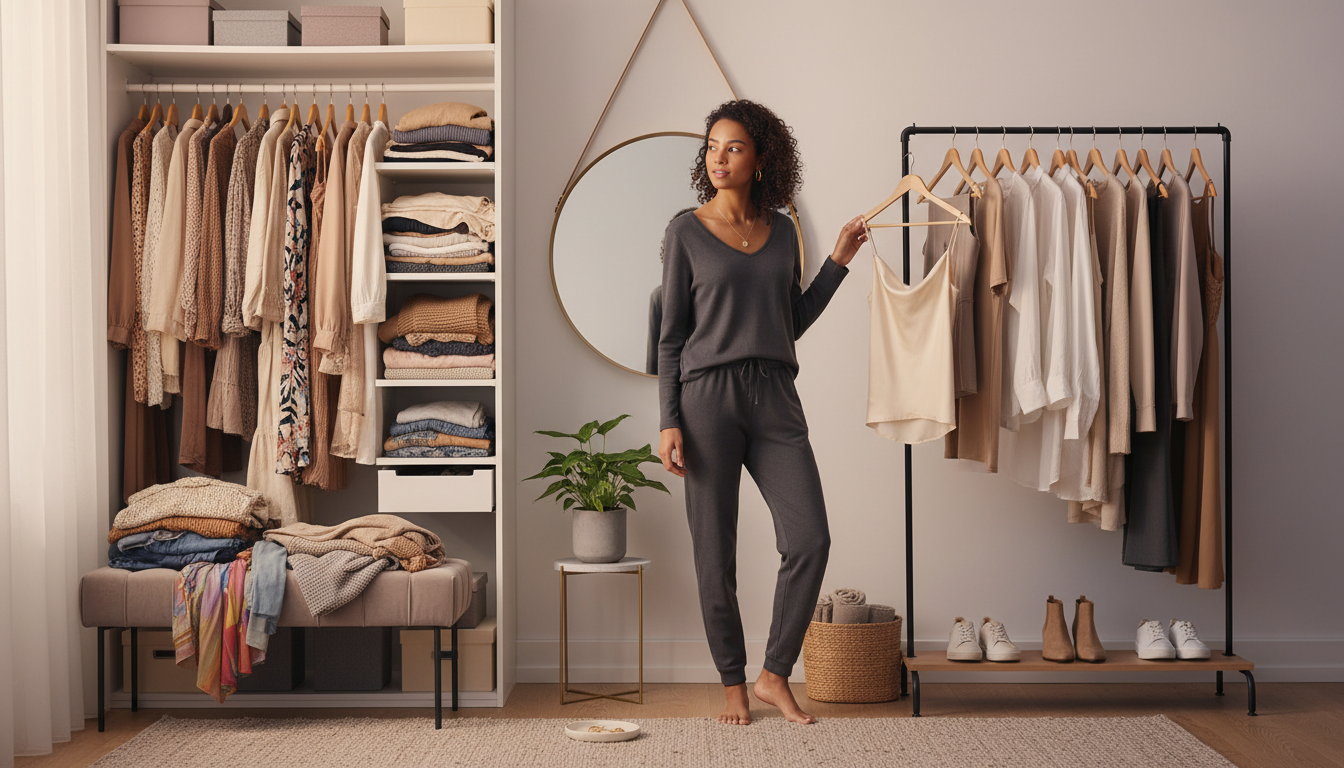
The 3-Question Test Before Buying Anything

The Problem - Closet full of clothes, nothing to wear; buyer’s remorse
You open your closet, see plenty of clothes, and somehow still feel like you have nothing to wear. Most people assume this means they need more, but what I see over and over is a lack of strategy, not a lack of options. The real drain is the cycle of late-night scrolling, impulse adding to cart, and that quiet regret when the package arrives and nothing quite works. You keep a few pieces because returns feel like a hassle, then those pieces silently clog your wardrobe and your mornings.
If you recognize yourself in this, you are not “bad at style.” You’re just shopping without a filter. Every click is driven by mood, marketing, or a flash sale, instead of a clear framework. That’s exactly how you end up owning five similar tops that don’t match your pants, or a dress you only wear once because it never feels quite right. When you don’t have a decision system, your closet becomes a museum of almost-right pieces and sunk costs. My goal is to hand you a simple checklist so every new item has to earn its place before it comes home to you.
The payoff is practical: fewer returns, fewer guilt-hangs in your wardrobe, and faster mornings because your clothes actually connect. You’ll still get to enjoy fun impulse moments, but they’ll be guided by a quiet question in the back of your mind: “Will this actually serve me, or just my dopamine tonight?” Once you start running that question through a structure, your style stops feeling chaotic and starts feeling curated—without needing more stuff.
Question 1: Does It Fit My Color Palette? - Undertone, seasonal colors, existing wardrobe
Before you think about trend or silhouette, I want you to assess color. If the shade fights your undertone, it will never feel quite right, no matter how flattering the cut is. Most people skip this step and end up chasing the right lipstick, more bronzer, or different jewelry to “fix” a color that was wrong from the start. Instead, I want you to get clear on what naturally lights up your skin, eyes, and hair.
Start with your undertone: warm, cool, or neutral. Look at a photo of yourself in natural light wearing white. If bright white makes you look sharp and rosy, you likely lean cool. If off-white or cream softens you and makes you look alive, you likely lean warm. Neutrals can wear both, but even then there’s usually a slight preference. Once you see this, you can create a simple palette for yourself with:
- 3–4 core neutrals that work on you (for example: oat, camel, charcoal, soft black)
- 3–5 accent colors that consistently flatter you (for example: olive, rust, soft blue, burgundy)
- 1–2 metallics that feel harmonious (for example: gold for warm, silver for cool)
When you’re shopping, hold the item’s color up against that mental palette and your existing wardrobe. Ask: “Does this live in the same color story as what I already own, or will it be a loner?” If you love icy pastels but your closet is mostly warm earth tones, that pastel skirt will struggle to pair with anything. You’ll either need to buy more around it, or it will collect dust. Staying loyal to your palette doesn’t mean never experimenting; it means making sure most of your clothes can talk to each other so you get more outfits from fewer pieces.
The ROI is huge: your face looks brighter with no extra effort, outfits mix easily, and your cart shrinks because you quickly dismiss gorgeous-but-wrong shades. You’ll find that returns drop simply because you’re choosing colors that cooperate with both your complexion and your closet. Once color is a given, you can spend your energy on silhouette and styling instead of trying to rescue purchases that never stood a chance.
Question 2: Does It Match 3+ Existing Pieces? - Versatility test, outfit creation
After color, the next question I ask for every single item is: “Can this play with at least three pieces I already own?” This is the versatility test, and it’s how you turn one purchase into multiple outfits instead of a single look that only exists in the product photo. Most impulse buys fail this test because they are designed to look perfect in one styled scenario, not in your real, existing wardrobe. I want your clothes to cross-pollinate so each new piece multiplies the utility of what you already have.
When you’re considering something, quickly picture your closet. If you’re buying a top, can it work with:
- At least two different bottoms (for example: your straight-leg jeans and your tailored black trousers)
- One layer or third piece you already own (for example: your leather jacket or a camel coat)
- At least one pair of shoes you wear weekly
If you struggle to imagine these combinations, pause. You don’t need to see fully styled outfits in your mind, but you should be able to list specific items you’d pair it with, not vague “I’ll find something.” If you can only pair a piece with one hero item, you’re probably buying an outfit, not a wardrobe builder. Outfits are fun, but too many of them create a fragmented closet that doesn’t mix.
A helpful trick: screenshot the item, then scroll your camera roll or saved photos of your closet and try to build three outfits visually. If you can’t do it on your phone, you won’t do it at 7 a.m. when you’re half awake. The long-term ROI is straightforward: every item that passes the 3+ pieces test dramatically increases the total number of looks you can create. You feel like you’re getting more from fewer clothes, and your future self spends less time wrestling with “nothing works together” moments before work or dinner with friends.


Question 3: Does It Serve My Actual Life? - Lifestyle reality check, occasion assessment
The third question is where most buying spirals quietly collapse: “Does this serve my actual life, not my fantasy one?” I see this gap constantly. People with fully remote jobs own multiple blazers they never wear, while commuters with active social calendars keep buying lounge sets they already have in triplicate. Your wardrobe feels off because your purchases are aligned with aspirational scenarios, not the rhythm of your real week.
To reset, I want you to map your lifestyle in rough percentages. For example, your week might look like:
- 60% work or study
- 25% casual social time and errands
- 10% going out or date nights
- 5% formal events or special occasions
Now, think about the item in your cart. Which slice of your life does it actually serve, and how often does that slice occur in a month? If a sequined mini dress serves 5% of your life and you already own two occasion dresses, that’s an indulgence, not a need. That doesn’t make it wrong, but I want you to buy indulgences consciously, not by default every time you feel bored. On the other hand, if you’re wearing the same two pairs of jeans four days a week and one is starting to sag, a well-cut replacement or upgrade absolutely serves your real life.
A simple rule of thumb: if you can’t name at least three contexts in your current routine where you’d reach for this item in the next 30–60 days, it probably doesn’t serve your life right now. You can always create a wish list for future you, when your schedule, climate, or budget aligns. Honoring your actual life in your cart decisions reduces guilt, clutter, and that subtle shame of owning things you never touch. It also builds a wardrobe that feels like a supportive tool, not a Pinterest board you’re failing to live up to.

The Bonus Questions - Fit, quality, price-per-wear, emotional triggers
Once an item passes the color, versatility, and lifestyle questions, I move it through a final filter of bonus checks. These are where you catch the subtle red flags that usually lead to returns or silent regret. The first is fit. Ask yourself: “If this arrived tomorrow and fit exactly like the model, would that work for my body shape and comfort level?” If you’re secretly hoping it will be looser, longer, shorter, or magically more structured, that’s a sign you’re negotiating against your own needs.
Next, zoom out on quality. You don’t need couture, but you do need fabrics and construction that match how often you plan to wear the piece. For something you’ll wear weekly, look for stable seams, fabric that won’t pill after two washes, and hardware that doesn’t feel flimsy. For trendier or occasional pieces, you can relax the standard slightly, but not to the point where the item looks tired after one night out. A simple quality check in your head:
- Does the fabric look thin, shiny, or scratchy in the close-ups?
- Are there loose threads or puckering seams visible?
- Is this a fiber content I already know I avoid (for example: too much polyester that makes you overheat)?
Then calculate a rough price-per-wear. Take the price, divide it by the number of times you realistically see yourself wearing it in the next year. A $150 coat worn 60 times is $2.50 per wear. A $40 top worn twice is $20 per wear. This reframes “cheap” and “expensive” into value. Finally, check for emotional triggers: are you buying because you’re stressed, bored, or feeling behind trend-wise? If the urge feels urgent or soothing rather than grounded, park the item in your cart for 24 hours. When you come back, you’ll either still want it for clear reasons, or the spell will have broken—and you’ll have just saved yourself another almost-right piece from crowding your closet.

If you want this calm, confident way of shopping to become your new default, I can sit in your pocket and run every cart through this lens in minutes, not hours of second-guessing.
Know It Works Before You Buy
Upload photos of what you’re eyeing and I’ll walk you through a fast cart check so you buy only what fits your colors, life, and wardrobe—often in under 5 minutes.

When to Break the Rules - Statement pieces, wardrobe gaps, special occasions
Every good framework needs room for intentional rule-breaking. The goal is not to turn you into a rigid shopper who never buys anything joyful. The goal is to help you know when you’re making an exception and why. There are three main moments when I bless breaking the color, versatility, or lifestyle rules: true statement pieces, strategic wardrobe gaps, and meaningful special occasions.
A statement piece is something that expresses you so clearly that it doesn’t need to match everything. Maybe it’s a sculptural pair of shoes in a saturated color, or an artful coat with unexpected volume. It might only pair with one or two outfits, but every time you wear it, you feel electric and fully yourself. In that case, I want you to ask a different question: “Will this still feel like me a year from now?” If yes, you’re investing in your personal style vocabulary, not just another trend.
Wardrobe gaps are another time to flex the rules. If you realize you lack a specific category, like a polished low-heel boot for winter or a lightweight jacket for in-between weather, you may pick something slightly outside your usual palette or vibe to solve a recurring problem. Here, the ROI is in friction removed from your week. Special occasions sit in their own category. A wedding, graduation, or career milestone sometimes calls for a dress or suit that won’t see weekly wear, and that’s fine. In those moments, use the framework loosely: at least respect your undertone and fit, so the photos age well and you still feel like yourself.
What I want you to avoid is labeling every temptation as a “statement” or “special.” If you hear yourself doing that, pause and revisit the three primary questions. Conscious exceptions enrich your style and tell your story. Unconscious exceptions drag you back into overstuffed-closet, nothing-to-wear territory. With a little honesty, you’ll learn to tell the difference quickly and give yourself both discipline and delight.
The ROI - Lower return rates, higher satisfaction, money saved
When you run your shopping through this simple sequence—color palette, versatility, real-life fit, then bonus checks—you change the economics of your wardrobe. You’re no longer judging pieces only by the high of checkout or the first try-on in good lighting. You’re evaluating how each item will behave over time. That shift quietly compounds in your bank account, in your closet space, and in your mental energy every single morning.
Lower return rates are the first obvious win. If most of your items already align with your colors and life, fewer things arrive and feel “off.” You save time on printing labels, dropping packages, and tracking refunds. More importantly, you save the hidden emotional cost of frustration and self-blame. You stop asking, “What’s wrong with my body?” and instead think, “This simply doesn’t meet my criteria.” That small reframing protects your confidence.
You’ll also notice higher satisfaction from what you keep. Pieces get worn often, styled in multiple ways, and actually earn their place. Over a few months, this looks like spending the same amount on clothes, but keeping fewer and loving most of them. Over a year, it often looks like spending less overall because you’re not constantly compensating for bad buys. You may start redirecting that money toward better-quality staples or experiences you value more than yet another “meh” top.
Finally, the ROI shows up in your mornings. When your closet is filled with items that passed this filter, outfit decisions become almost mechanical. You know your colors, you know what mixes, and everything in front of you reflects your real life. Getting dressed shifts from stressful improvisation to a quick, calm selection process. You leave the house feeling resolved instead of uncertain, which is ultimately the most valuable return: a quiet, everyday confidence that your wardrobe is working for you, not against you.
Know It Works Before You Buy
Upload photos of what you’re eyeing and I’ll walk you through a fast cart check so you buy only what fits your colors, life, and wardrobe—often in under 5 minutes.