
Why You Feel Like You Have Nothing to Wear (And How to Fix It)
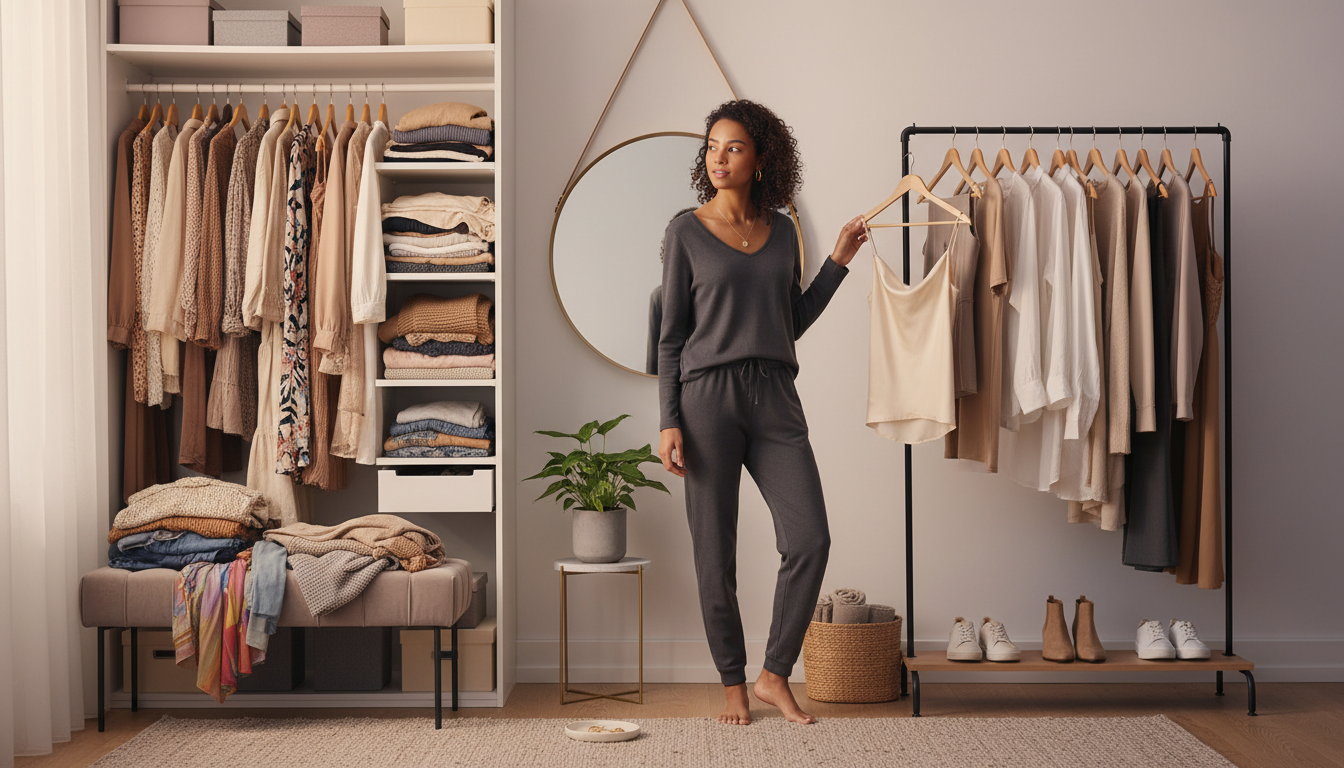
The Paradox - Full closet, persistent feeling of lacking options
You open your closet, it’s packed, and yet your first instinct is, “I have nothing to wear.” I see this pattern constantly, especially with busy, style-conscious shoppers. The problem usually isn’t quantity, it’s friction: pieces compete rather than cooperate, so every outfit feels like a fresh puzzle. That daily micro-stress adds up into decision fatigue, rushed outfits, and a vague feeling that you’re missing something essential.
When I dissect these closets, three issues show up again and again: low versatility, poor cohesion, and emotional clutter. Many items were bought to solve a momentary insecurity or react to a trend, not to serve a clear wardrobe plan. So the closet becomes a record of impulses instead of a tool that supports your current life. You feel it every morning when you’re already short on time and energy.
To shift this, I like to reframe your closet as a system that should give you returns: time saved, confidence gained, and fewer bad purchases. Imagine being able to pull three items and know they combine into something polished without overthinking. That is the payoff of a connected wardrobe. The rest of this piece is about diagnosing where your system is leaking and how to redesign it so that “nothing to wear” stops being your default script.
Problem 1: Too Many Orphan Pieces - Items that don’t pair with anything
Orphan pieces are those items you like in theory but rarely wear because they don’t meaningfully connect to the rest of your wardrobe. You might have a bold printed skirt, a neon blazer, or a pair of statement shoes that only work with one ultra-specific outfit. Each orphan looks interesting on its own but quietly increases your decision fatigue. You keep trying to “make it work,” and every failed attempt trains your brain to distrust your closet.
When I review closets, I run a simple connectivity test: can this piece create at least three outfits using only items you already own? If the answer is no, it’s an orphan or at best underleveraged. The result is a rail of “special” items and not enough reliable building blocks. That imbalance feeds the feeling that you need to shop again every time an event or new season appears.
To manage this, I use a quick framework:
- Identify: Pull every item you only wear with one specific partner.
- Evaluate: Ask, “Would I buy this again today?” and “Does it reflect my current style direction?”
- Decide: Either intentionally build 2–3 outfits around it using existing pieces, or classify it for donation/resale.
The ROI is immediate: fewer dead-end try-ons and a clearer sense of what actually functions in your wardrobe. Over time, you’ll start recognizing potential orphans in your cart before you buy, which means fewer returns and less wasted money on one-off items.

Problem 2: Wrong Colors - Pieces that don’t flatter your coloring
Color mistakes are sneaky because the item might technically fit, yet you avoid it without fully knowing why. I often see closets packed with shades that fight against the wearer’s undertone: cool, icy tones on warm skin, or muted, dusty hues on someone who looks incredible in clear, high-contrast colors. The result is subtle but powerful. You put it on, feel dull or slightly off, and reach for something else. Over months, you stop trusting half your closet.
You don’t need a complicated color analysis to make progress. Start with observation: notice which colors make your face look brighter, your eyes clearer, and your skin more even when you try them on near natural light. Then notice the opposite: pieces where your skin looks greyed out, sallow, or where dark circles feel emphasized. Those “off” colors are often driving your “nothing to wear” feeling, because you instinctively avoid them on important days.
A simple framework I use:
- Best row: Pull 5–7 items you always feel good in and group them together.
- Questionable row: Pull the pieces you consistently skip, even when they’re clean and available.
- Compare: What’s different in brightness, warmth/coolness, and saturation between the two groups?
Once you see the pattern, you can be more selective. Editing out your worst-color offenders clears visual noise and helps your remaining pieces work harder. The payoff is faster mornings because more of what you see is automatic “yes” territory, and future purchases become easier to evaluate before they enter your closet.
Problem 3: Ill-Fitting Clothes - Keeping things that don’t fit properly
Ill-fitting clothes are one of the biggest sources of low-level style stress. Even premium pieces look inexpensive when the proportions are wrong, and budget items can look elevated when they fit beautifully. I routinely find wardrobes where 30–40% of the clothing technically “fits on the body” but doesn’t actually flatter: waistlines cutting in, shoulders collapsing, thighs pulled tight, or hems pooling awkwardly over shoes. Every time you put those items on, your posture shifts and your confidence dips.
Many people keep these pieces for emotional reasons: “I might fit into this again,” “It was expensive,” or “It’s the right size on the label.” But your body and your life evolve, and your closet needs to keep up. Holding onto clothes that don’t respect your current shape keeps you anchored to a past version of yourself. It also clutters your mental map of what’s truly wearable right now.
When I assess fit, I pay attention to four zones:
- Shoulders: Seams should sit at the edge of your shoulder bone, not halfway down your arm.
- Bust/seat: No pulling, gaping, or stress lines across zippers or buttons.
- Waist/hip: Comfortable when you sit, not just when you stand.
- Length: Sleeves and hems that feel intentional, not “I’ll fix this someday.”
Make three piles: tailor, wear now, and release. If a piece is high-quality and aligns with your style but needs tweaks, tailoring is usually cheaper than replacing it. Everything else that doesn’t fit and can’t realistically be altered becomes a sunk cost to let go of. The ROI is tangible: you reduce the number of frustrating try-ons, increase the hit rate of outfits you feel good in, and train yourself to prioritize fit over hype when you shop.
Problem 4: Lifestyle Mismatch - Clothes for a life you don’t live
A surprisingly large share of closet stress comes from owning clothes for an imagined life, not your actual one. I often see wardrobes overstocked with event dresses for a mostly casual existence, or towering heels in the closet of someone who walks to work and lives in a city. Then there are the pristine gym sets that never see a workout, or stacks of “future office” pieces when you’re fully remote. These items quietly create guilt every time you look at them.
Your wardrobe should be a mirror of your true week, not your aspirational fantasy. When I map a client’s lifestyle, I break it into rough percentages: work, socializing, errands, workouts, lounging, and special events. Then we compare those numbers with how the closet is actually distributed. The gaps are always revealing. For example, if 70% of your week is smart-casual and only 10% is dressy, but half your closet is statement dresses, you’ll still feel like you have nothing to wear Monday through Friday.
To course-correct, try this exercise:
- Sketch your week: Estimate what you wear for each activity in an average month.
- Audit your closet: Roughly count how many pieces serve each category.
- Align: Identify where you’re overbuilt (too many) and underbuilt (too few).
Once you see the mismatch, editing becomes more straightforward. You can comfortably release pieces that serve a past job, climate, or routine, and intentionally invest in what your real life requires now. The benefit is practical and emotional: you stop feeling like you’re “failing” your clothes and start feeling like they’re working in partnership with your days.

Problem 5: No Clear Style Direction - Random purchases without cohesion
When there’s no clear style direction, every purchase happens in a vacuum. You buy a romantic floral dress one week, sharp streetwear the next, and a corporate blazer after that, all influenced by different creators and moods. Individually, each piece might be attractive. Together, they don’t tell a coherent story, which is why getting dressed can feel like mixing three different wardrobes. You’re not the problem; the lack of a guiding aesthetic is.
I like to think of style direction as a simple headline for how you want to show up. It doesn’t need to be perfect or permanent. It just needs to be specific enough to filter decisions. For example, “clean, elevated minimalism,” “soft, tailored romantic,” or “polished creative casual.” That phrase becomes a lens for judging what enters and stays in your closet.
You can clarify your direction with a quick process:
- Pull your top 5–7 favorite outfits from the last six months.
- Ask: “What do these share in silhouette, texture, mood, and color?”
- Write a 3-word style headline that fits most of them.
Going forward, every potential purchase has to pass a simple test: does this support or distract from that headline? Over time, you’ll notice fewer impulse buys and a stronger, more recognizable signature in the mirror. The ROI is significant: less decision fatigue, fewer returns, and a wardrobe that feels like a cohesive extension of you instead of a collage of trends.
If you want your closet to start feeling polished and easy instead of random and draining, I can walk you through a focused reset that delivers real change within a few weeks, not someday.
Turn closet chaos into calm clarity
In just a few guided sessions, I’ll help you edit, align, and rebuild your wardrobe so getting dressed feels fast, confident, and intentional every morning.

Problem 6: No Clear Style Direction - Random purchases without cohesion
When your closet lacks a defined style direction, every shopping moment turns into a fresh experiment. That sounds exciting, but practically it means new pieces rarely connect to what you already own. You chase the feeling of “new” instead of the feeling of “this is so me.” The result is a closet full of almost-right items and very few combinations that feel effortless and repeatable.
I see this most in online shopping patterns: lots of late-night browsing, saving dozens of tabs, buying under time pressure, and returning a large portion. Without a clear filter for silhouette, color, and mood, the algorithm is running your style more than you are. You try to fix the problem by adding more options, which only makes your mornings more crowded and confusing.
To regain control, you need a lightweight style compass you can actually use in real life. I like a two-part filter:
- Identity: How do you want to be perceived most days in one sentence? (For example, “sharp but approachable,” or “relaxed but polished.”)
- Structure: Which silhouettes, fabrics, and color ranges support that identity on your body specifically?
Use this compass in three places: when you edit your closet, when you add to cart, and when you get dressed. It’s not about perfection; it’s about stacking small, consistent yeses in the same direction. Over a few weeks, you’ll notice something important: your outfits start to look like variations on a theme instead of random spins of a wheel. That’s when “nothing to wear” begins to fade.
The Ruthless Edit - How to assess and purge effectively
A ruthless edit isn’t about being harsh; it’s about being honest and precise. Your goal is to remove everything that fights your current body, coloring, lifestyle, and style direction, so what remains is both functional and inspiring. When I guide someone through an edit, I’m not asking, “Is this cute?” I’m asking, “Is this earning its space and supporting the way you actually live?” That shift alone makes decisions much clearer.
Start with a focused session, not your entire closet at once. Choose one category, like tops or denim, and pull everything out. Then run each piece through a consistent filter:
- Fit: Does it sit cleanly on your shoulders, waist, and hips without adjusting?
- Color: Does it belong in your “best colors” family, not your questionable pile?
- Lifestyle: Can you picture wearing it in at least two real weekly scenarios?
- Direction: Does it align with your style headline and identity words?
Create four zones on your bed or floor: keep, tailor, maybe, and release. The keep pile should feel like a clear yes on all four criteria. Tailor is for pieces that fit your direction and coloring but need technical adjustments. The maybe pile is allowed, but it should be small and revisited at the end of the session. Release is where emotional discipline pays off: these are the items that represent sunk cost, not current value.
The ruthless part is this: you commit to bagging and removing the release items within 48 hours, through donation, resale, or a clothing swap. Sitting with them for weeks keeps you mentally tangled. The payoff of a thorough edit is huge. You reduce visual clutter, which speeds up outfit decisions, and you create an accurate inventory of what you truly own, which prevents duplicate buys and helps you invest where it matters.

The Rebuild - Strategic additions that create exponential outfit options
Once you’ve edited, the real leverage comes from how you rebuild. This is where you shift from collecting clothes to designing a system. Strategic additions are pieces that connect what you already own into multiple outfits. Instead of more statement items, you focus on high-ROI connectors: the right denim silhouette, a versatile blazer, a neutral shoe that works with three hemlines, or a knit that harmonizes several bottom colors.
To rebuild intentionally, start by listing your key lifestyle buckets and your style headline. Then identify where you feel “stuck” when getting dressed. Maybe you have plenty of tops but only one pair of pants that truly works with most of them, or you have dresses but no outer layers that feel right over them. Those pressure points tell you what to buy next.
I like using a capsule connectivity mindset:
- Anchor pieces: Simple, high-quality basics that can be worn 2–3 times a week without feeling repetitive.
- Accent pieces: A smaller number of distinctive items that reflect your personality and keep outfits from feeling flat.
- Bridges: Shoes, layers, and accessories that tie anchors and accents together across outfits.
Before purchasing anything, mentally (or physically) pair it with at least three items you already own. If you can’t, it likely becomes a future orphan. When you buy this way for even one season, your outfit options grow exponentially without your closet expanding dramatically. Mornings get faster because almost everything plays nicely together, and your returns decrease because each piece has a clear role. That is how a closet shifts from “full and frustrating” to curated, connected, and genuinely easy to wear.

Turn closet chaos into calm clarity
In just a few guided sessions, I’ll help you edit, align, and rebuild your wardrobe so getting dressed feels fast, confident, and intentional every morning.