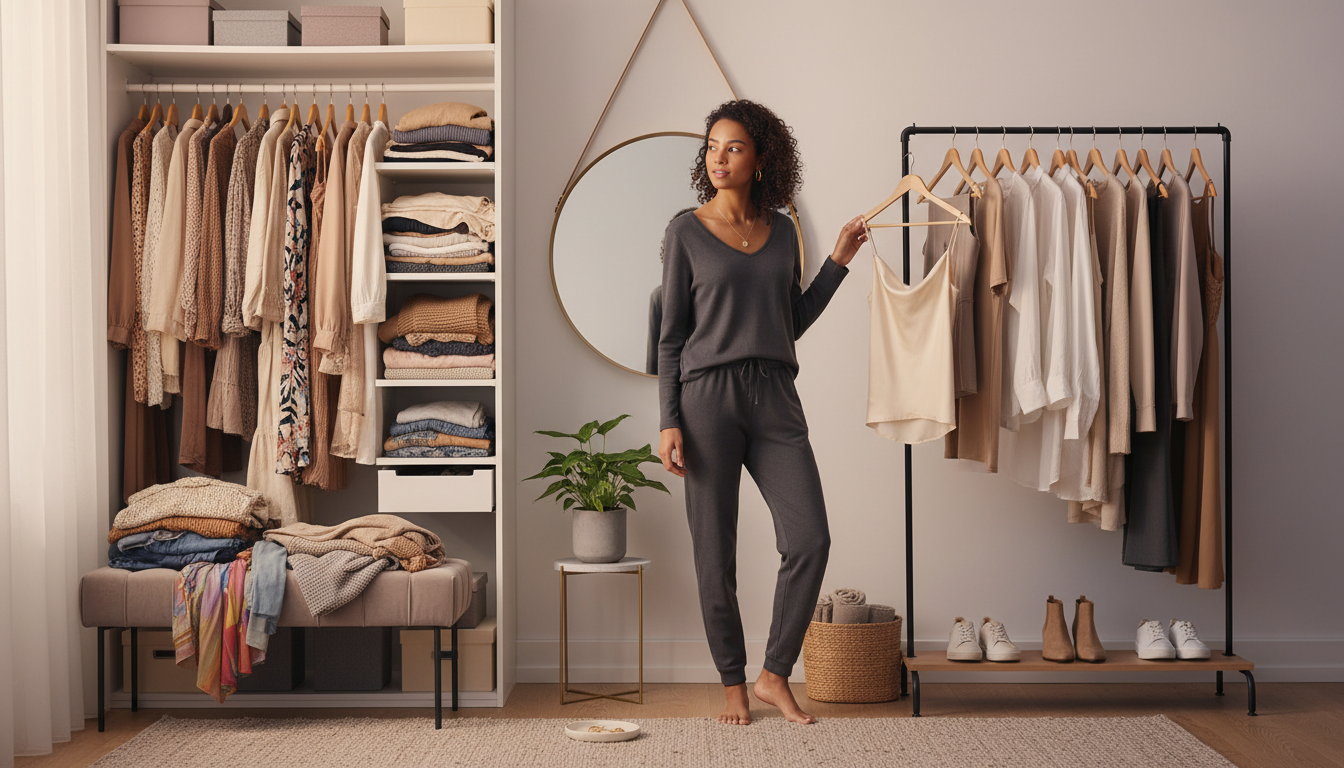
The Capsule Wardrobe Formula That Actually Works

What Is a Capsule Wardrobe?
When I talk about a capsule wardrobe, I am not talking about a rigid, monochrome closet where you never see a print again. I mean a tight, intentional set of 30–40 pieces that work together so well you can get dressed in under a minute and still feel like yourself. Think of it as your wardrobe operating system: the core items that carry 80% of your outfits, season after season. Everything mixes, proportions relate to each other, and nothing just “sits there” waiting for a special occasion that never comes.
A good capsule does three things for you. It eliminates decision fatigue in the morning, because almost any top works with almost any bottom. It cuts down on returns and impulse buys, because you know exactly what earns a spot. And it gives you a clear visual language: a recognizable style that still has room to play. To get there, you need enough variety in silhouettes, texture, and color to keep outfits interesting, without sliding back into the chaos of a packed but incoherent closet.
I like to think of a capsule as a toolkit, not a tiny uniform. The point is versatility, not restriction. It should be built around the life you actually live, not an imagined future self who spends every day in a chic office or wandering European streets. When the pieces are chosen correctly, a 30–40 piece capsule can easily create 100+ outfits. That scale is what turns getting dressed from a daily puzzle into a simple, repeatable habit.
Why Most Capsules Fail
Most capsule wardrobes fall apart because they’re built in a vacuum. You see a perfect grid on Pinterest, copy the shopping list, and then wonder why half of it never leaves the hanger. The core issue is misalignment: the capsule reflects an aesthetic fantasy instead of your actual life, climate, and body. When your clothes don’t serve your real routine, they will always lose to whatever feels easier in the moment.
The second reason is that many capsules are far too restrictive. They over-index on basics and under-index on personality. If everything is plain, neutral, and similar in cut, you end up bored, and boredom leads straight back to impulse shopping. I want you to have a strong foundation, but also a few clear “you” pieces that keep the capsule feeling alive. Without that balance, the system collapses.
Fit and proportion are the quiet saboteurs. If your capsule doesn’t respect your body’s vertical balance (long torso vs long legs) and where you carry volume (hips, bust, shoulders), you will avoid those pieces no matter how “essential” they looked in a checklist. The result is what I see often: 30 items, but only 8 you actually wear. My approach is to solve from the root: lifestyle first, then color, then silhouettes, then shopping. When those layers align, a capsule stops feeling like a constraint and starts feeling like an upgrade.
The Formula
To keep this simple and realistic, I use a clear formula for a baseline everyday capsule: 5 bottoms, 8 tops, 3 dresses, 2 outerwear pieces, 4 pairs of shoes, and a focused set of accessories. Within that structure, you adapt the exact pieces to your climate, dress code, and style DNA. The numbers force clarity. You can’t keep five versions of the same black jean and still expect versatility.
Here is how I like to think about the core mix:
- 5 bottoms: a blend of denim, tailored, and relaxed
- 8 tops: a mix of base layers, elevated pieces, and one or two statements
- 3 dresses: versatile silhouettes that work day to night
- 2 outerwear: one structured, one relaxed
- 4 shoes: specific roles (commute, polished, casual, seasonal)
Accessories then act as finishers: a couple of bags, a watch, simple jewelry, and one or two bolder pieces that communicate personality. This formula gives you range without chaos. It’s enough to handle work, weekends, dates, and low-key events for most urban lifestyles. The ROI is significant: fewer decisions, faster mornings, and far less wasted spend on duplicates that play the same role.
Once you understand the formula, you can flex it by season. Maybe your “3 dresses” become 2 dresses + 1 jumpsuit. Perhaps one of your 5 bottoms is an elevated legging because you work from home. The framework stays consistent; the contents shift with your reality. That’s what keeps the capsule both structured and human.

Step 1: Audit Your Life
Before you touch your closet, you need to understand where your clothes actually work. I always start clients with a simple lifestyle audit: where do you spend your time, what are the dress codes, and what feelings do you want your outfits to support in each setting? This removes guesswork and stops you from overbuilding for a version of your life that doesn’t exist. It also reveals why you keep reaching for the same 10% of your wardrobe.
Break the week into realistic categories and approximate percentages. For most people, a starting point looks something like:
- Work or school (on-site or remote)
- Social / going out
- Errands and casual days
- Movement (gym, yoga, walks)
- Occasions (events, dates, family gatherings)
Assign rough percentages: maybe 50% work, 25% casual, 15% social, 10% movement. Your capsule should mirror those proportions. If you work from home, you probably do not need three blazers in your 30 pieces. Instead, you may need polished knits that feel like loungewear but read put-together on Zoom. This is where time savings start: when your closet is weighted toward what you actually wear, choosing an outfit becomes a quick match, not a search.
As you audit, pay attention to friction points: where you currently feel stuck. Do you always change before going out because your daytime clothes feel too basic? Do you struggle with shoes for in-between occasions? Those patterns tell you exactly where your capsule must overdeliver. When the audit is honest, the rest of the build becomes straightforward.

Step 2: Choose Your Colors
Color is where many capsules become either flat or chaotic. I use a simple structure: three core neutrals and up to four accent colors that harmonize. Your neutrals do the heavy lifting; your accents provide energy. When those two groups work together, your outfits look intentional even when the pieces are basic. When they fight, you end up with “nothing goes together” syndrome despite owning plenty.
Start with your neutrals. Choose:
- One dark base (charcoal, deep navy, espresso, or black if it truly suits you)
- One mid-tone (camel, taupe, warm grey, olive)
- One light (ivory, soft white, light beige)
These should flatter your undertone and feel at home in your environment. For urban life, I often lean toward deep navy, taupe, and ivory: polished, forgiving, and easy to mix. Then select up to four accents that reflect your style DNA and skin tone: maybe muted terracotta, dusty blue, forest green, and soft blush. The key is cohesion. You want any accent to pair with at least two of your neutrals without clashing.
With this palette locked, shopping becomes faster and cheaper. You can instantly rule out items in colors that will complicate the system, no matter how tempting the trend is. Returns drop because new pieces naturally slide into your existing mix. Your closet also becomes visually calmer, which matters on busy mornings. You are not fighting visual noise; you are choosing from a curated spectrum that already loves itself.
Step 3: Select Your Silhouettes
Silhouette is where your capsule stops being generic and starts feeling personal. I look at two things: your body’s structure (proportions, vertical balance, where you carry volume) and your style DNA (the mood you want your clothes to project). The goal is to build a repeating set of shapes that flatter you and communicate your energy. When those shapes are consistent, even new trends become easier to evaluate.
Begin by noticing what already feels “right” on your body. Ask:
- Do you prefer high, mid, or low rise on bottoms?
- Do you feel better in fitted, skim, or oversized tops?
- Do straight, wide, or tapered legs feel most balanced?
- Where do you like your hemlines to hit (mid-thigh, knee, midi)?
If you have longer legs and a shorter torso, mid-rise or slightly lower rises can look more harmonious than ultra-high. If you carry volume in your hips, a straight or relaxed leg often balances better than super-skinny cuts. For a minimalist wardrobe, I like to anchor you in two or three go-to silhouettes per category. For example: straight-leg jeans, a tailored wide-leg trouser, and a clean column dress. You then echo those lines in your tops and outerwear so proportions stay consistent when you mix pieces.
Layer your style DNA on top. If you like sharp, modern lines, we’ll lean into structure: blazers with defined shoulders, clean necklines, and streamlined coats. If you’re drawn to softness, we’ll choose fluid pants, drapey knits, and relaxed shirting that still has intention. When the silhouettes respect both your body and your identity, you stop second-guessing every mirror check. Outfits feel like different verses of the same song instead of random tracks on shuffle.
Step 4: Fill the Gaps
Once you understand your life, colors, and silhouettes, then you earn the right to shop. I treat this phase like solving a puzzle, not wandering a mall. First, inventory what you already own that fits the formula and your new criteria. Pull the winners. Then map the gaps against the capsule formula: which bottoms, tops, dresses, outerwear, shoes, and accessories are missing for your real week.
I like to create a short, surgical list:
- Priority pieces that unlock many outfits (e.g., a neutral straight-leg jean, everyday sneaker, versatile blazer)
- Support pieces that refine the capsule (e.g., a second work-appropriate top shape, an elevated knit dress)
- Future upgrades you’ll address later (e.g., replacing worn basics with higher-quality versions)
When you shop, hold each potential purchase to a simple test: can I style this three ways with what I already own, for the life I actually live? If the answer is no, it’s not a gap-filler; it’s a distraction. This mindset alone saves most people hundreds per year and dramatically cuts returns. You’re no longer chasing novelty; you’re solving for specific missing roles.
Stay disciplined about texture and formality too. If your week is 50% casual and 50% smart-casual, your new pieces should reflect that balance. A fourth pair of statement heels might be fun, but if you live in flats and sneakers, it will gather dust. Strategic gap-filling is where a capsule becomes financially efficient: every new item earns its place by multiplying outfit options instead of cluttering your rail.
If you want this clarity translated into your exact closet, I can help you turn these frameworks into a personalized capsule in days, not months of trial and error.
Build your capsule, without the guesswork
In under a week, I’ll help you map the exact essentials for your lifestyle and turn them into a clear capsule plan, so getting dressed feels fast and confident.

Making It Work
A capsule only pays off if you actually use it. I want your 30–40 pieces to feel like a living system, not a static Pinterest board. Start by creating a few “default formulas” for your main contexts, so you can get dressed on autopilot. For example: straight jean + knit tank + relaxed blazer + sneaker for weekdays, or midi dress + structured jacket + ankle boot for dinners. Write these down or photograph them. You are building muscle memory.
Then, play with mix-and-match rules. Rotate:
- One hero piece at a time (a printed top, bold shoe, or standout coat)
- One proportion shift (wide-leg pant instead of straight, or cropped jacket instead of long)
- One color emphasis (accent bag, colored knit layered over neutrals)
This keeps outfits fresh without breaking the capsule logic. Seasonal swaps are straightforward once the base is strong. In warmer months, your 5 bottoms might include a tailored short and a linen trouser instead of heavier denim. In colder months, you might trade a lightweight dress for a knit midi and add a boot in your 4-shoe lineup. The silhouette and color language stay the same, so everything still connects.
Finally, track what you actually wear for a couple of weeks. Notice which pieces earn repeat use and which rarely leave the hanger. This quiet data will show you whether your formula needs tilting: maybe one more work-top and one fewer casual sweater. Treat the capsule as a living document. Adjust lightly, stay within the structure, and your wardrobe will continue to serve you instead of demanding constant management.


Build your capsule, without the guesswork
In under a week, I’ll help you map the exact essentials for your lifestyle and turn them into a clear capsule plan, so getting dressed feels fast and confident.