7 Styling Mistakes Men Make (And How to Fix Them)
Mistake 1: Wrong Fit - Too baggy or too tight; how clothes should sit
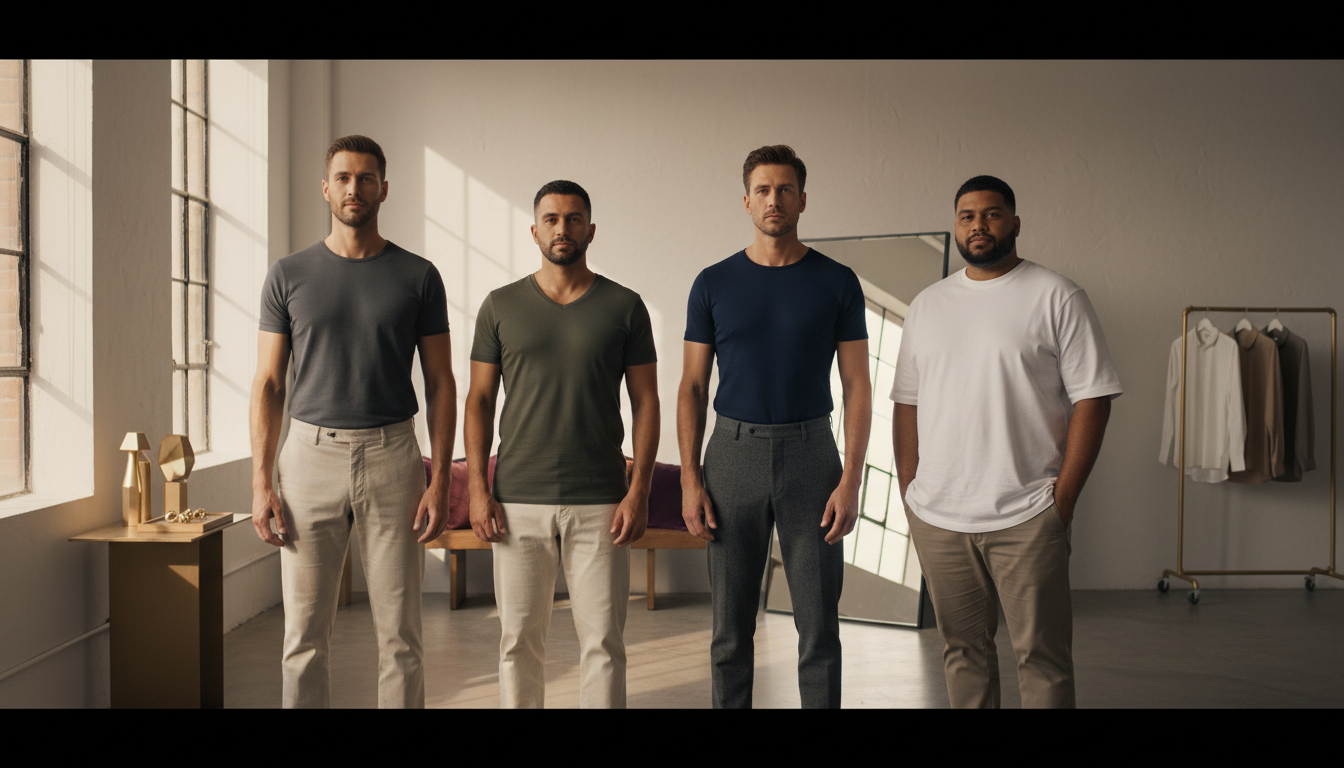
When I look at most men’s outfits, the biggest issue is rarely color or trend. It’s fit. Clothes that are too tight make you look like you sized out of your own wardrobe. Too baggy and everything reads sloppy, even if the pieces are expensive. The ROI on fixing fit is huge: you instantly look stronger, cleaner, and more put-together, without buying anything wild.
Here’s how I want your basics to sit:
- Shoulders: seams end right where your shoulder bone drops, not on your bicep or neck.
- Chest and torso: you can pinch about 2–4 cm of fabric, not a handful.
- Sleeves: no pulling across the bicep; no extra puddling at the cuff.
When you try something on, move: raise your arms, sit down, twist. If the fabric strains or you feel like adjusting constantly, the fit is wrong. If everything collapses and hides your shape, it’s also wrong. Aim for a clean outline that follows your frame without clinging. Once you lock in your correct sizes and preferred cuts, online shopping becomes faster and you return far less, because you’re no longer gambling on guesswork sizing.

Mistake 2: Ignoring Proportions - Shirt length, jacket length, pant break
Even if the size is technically right, proportions can still throw the whole look off. I see this when shirts drown the hips, jackets cover half the thigh, or pants stack like an accordion at the ankle. Your eye reads this as “something’s off,” even if you can’t name it. Fixing proportion is about where garments start and stop on your body.
Use these simple markers:
- Casual shirts: end between mid-fly and just below the zipper, never across the widest part of your thighs.
- Jackets: hem should land around mid-seat, not at your knees and not above your belt.
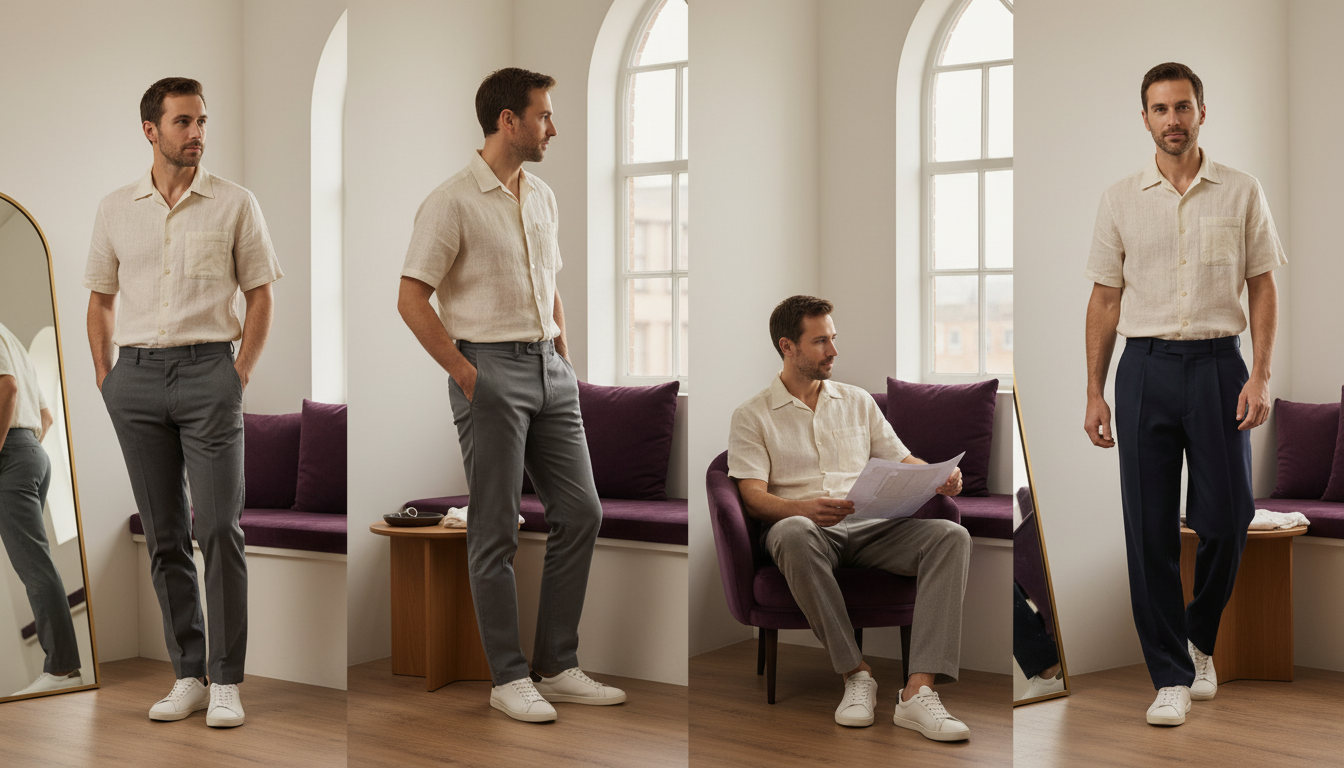
- Pants: one clean break at the front of the shoe for smart looks; almost no break for modern, slim styles.
Think in thirds: ideally, your torso is about one-third and your legs two-thirds, visually. Long tops and long jackets shrink your legs and make you look shorter and heavier than you are. Cropped everything can make you look top-heavy. Start noticing where hems land in outfits you like on others. Once you tune your eye to these anchors, you’ll scroll and shop faster because you can immediately filter out pieces that will never sit right on your frame.

Mistake 3: Orphan Suits - When to break up suits vs keep together
The “orphan suit” problem shows up when suit jackets and trousers get separated and start living as random pieces. Not every suit wants to be broken up. Some fabrics, weaves, and structures look odd when worn as separates, which is why those outfits feel slightly off even if the colors technically match. I pay close attention to whether a suit reads as a sharp set or a versatile mix-and-match tool.
Here’s how I decide:
- Keep together: very formal wool, strong sheen, sharp shoulder pads, matching trouser crease.
- Often safe to split: matte fabrics, subtle texture (flannel, hopsack, cotton), softer shoulders.
- Best as separates: unstructured blazers and suit trousers that already feel like smart chinos.
If a jacket screams “boardroom” on its own, don’t try to make it a casual piece with jeans and sneakers. It will make the jeans look cheap instead of intentional. Instead, use it as your dedicated suit and invest in one or two blazers specifically designed as separates. That small shift keeps your wardrobe clearer: some pieces are workhorses for mixing, others are reserved for formal moments. You’ll save time before events because you’re not forcing combinations that fight each other.
Mistake 4: Running Shoe Syndrome - Athletic shoes with non-athletic outfits
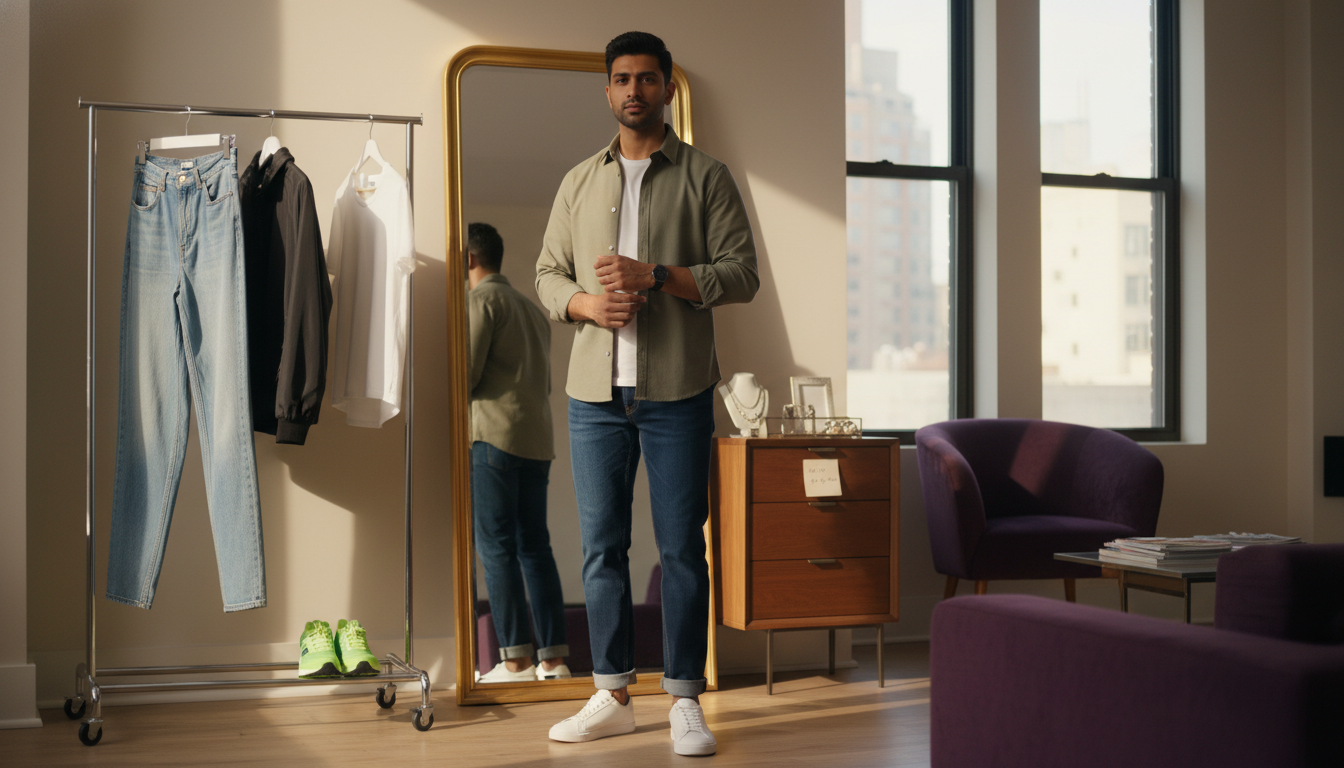
Athletic running shoes are built for performance, not polish. When I see them paired with jeans, chinos, or even trousers, they instantly drag the outfit into “just threw this on” territory. It’s a common default because they’re comfortable and already by the door. The fix is not owning fewer sneakers; it’s owning the right types for the right contexts.
Think in three tiers:
- True running shoes: high-tech, bright, lots of mesh; keep these for workouts and actual runs.
- Clean casual sneakers: leather or suede, minimal branding, neutral colors.
- Smart shoes: loafers, boots, derbies, or sleek minimal sneakers.
For everyday city life, I want you living mostly in the middle and top tiers. A simple white or off-white leather sneaker already pairs well with jeans, chinos, and casual tailoring. For dates, office, and events, rotate in loafers or sleek boots. You keep the comfort, but the visual message shifts from “gym detour” to “intentional, modern, adult.” Once you lock this in, your outfits look better without any extra time in the morning, because your footwear is already sorted by purpose.

Mistake 5: T-Shirt Under Everything - When undershirts show (and shouldn’t)
The visible undershirt is one of those small details that quietly cheapens an otherwise solid outfit. A bright crew neck peeking above an open shirt or under a sweater draws the eye in the wrong way. It breaks the line of your neck and makes layers feel bulky. I care less about whether you wear an undershirt and more about whether it stays invisible.
Here’s the framework I use:
- With dress shirts: choose a deep V-neck in a color close to your skin tone so it disappears.
- With crewneck sweaters: either skip the undershirt or match necklines so nothing peeks out.
- With open overshirts and flannels: treat the T-shirt as a visible layer and choose it intentionally.
If you run warm or want the extra layer for sweat, just be precise about cut and color. Undershirts should sit close to the body so they don’t create extra bulk at the waist and arms. When the base layer vanishes, everything on top looks cleaner and more expensive. You spend the same time getting dressed, but the result feels sharper because you’ve removed visual noise that doesn’t add anything.
Mistake 6: Neglecting Grooming - How clothing and grooming interact
Clothes cannot fully compensate for neglected grooming. When hair, facial hair, and skin look like an afterthought, even a strong outfit loses impact. I always look at the head and shoes first; they frame everything else. Polished style comes from the way grooming and clothing support the same story.
Think of grooming as part of your outfit system:
- Hair: a clean, consistent cut that works with your texture and face shape.
- Facial hair: shaped lines, intentional length, no neckbeard drift.
- Hands and skin: trimmed nails, moisturized skin, subtle fragrance if you wear it.
You don’t need a complicated routine. You do need rhythm: a haircut schedule, a quick beard check, and basic skincare that you can maintain even on busy weeks. The benefit is outsized. A simple T-shirt and jeans look deliberate when your hair is sharp and your face is tidy. That means you can get away with fewer clothes and simpler outfits because your baseline presentation is higher. It’s one of the easiest ways to upgrade how people read your style without buying anything new.
Mistake 7: All Black Everything - Missing opportunities for subtle color
Head-to-toe black feels safe, especially in a city. It can look cool in theory, but in real life it often reads flat, dusty, or harsh against your skin. I rarely see men use black the way it works best: as one strong element in a palette, not the entire story. When everything is black, you miss chances to create depth and contrast that make outfits look expensive.
Instead of abandoning black, I prefer to soften and support it:
- Swap one piece at a time: black jeans with a charcoal or navy top.
- Introduce muted color: olive, tobacco, burgundy, deep forest, or stone.
- Play with texture: combine black denim, knit, and leather so the light hits differently.
Notice what happens when you keep black in your shoes, belt, or jacket, but let other neutrals carry the rest. Your face looks more alive, and fabrics photograph better in natural light. The outfit still feels urban and grounded, just more dimensional. Once you see how much more expensive a simple mix of black, charcoal, and deep green looks than pure black, you’ll start shopping with a mental palette, not just defaulting to the darkest option every time.

If you want your outfits to feel as intentional as they look, I can help you apply these principles to your actual closet in under a minute, so your mornings feel calmer and more confident.
Get instant clarity on every outfit
Upload a photo or two to Mira and I’ll guide you to better fit, proportions, and polish in under a minute—so getting dressed feels simple every day.

Quick Fixes - Immediate changes for better style
If this feels like a lot, you don’t need to fix everything at once. Start with the highest return moves, the ones that immediately clean up your silhouette. One small change can make your whole wardrobe perform better without a full rebuild. I like to think in quick passes you can run through your closet and your cart.
Begin with these steps:
- Fit audit: remove or tailor anything obviously too tight or too baggy.
- Shoe swap: reserve running shoes for workouts; use clean sneakers or loafers for daily wear.
- Hem check: cuff or tailor pants that stack heavily at the ankle.
Next, refine details: upgrade your undershirts, book a haircut, and add one non-black neutral piece you can wear three ways. Each tweak reduces friction when you get dressed, because more of your clothes now “just work” together. Over time, you’ll notice you return fewer orders and spend less time second-guessing purchases. That’s the real goal: a wardrobe that quietly supports your life, so your energy goes to what you’re doing, not what you’re wearing.
Get instant clarity on every outfit
Upload a photo or two to Mira and I’ll guide you to better fit, proportions, and polish in under a minute—so getting dressed feels simple every day.