The Modern Guide to Men's Pant Fit (Slim, Straight, Relaxed, Wide)
The Pant Fit Spectrum - From skinny to wide-leg
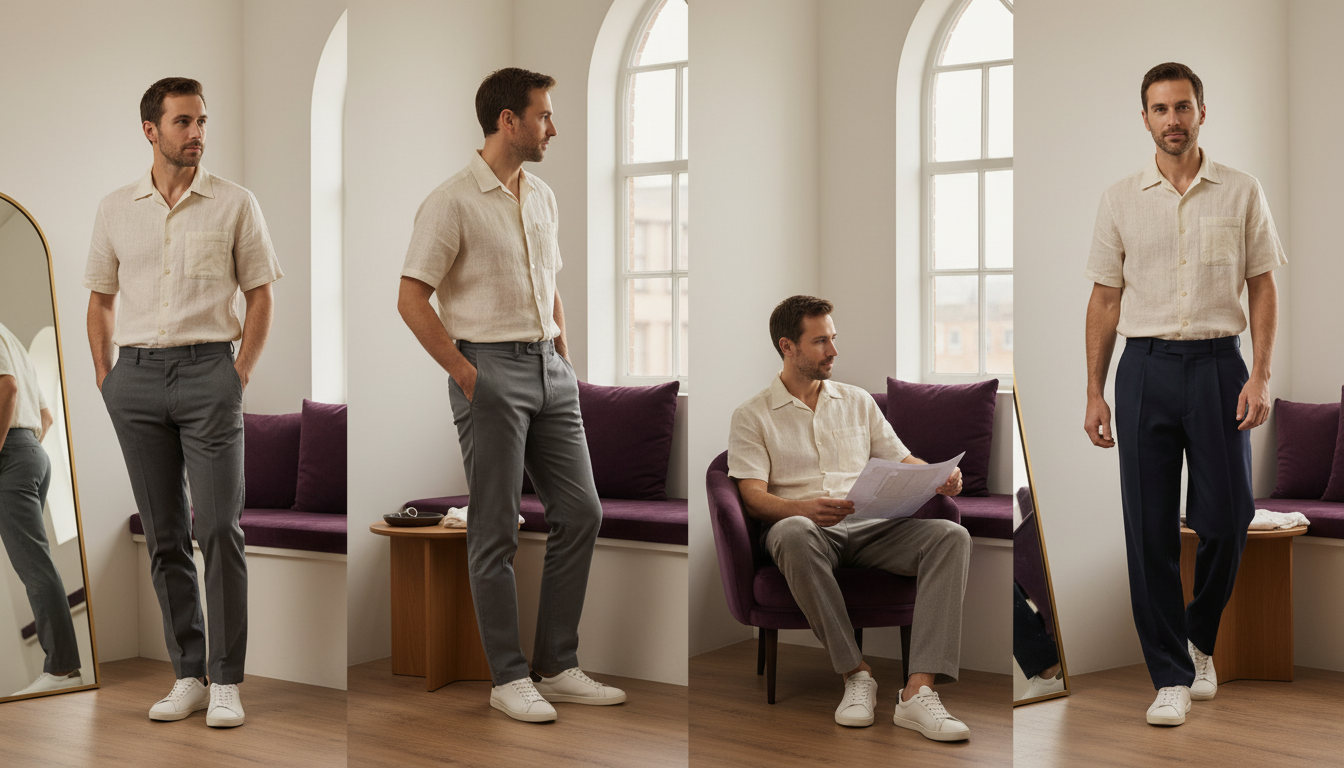
When men talk about pant fit, the conversation usually jumps straight to “slim” or “baggy.” I want you to think in terms of a spectrum instead. On one end, you have skinny and very slim cuts that hug the leg closely; on the other, wide-leg and relaxed shapes that add volume and movement. Most men actually look best in the middle of that range, but the right spot for you depends on your build, lifestyle, and shoes. Once you see fit as a sliding scale rather than a trend decision, it becomes much easier to shop and avoid returns.
Here’s the simple framework I use:
- How close is the fabric to your leg through the thigh?
- How much the leg tapers from knee to hem?
- How much ease you have when you sit, walk, and climb stairs? If you answer those three questions every time you try on pants, you’ll make cleaner decisions and stop getting surprised when something looks nothing like it did on the model. A lean, tailored fit signals polish; a slightly fuller, drapier fit reads modern and relaxed. The key is choosing intentionally, not accidentally drifting into “too tight” or “sloppy” because you never defined your ideal zone on that spectrum.

Watching how fabric hangs through the thigh and at the hem tells you whether a pant is truly slim, straight, relaxed, or wide.
Slim Fit - Who it works for, styling approach, when to avoid
Slim fit works best when it follows the line of your leg without squeezing it. I like it for men with relatively balanced proportions and moderate muscle in the thighs and calves. If your legs fill the fabric so much that horizontal lines appear at the thigh or seat, the pant is too tight, not truly slim. Aim for a clean outline with a little space at the knee and ankle so the fabric still drapes.
Styling-wise, slim pants pair well with:
- Trim tees and polos
- Slim or slightly structured shirts
- Minimal sneakers, loafers, or sleek boots They’re efficient for city dressing because they move from office to dinner easily and keep your silhouette sharp. I recommend avoiding very skinny cuts if you have athletic thighs, a fuller seat, or prefer chunkier shoes; the contrast exaggerates the size difference and can make your proportions look off. If you notice your pant leg getting stuck on your calf or needing to be peeled off at the end of the day, it’s a signal to size up or shift to straight fit for better long-term comfort and fewer “these felt fine in the fitting room” regrets.
Straight Fit - The versatile classic, proportions, styling
Straight fit is the workhorse of a smart wardrobe. The leg falls from hip to hem with minimal taper, which quietly flatters most body types because it doesn’t fight your natural shape. If you ever feel overwhelmed by choice, I default you to a straight fit first; it’s easier to evaluate proportion and then adjust slimmer or looser from there. The goal is a leg that skims the body, with enough room in the thigh to sit comfortably and a hem that doesn’t cling to your ankle.
To keep straight fits looking intentional, focus on proportion:
- Balance them with tops that are neither skin-tight nor oversized
- Add subtle structure up top (a well-cut overshirt, chore jacket, or blazer)
- Choose shoes with a medium profile: classic sneakers, derbies, Chelsea boots Straight pants respond especially well to small tailoring tweaks, like cleaning up the inseam length or taking in the waist, which maximizes ROI on each pair you own. When your default jean or chino is a clean straight fit, getting dressed in the morning becomes much faster because nearly every top and shoe you own will cooperate, instead of needing separate “skinny pant outfits” and “baggy pant outfits.”
Relaxed Fit - Modern comfort, avoiding sloppiness
Relaxed fit has become the quiet hero of modern menswear. Done right, it gives you ease through the seat and thigh with a more generous leg, but still reads polished if the fabric drapes smoothly. I like relaxed cuts for men who spend long days moving, sit at a desk for hours, or simply don’t enjoy feeling constrained. The key is that “relaxed” should mean soft volume, not collapsing or pooling.
To keep relaxed pants sharp, I watch three things:
- The rise: slightly higher helps the volume hang cleanly
- The fabric: denser twill, wool blends, or structured cotton keep shape
- The length: avoid heavy puddling over the shoe Pair them with more refined pieces on top, like a neat knit polo, a fitted hoodie, or a cropped jacket, so your overall outline still feels deliberate. If both your pants and top are oversized and your shoes are bulky, you drift into shapeless territory that photographs poorly and often looks less expensive than it is. When you get the proportions right, relaxed fit gives you all-day comfort and makes it much easier to sit, commute, and live in your clothes without constantly adjusting.
Wide-Leg - Contemporary trend, styling for different body types
Wide-leg pants sit toward the fuller end of the spectrum and can look incredibly intentional when they’re cut well. They offer more room from thigh to hem, usually with minimal taper, which creates a long, clean column of fabric. I find they particularly suit taller men, men with broader shoulders, or anyone whose style leans modern and slightly artsy. The volume in the leg can balance a larger upper body and create a sense of relaxed authority.
For different body types, I adjust the details:
- If you’re shorter, choose a high rise and a gentle taper so the leg still lengthens you
- If you’re broad-shouldered, let the leg stay wide to echo your upper frame
- If you carry weight in your midsection, use a slightly stiffer fabric so the front lies flat Styling-wide legs works best with simple, cropped, or tucked-in tops so your waist is visible and the volume doesn’t swallow you. Shoes matter: think clean sneakers, loafers, or sturdy boots that visually “ground” the fabric. Wide-leg pants are worth considering as a signature piece once your basics are set, because a single well-cut pair can instantly modernize older tees, shirts, and jackets you already own.
Rise Considerations - Low, mid, high rise for men
Rise is where the waistband sits on your body, and it quietly determines whether your proportions feel balanced or off. Low rise sits on the hips and shortens the look of your legs, which can work for a very casual, early-2000s feel but often fights modern tailoring. Mid rise, at or just below the natural waist (roughly around your navel or slightly under), is the most forgiving and what I reach for in most wardrobes. High rise sits above the navel and visually lengthens the legs while shortening the torso.
Here’s how I match rise to body shape:
- Long torso, shorter legs: mid to high rise to restore balance
- Short torso, longer legs: mid rise to avoid exaggerating the difference
- Fuller stomach: mid to slightly higher rise, with a clean front and structured waistband If you constantly find yourself pulling up your pants or feeling squeezed across the lower belly, the rise is wrong, not your body. A well-chosen rise also makes tucking shirts much easier and prevents that “muffin top” effect that ruins otherwise good outfits. Once you lock in your ideal rise, shopping gets faster because you can filter out half the options instantly and focus only on cuts that actually sit where your body wants them to.

Where your waistband sits can lengthen or shorten your legs more than any pattern or color.
Inseam and Break - Where pants should hit, break types
Inseam and break decide how your pants meet your shoes, which is why two men in the same jean can look completely different. The inseam is the length from crotch seam to hem; the break is how much the fabric creases over your shoe. I want you to choose both with intention instead of accepting whatever comes off the rack. A quick hem at a tailor is one of the cheapest upgrades you can make and has a high return in polish and versatility.
Think about break in three main types:
- No break: the hem just kisses the top of the shoe, very clean and modern
- Light/half break: a small crease at the front, classic and flexible
- Full break: deeper folds over the shoe, more traditional or relaxed For slimmer pants, no break or a light break keeps the line sharp and avoids bunching at the ankle. For relaxed and wide-leg fits, a light to fuller break can look intentional, especially with heavier fabrics like wool or denim. Start by deciding your preferred break, then have inseams adjusted to repeat that consistently; this consistency means your shoes will work across more outfits and you’ll spend less time second-guessing why something “looks off” in the mirror.

A few centimeters in inseam length can shift your pants from crisp and modern to classic or overly pooled.
Footwear Pairings - Shoes that work with each fit
Shoes and pant fit are a conversation; when they disagree, the whole outfit struggles. Slim pants harmonize with lower profile shoes: minimalist sneakers, slim loafers, Chelsea boots, and refined derbies. Straight fits are the most forgiving and can sit nicely on almost any classic shoe, as long as the leg opening is wide enough not to catch on high-top collars. Relaxed and wide-leg cuts appreciate more visual weight at the bottom so the volume feels grounded.
As a simple guide:
- Slim: low sneakers, sleek loafers, streamlined boots
- Straight: most sneakers, loafers, derbies, and casual boots
- Relaxed/wide: chunkier sneakers, sturdier boots, substantial loafers or clogs Pay attention to how much of the shoe the hem covers; for modern lines, you want to see the full top of the shoe and a hint of ankle shape, not just a fabric tube swallowing everything. If your pant opening is narrower than your shoe at the ankle, you’ll get awkward bunching that makes even good shoes look wrong. Once you define two or three go-to pant fits and pair them with the right footwear profiles, your outfit choices narrow in a healthy way and mornings speed up because you intuitively know which shoes work with which silhouettes.

Matching shoe profile to pant fit keeps your silhouette intentional from waist to floor.
If you want this level of clarity on your own body, I can translate these fit rules into precise recommendations for you in one short, focused session.
Find your perfect pant fit, fast
Share a quick photo and I’ll map your ideal pant fit, rise, and inseam in seconds, plus suggest brands that consistently match your proportions so getting dressed feels effortless.

Body Type Recommendations - Best fit for rectangle, triangle, etc.
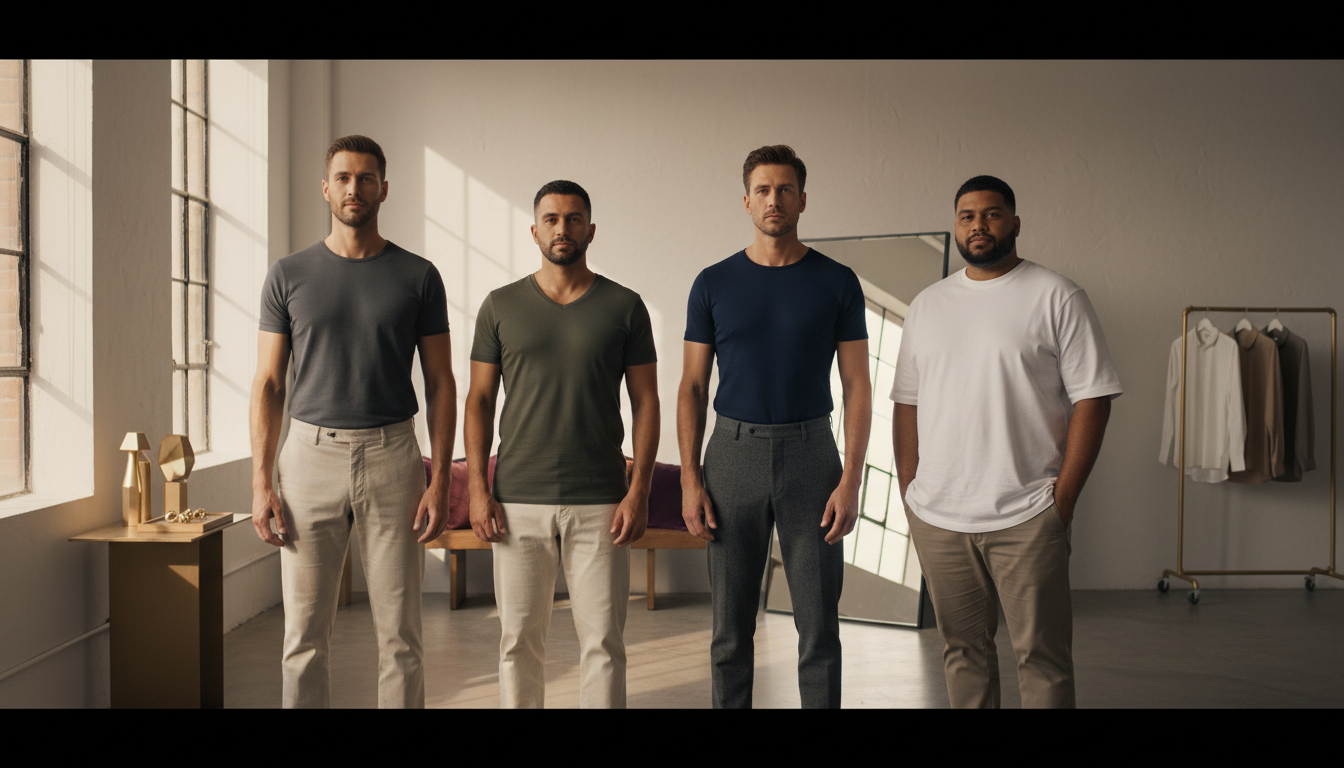
Your body type is a starting point, not a limitation, but it does suggest where on the pant spectrum you’ll feel most at home. If your frame is more rectangle (shoulders, waist, and hips about the same width), you can usually wear slim or straight fits easily; just avoid extremes that erase your shape or cling too tightly. For an inverted triangle (broad shoulders, narrower hips), I often like straight or relaxed legs to balance the upper body and keep you from looking top-heavy. If you’re more triangle (narrower shoulders, fuller hips or thighs), a clean straight or gently tapered relaxed fit often feels best.
Here’s how I think it through:
- Rectangle: slim or straight, mid rise, light break
- Inverted triangle: straight or relaxed, mid to high rise, enough leg opening to match your shoe
- Triangle: straight with room in the thigh, or relaxed taper; avoid very low rise that cuts across the widest part of your hip If you’re fuller all around (“oval”), prioritize comfort and drape: relaxed fits in structured fabrics, mid rise that doesn’t cut in, and hems tailored to avoid stacking. Athletic builds with strong thighs and glutes usually do well in athletic-tapered or relaxed-tapered fits that give room up top and narrow gently from the knee. When you align pant fit with your actual structure, you need fewer pairs overall because each one genuinely works; that’s how you move from a crowded closet and frequent returns to a small rotation of pants you reach for without thinking.
Find your perfect pant fit, fast
Share a quick photo and I’ll map your ideal pant fit, rise, and inseam in seconds, plus suggest brands that consistently match your proportions so getting dressed feels effortless.