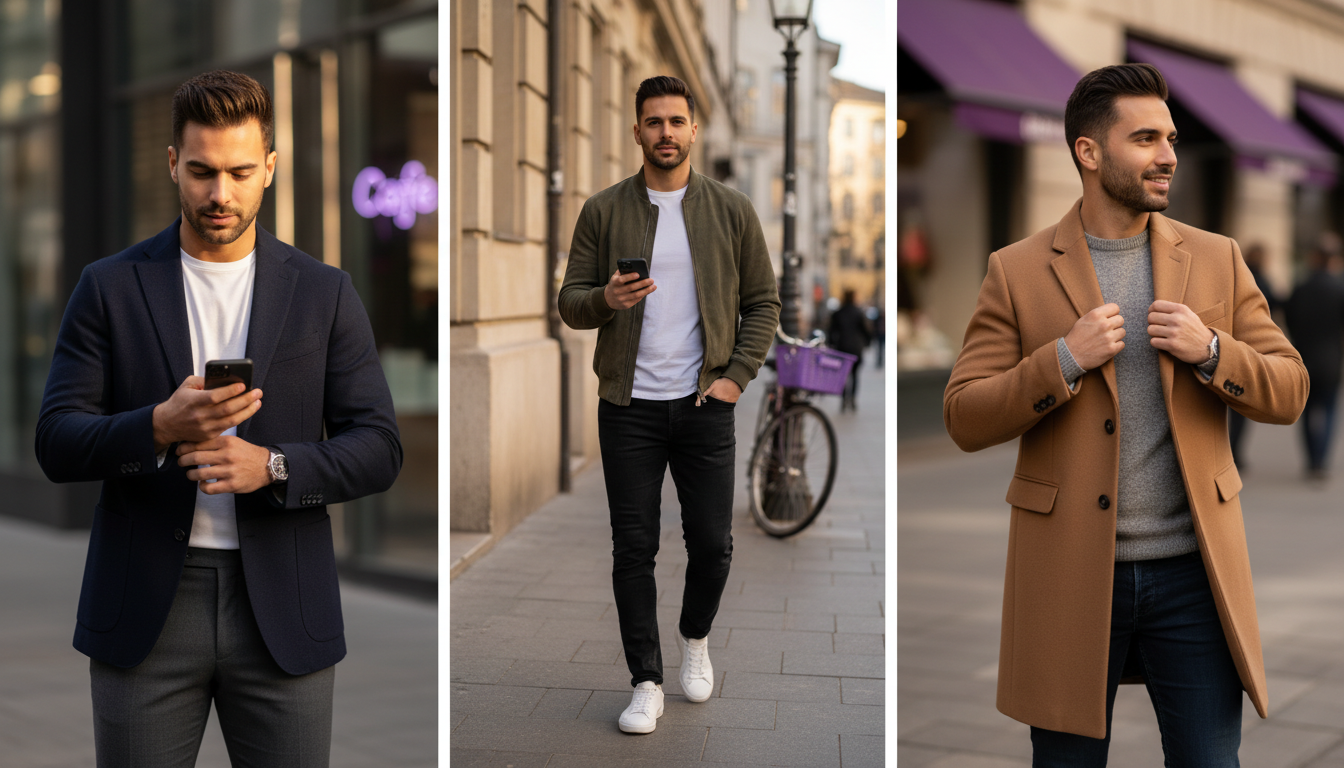
How to Dress for Your Body Type (Men)
Understanding Male Body Types - Rectangle, triangle, inverted triangle, oval
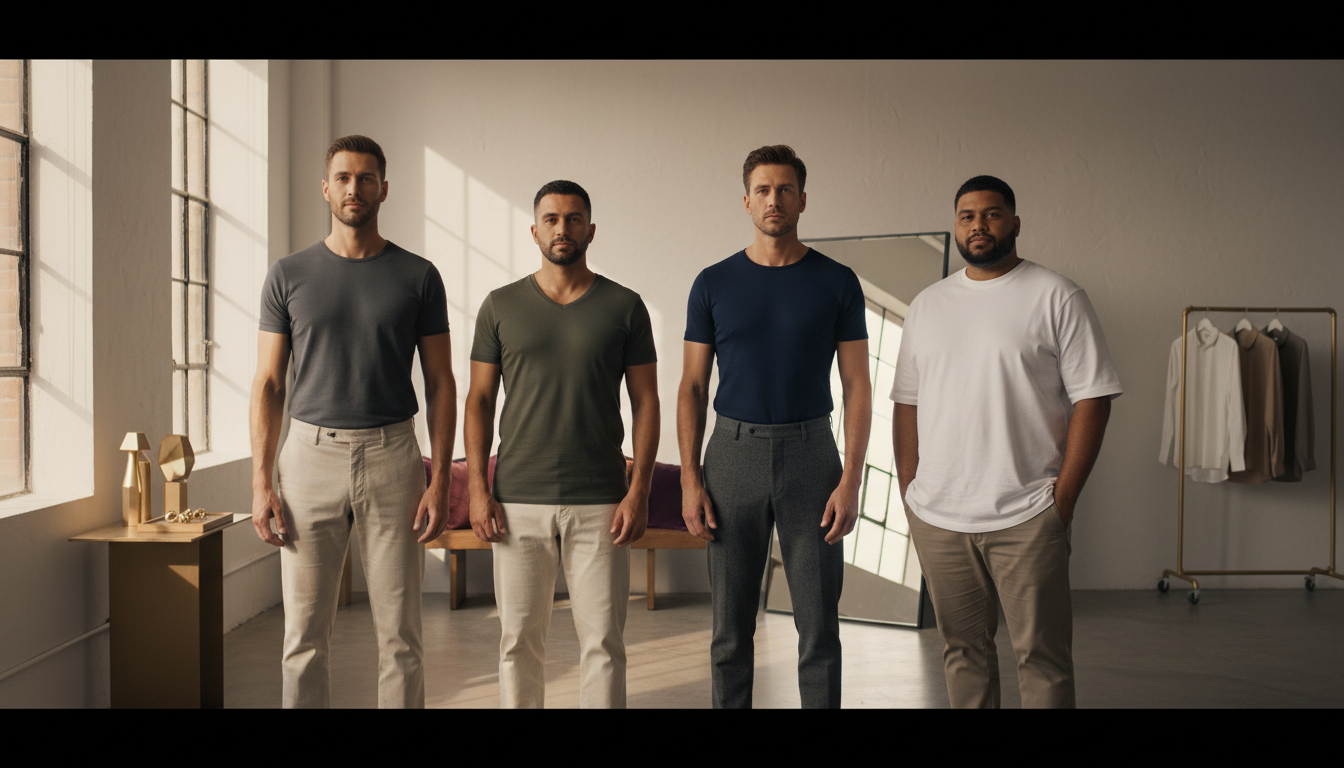
When I look at a man’s frame, I’m paying attention to three things first: shoulders, waist, and hips. Most bodies fall into four broad types: rectangle, triangle, inverted triangle, and oval. None of these are “better” or “worse”; they’re simply blueprints for how fabric hangs on you. Once you know your blueprint, shopping stops feeling like guesswork and starts feeling like a filter.
Here’s how I like to simplify it:
- Rectangle: shoulders, waist, and hips are similar in width.
- Triangle (pear-shaped): hips wider than shoulders, weight lower.
- Inverted triangle: shoulders wider than hips, athletic upper body.
- Oval: more fullness through the midsection, softer lines overall.
You don’t need a tape measure to use this guide. A mirror and a fitted tee tell you enough: look at where your frame carries volume and where it’s narrower. That single observation controls which necklines, jacket cuts, and pant rises will feel effortless on you. The ROI is real: fewer returns, fewer “this looked better on the model” moments, and a wardrobe that actually earns its space.

Rectangle (Athletic/Straight) - Creating shoulder width and waist definition
If your shoulders, waist, and hips are similar in width, you’re working with a rectangle. This shape often looks athletic or lean but can read flat if the clothes don’t add any contour. My goal for you is simple: create the illusion of stronger shoulders and a slightly defined waist so your frame feels intentional, not boxy. I do this with strategic structure and subtle tapering.
Think in two moves:
- Add presence up top: jackets with a defined shoulder seam, collars that stand, crew neck or slightly higher necklines.
- Suggest a V-shape: shirts that skim the torso and narrow slightly at the waist, not straight box cuts.
Opt for overshirts, bomber jackets, and workwear-style pieces that have some heft in the upper body. Avoid ultra-long, unstructured tees that hang straight down; they exaggerate the rectangle and make you look less polished. A mild taper in your shirts and a slim-straight leg in your pants instantly upgrade your proportions. Once you dial this in, you can buy fewer pieces, because almost everything you own will work together without that “cardboard” feel.
Triangle (Pear-Shaped) - Balancing narrow shoulders with wider hips
If your hips or thighs are noticeably wider than your shoulders, you’re likely a triangle. Most guys here focus on hiding their lower body, which usually backfires. Instead, I’d rather rebalance the frame by giving the upper body more visual weight and keeping the lower half clean and simple. The aim is a calm, streamlined line from shoulders to ankle.
Start with your top half:
- Choose jackets and shirts with a bit of structure in the shoulders.
- Use medium-to-dark colors on the bottom and slightly lighter or richer tones up top.
- Keep graphics, pockets, and texture mostly above the waist.
For trousers and denim, a straight or gently tapered leg is your friend; avoid super-skinny fits that cling around the thighs and emphasize the width you’re trying to neutralize. At the same time, avoid overly cropped, wide, or flared pants that add bulk. When you get this balance right, clothes sit closer to your body without feeling tight, and your whole silhouette reads taller and more composed. Shopping becomes faster because you know instantly which cuts to skip, instead of learning the hard way at home.
Inverted Triangle - Balancing broad shoulders with narrower hips
If your shoulders and chest are broad while your waist and hips are narrower, you’re an inverted triangle. This shape is naturally strong and athletic, but it can look top-heavy if everything you wear is skin-tight or shrunken. My job is to ease some volume downward and soften the upper body just enough so the whole look feels balanced, not crowded around your chest and arms.
I think in three levers:
- Soften the top: avoid spray-on tees and overly short sleeves that cut across the widest part of your biceps.
- Support the bottom: use straight or slightly relaxed legs instead of ultra-skinny cuts.
- Control contrast: keep the top and bottom in similar color depth to avoid a “floating torso” effect.
Raglan sleeves, open collars, and knitwear that skims (not clings) work particularly well for you. You can still wear structured jackets, but look for ones that don’t aggressively pad the shoulders or nip the waist. Once you adjust these details, you’ll notice fewer “tight in the chest, loose at the waist” problems and a lot less time wasted returning pieces that never had a chance to sit right on your frame.
Oval (Round) - Creating vertical lines and structure
If you carry most of your volume through your midsection and your outline looks more rounded than angular, you likely fall into the oval category. Many men here instinctively size up to hide their stomach, but oversized fabric just makes everything look bigger and less defined. My focus with an oval frame is to create longer visual lines and a bit of structure so your body feels supported, not swamped.
Use these principles as your filter:
- Prioritize verticals: think open shirts, long plackets, zip fronts, and subtle vertical textures.
- Choose gentle structure: jackets with a clean shoulder and a smooth drape over the torso.
- Refine, don’t cling: fabrics that skim over the body without grabbing.
Mid-rise trousers that sit comfortably at the natural waist help prevent the “cutting in” effect that emphasizes the stomach. Keep your color palette more even from top to bottom, with slightly darker tones through the midsection, so the eye travels up and down rather than side to side. When this comes together, outfits feel more streamlined and you move through your day without thinking about whether your shirt is pulling or clinging. That peace of mind alone is worth tightening your fit strategy.
Fit Is Everything - Why tailoring matters more for men
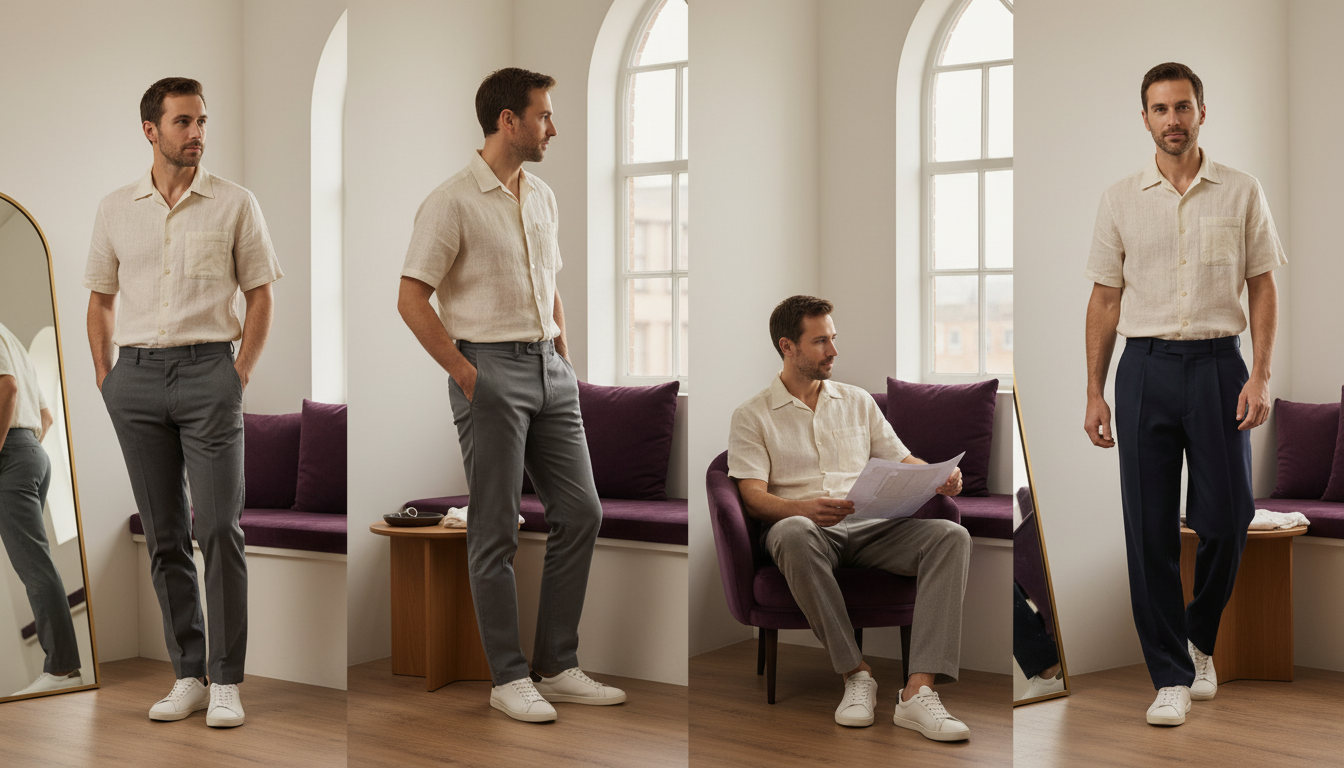
No body type looks good in poor fit. Men’s clothing is built around relatively simple shapes, which means small adjustments in length, taper, and shoulder placement have a huge impact on how you look. Off-the-rack pieces are drafted for an imaginary “average” body; you’re not average, you’re specific. Tailoring is how we translate that reality into clean lines.
I look at tailoring in three quick passes:
- Shoulders and seat: they should sit cleanly with no pulling or collapse.
- Sleeve and leg length: no puddling, no bracelet-length accidents unless intentional.
- Waist shaping: enough room to move, but not so much fabric you could grab a handful.
You don’t need a full bespoke wardrobe; a good alterations tailor can reshape a handful of key pieces for the cost of one bad online purchase. Shortening sleeves, taking in a shirt slightly, or slimming a pant leg often turns “almost right” into “I wear this every week.” When you treat tailoring as standard maintenance rather than a luxury, you automatically reduce returns, cut morning trial-and-error, and extend the life of your clothes.

Silhouette Strategies - Patterns, layering, structure for each type
Once you know your body type, silhouette becomes your main styling tool. Silhouette is simply the outline your clothes create when someone sees you from across the room. I use patterns, layering, and structure differently for each type to guide the eye where I want it. This is where you move from “dressed” to “put-together.”
Here’s how I think about it:
- Rectangle: use layering and subtle taper to fake a mild V-shape.
- Triangle: add visual interest up top and keep the lower half simple.
- Inverted triangle: relax the upper body volume and support the lower half.
- Oval: create clean verticals and avoid heavy horizontal breaks.
For rectangles, overshirts, gilets, and light jackets give you that upper-body presence. Triangles benefit from textured knits, pockets, or subtle pattern above the waist, paired with dark, clean trousers. Inverted triangles look best in knits and shirts that glide over the torso, plus pants with enough weight and width to visually “anchor” the frame. Ovals thrive in longline overshirts, soft blazers, and open layers that slice the torso vertically. Once you train your eye to read your outline, you’ll scroll product images faster and only click into what has the right architecture for you.

Common Mistakes by Body Type - What to avoid
Most style frustration comes from repeating the same proportion mistakes, not from buying the “wrong” trends. When I review wardrobes, I usually see the same patterns by body type. Cleaning these up instantly makes everything you already own work harder for you. Think of this as your personal “do not buy” list.
Here’s what I watch for:
- Rectangle: boxy, long tees and hoodies that fall straight without any shape.
- Triangle: ultra-skinny jeans or joggers that hug the thighs and draw attention downward.
- Inverted triangle: painted-on tees and tanks that make the upper body look crowded.
- Oval: oversized tops with dropped shoulders paired with tight skinny jeans.
For rectangles, I replace generic, longline basics with pieces that hit mid-fly and have some taper. Triangles get more balanced when we retire aggressively tapered bottoms and low-rise pants that cut into the hips. Inverted triangles look more refined once we stop overemphasizing the chest and start choosing slightly looser knits and shirts. Ovals benefit from ditching extreme volume and harsh horizontal breaks, like high-contrast belts or very short jackets. Avoiding these traps saves you from buying clothes that only work from one angle or in one mirror.
If you want this clarity tailored to your actual body, I can turn these principles into specific, shoppable decisions so your wardrobe feels sharper within days, not months.
Turn Your Body Type Into Your Superpower
In under a week, I’ll translate your proportions into clear fit rules, brand cues, and go-to outfits so mornings feel fast, confident, and stress-free.

Outfit Formulas - 2-3 complete looks for each body type
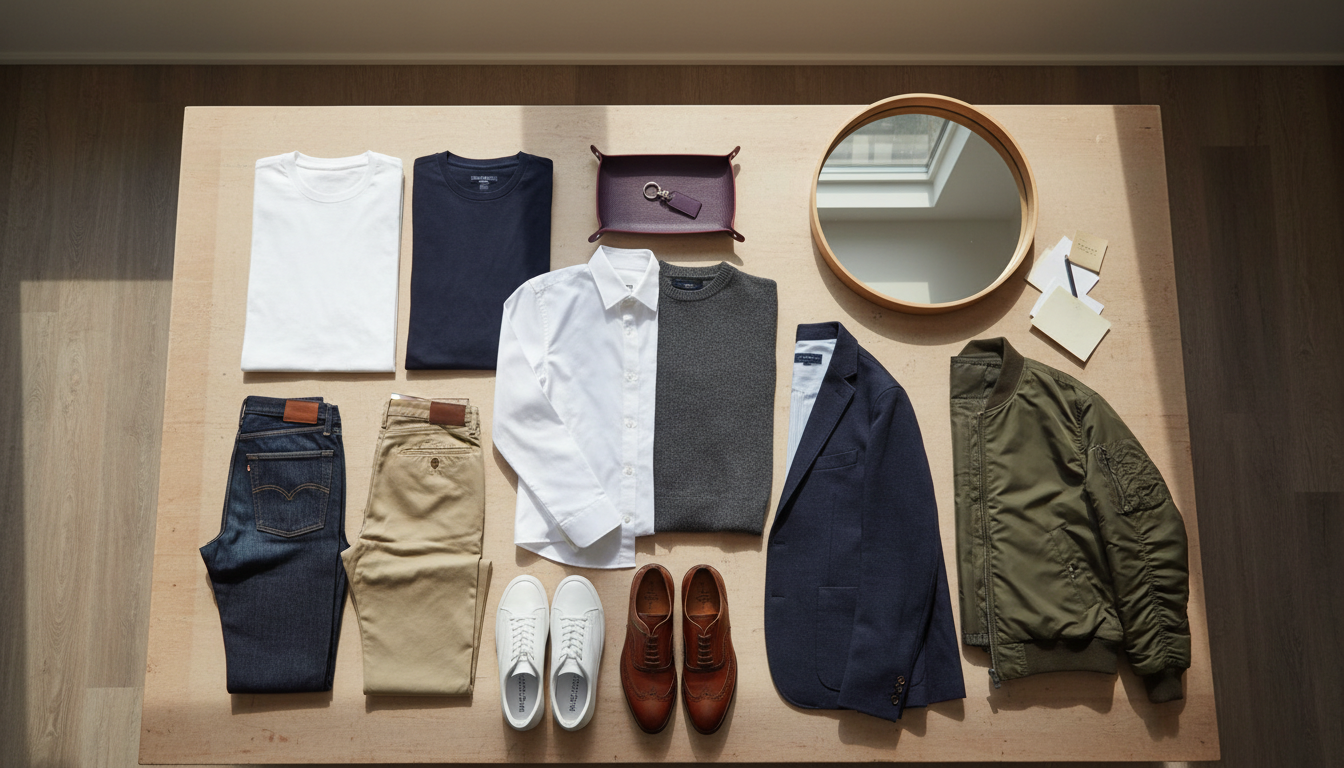
I like outfit formulas because they take your body type and translate it into fast, repeatable decisions. Each formula here is built to be modular: you can swap colors and fabrics, but the proportions stay consistent. Once you have 2–3 per body type, you stop starting from zero every morning and start assembling from a proven template.
For rectangles, try:
- Lightly structured bomber, crew neck tee, slim-straight jeans, clean sneakers.
- Overshirt left open, slightly tapered knit tee, tailored chinos, leather trainers.
For triangles, aim for:
- Soft-shouldered chore jacket, textured sweater, dark straight-leg jeans, boots.
- Henley or polo with some structure at the collar, lightweight overshirt, tapered-but-not-skinny chinos.
For inverted triangles, build:
- Relaxed knit polo, drapey straight-leg trousers, minimal sneakers.
- Casual blazer without heavy padding, open-collar shirt, slim-straight jeans with some room at the thigh.
For ovals, focus on:
- Longline overshirt or unstructured blazer, breathable knit tee, mid-rise straight trousers, suede sneakers.
- Zip-front cardigan worn open, darker tee, tailored joggers or drawstring trousers with structure, sleek trainers. With a few of these set up in your wardrobe, you cut decision time dramatically and your outfits start to feel consistently intentional instead of occasionally lucky.

Turn Your Body Type Into Your Superpower
In under a week, I’ll translate your proportions into clear fit rules, brand cues, and go-to outfits so mornings feel fast, confident, and stress-free.