7 Styling Mistakes Women Make (And How to Fix Them)
Mistake 1: Wrong Bra = Wrong Silhouette
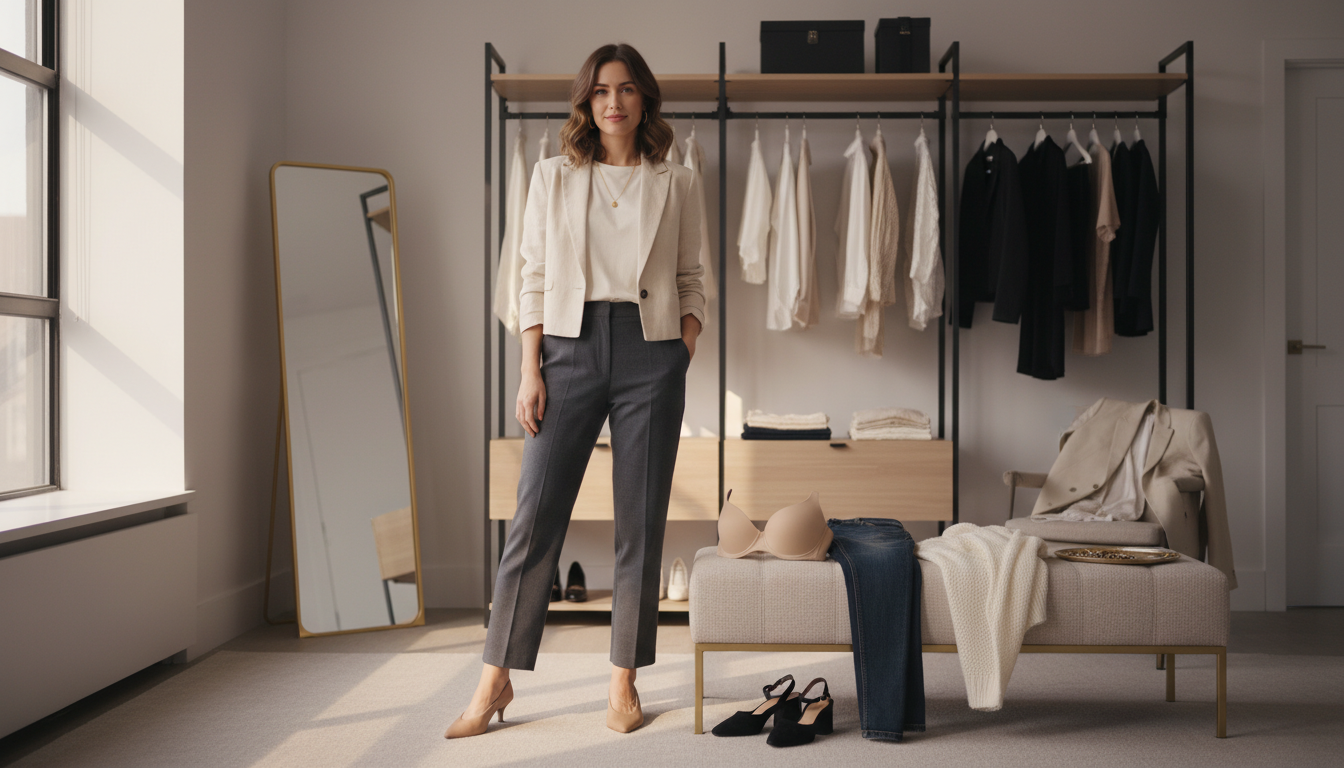
When an outfit feels “off” and you can’t explain why, I often find the problem isn’t the clothes at all. It’s the bra. A poorly fitting bra changes everything: where your waist appears, how tops hang, even whether pants seem flattering. If the foundation is wrong, the whole silhouette collapses, and you start blaming your body instead of the underpinnings.
I look for a few simple signs. The back band riding up means the band is too loose and the straps are overworking. Spillage over the cup edge, gaping at the top, or wires sitting on breast tissue are all red flags. If you see deep strap dents, or you constantly adjust throughout the day, the fit is not supporting you the way it should.
A good fit does the opposite. The band is level and snug on the loosest hook, the center front lies flat against your chest, and breast tissue sits fully in the cup with no cutting or bubbling. Straps stay in place but aren’t doing the heavy lifting. Your waist suddenly looks more defined, tops skim instead of pull, and blazers button cleanly.
To streamline the process, I like this simple framework:
- Start with band size: if you can pull it more than 2 fingers away, size down.
- Check cup shape: you want smooth lines under a fitted tee, no ridges.
- Dress the breast: lean forward and scoop tissue into the cup, then re-check.
Getting this right has huge ROI: fewer returns on tops and dresses, less tugging all day, and a silhouette that looks “pulled together” with almost no extra effort. Once the foundation is correct, your existing wardrobe usually looks instantly more expensive.

The right bra quietly reshapes your entire silhouette, so tops and dresses sit the way they were designed to.
Mistake 2: Ignoring Proportions
Most women I work with buy pieces they like in isolation, then wonder why the outfits feel clumsy. The missing piece is proportion. The relationship between top length, bottom rise, and overall volume on your frame matters more than any single item. When proportions are off, even beautiful clothes can look cheap.
I start by thinking in terms of volume balance. If you’re wearing a wide-leg pant or full skirt, you want a neater, shorter top that defines where your body “starts.” With a body-skimming or slim bottom, you can afford more ease on top: a soft blouse, a boxy knit, an oversized shirt. The key is contrast. Volume on both halves without definition easily turns into a fabric cloud.
Rise placement is another quiet game-changer. A mid to high rise that hits around your natural waist visually lengthens the legs and creates a clear focal point for tucking or half-tucking. Ultra-low rises can work, but they shorten the leg line and require careful top length to avoid that “torso-heavy” feeling. Cropped tops or shorter knits usually pair best with higher rises, not low.
When you’re getting dressed, use a quick checklist:
- Ask: where is my waist in this outfit?
- Check: are top and bottom both oversized, or is one clearly slimmer?
- Adjust: try a front tuck, cuff, or roll to shift proportions before you change the whole look.
Once you start seeing outfits in terms of proportion instead of individual pieces, shopping becomes calmer. You stop chasing trends that fight your frame, and you build a closet where items actually work together, saving time each morning and cutting down on “this looked better on the model” returns.

When you balance top and bottom volume and place the waist intentionally, outfits read as effortless instead of clumsy.
Mistake 3: Oversized Everything
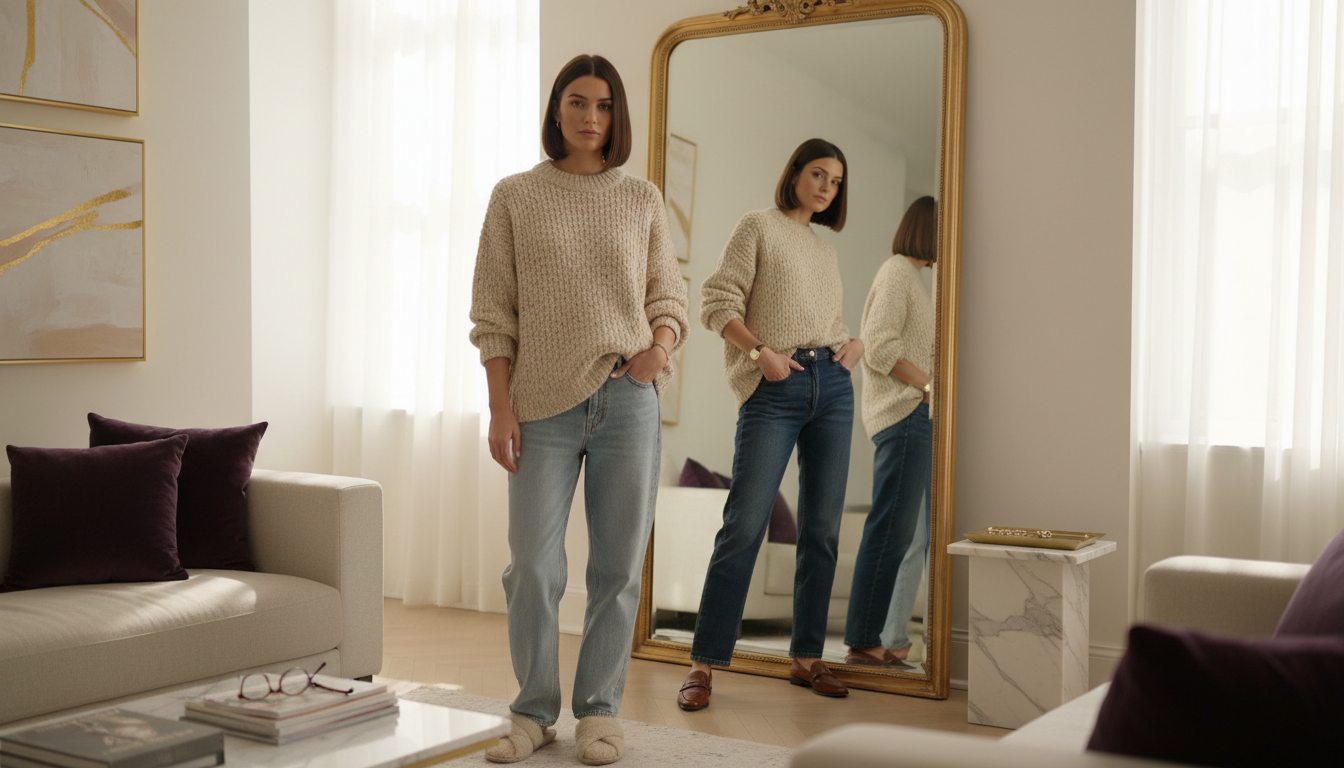
Relaxed silhouettes are useful and modern, but there’s a difference between intentional ease and getting swallowed by fabric. I see a lot of women hiding in oversized everything, hoping it reads as chic when it’s really just erasing their shape. The result is often “tired” instead of effortless.
Oversized pieces work best when there is still structure or a visible body point. Think a slouchy sweater with a defined shoulder seam and slim, ankle-length trousers. Or an oversized blazer with strong shoulders over a fitted tank and straight-leg jeans. Your eye needs an anchor: shoulders, waist, wrist, or ankle. Without that, you lose any sense of proportion.
If you love comfort, I never suggest giving it up. I want you to refine it. Keep one element relaxed and let the other elements sharpen the look. For example:
- Big sweater + slim or tapered bottom + visible ankle.
- Wide-leg pants + close-fitting knit + neat hairstyle or sharp shoe.
- Oversized shirt + half-tuck + streamlined trouser or skirt.
Fabric also matters. Stiff, bulky materials add visual weight, while fluid wovens or soft knits can drape in a way that still hints at your lines. If an item stands away from your body on its own, treat it as volume and keep everything else cleaner. When you do this, you get the psychological comfort of looseness with the visual clarity of a styled outfit, which is the sweet spot for busy mornings and long days.
Mistake 4: Matchy-Matchy Sets
Co-ords and matching sets promise zero thinking, which is why they’re everywhere in urban wardrobes. The trap is wearing them exactly as sold, all the time. Perfectly matched pieces can flatten your personality and make you look more “uniformed” than intentional, especially in bold colors or prints.
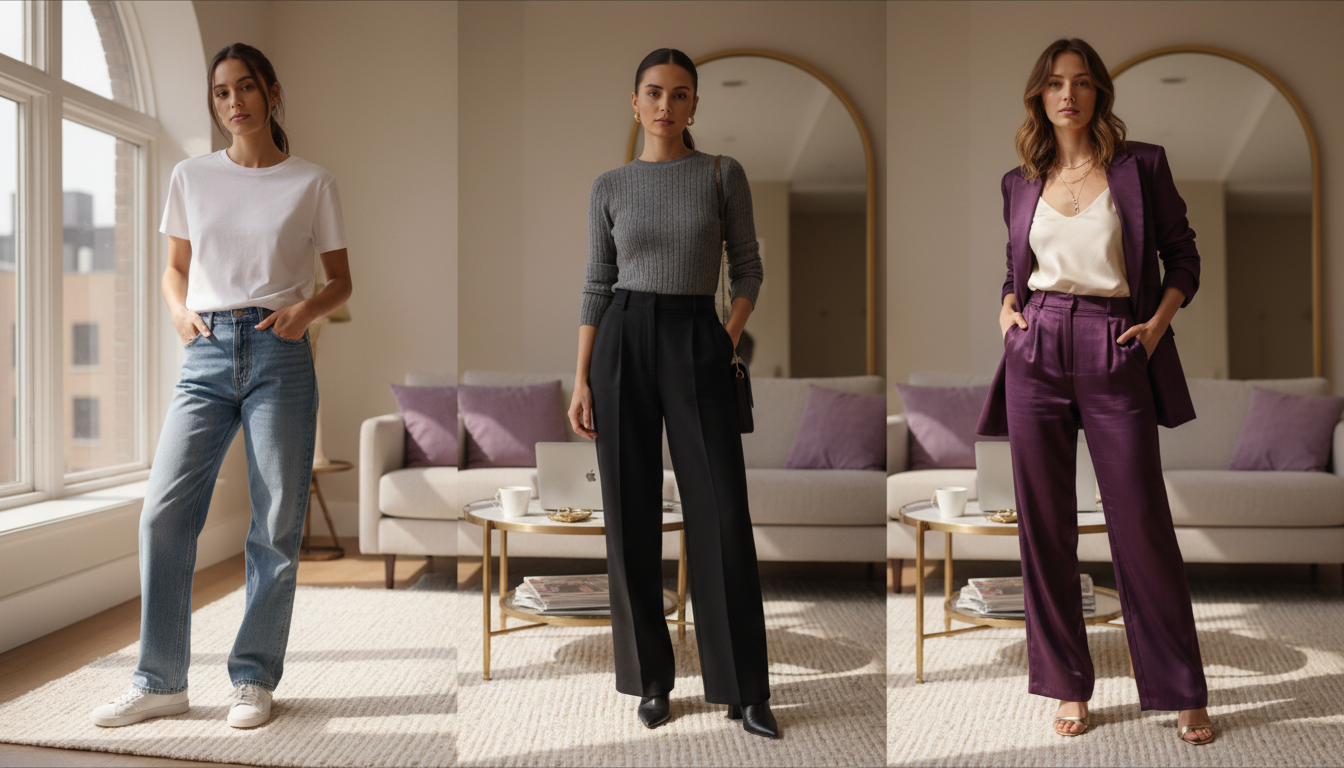
I like to treat a set as a mini capsule instead of a fixed outfit. That blazer from your suit can go over vintage denim and a ribbed tank. The matching trousers can anchor a simple tee and cardigan with a contrasting belt. When you start breaking sets up, you unlock far more outfits from the same investment and avoid that office-collection look.
The magic is in contrast and texture. Pair a sleek suiting pant with a soft, slightly textured knit. Break a bright colored set with a grounded neutral, like bone, charcoal, or camel. If your set is patterned, mix one piece with a solid in a supporting color from the print rather than matching it exactly.
Here’s a simple approach I use:
- Wear the full set when you need instant polish or a long, unbroken line.
- On more casual days, style just one piece of the set with wardrobe basics.
- Add at least one element that clearly doesn’t belong to the set: belt, shoe, or bag.
This small shift gives you more mileage from pieces you already own and makes outfits feel less “I put on what the hanger told me” and more curated. Over time, it also sharpens your eye for which sets are worth buying, because you’ll only keep the ones that flex across multiple looks.
Mistake 5: Ankle Straps on Everyone
Ankle-strap shoes are beautiful, but they are not neutral. They slice the leg line exactly where many women want length, then we wonder why dresses feel stumpier than they did in the fitting room. I watch this especially with blocky ankle straps paired with midi dresses or cropped pants on shorter or curvier legs.
The question isn’t “are ankle straps bad?” It’s “where is the visual break happening on my leg?” A strap that hits at or just above the narrowest part of your ankle is more forgiving than one that cuts across the thicker part. A slim, tonal strap blends more into the leg, while a dark, heavy strap on pale skin creates a hard stop.
Ankle straps tend to work well when:
- Your hemline is above the knee, so there’s enough visible leg to balance the cut.
- The shoe color is close to your skin tone, especially for dresses and skirts.
- The rest of the outfit is streamlined, allowing the shoe to be the detail.
If you feel shortened, experiment with alternatives. A low vamp pump, slingback, or sandal that exposes more of the top of your foot will extend the line from thigh to toe. For cropped pants, try a shoe that doesn’t add another horizontal break at the ankle. This single change often transforms how you feel in skirts and dresses you already own, reducing the urge to buy new “more flattering” pieces when the issue is really at your feet.
Mistake 6: Wrong Hem Lengths
Hem length is one of the fastest ways to change how tall, grounded, or sharp you look. Many women never adjust hems after buying, then quietly resent how things sit on their bodies. The good news: getting this right is incredibly high ROI. One tailoring appointment can make your entire wardrobe feel more intentional.
For skirts and dresses, I like to work around natural “break points” on the leg: just above the knee, just below the knee, mid-calf where the leg naturally narrows again, or ankle-bone length. A hem that cuts across the widest part of your calf or directly at the mid-knee cap is rarely the most flattering. On petites, I often recommend either a clean above-the-knee or a true midi that shows the narrowest part of the calf.
Pants need similar attention. Full-length trousers look best when they almost kiss the top of your shoe, creating a long line without puddling excessively. Cropped pants should intentionally show the ankle bone, not hover awkwardly above it. Wide-legs usually need more length than you think, while straight or slim styles can sit slightly shorter.
A practical framework:
- Try your clothes with the exact shoes you wear most.
- Pin or cuff to test several lengths in the mirror: shorter, current, longer.
- Notice at which point your legs look longest and the outfit feels intentional.
Once you identify your best hem points, shopping becomes faster. You can quickly see when an off-the-rack length will work and when you’ll need tailoring, which minimizes those “almost right” pieces hanging unworn in your closet.

Dialed-in hem lengths instantly refine your shape and make even simple pieces look intentional.
Mistake 7: Accessories as Afterthought
When outfits feel flat, most women instinctively think they need new clothes. Often, they just need better accessory strategy. Treating accessories as a rushed afterthought leads to two extremes: wearing nothing at all, or piling on pieces that compete with each other. Neither gives you that quiet, polished finish.
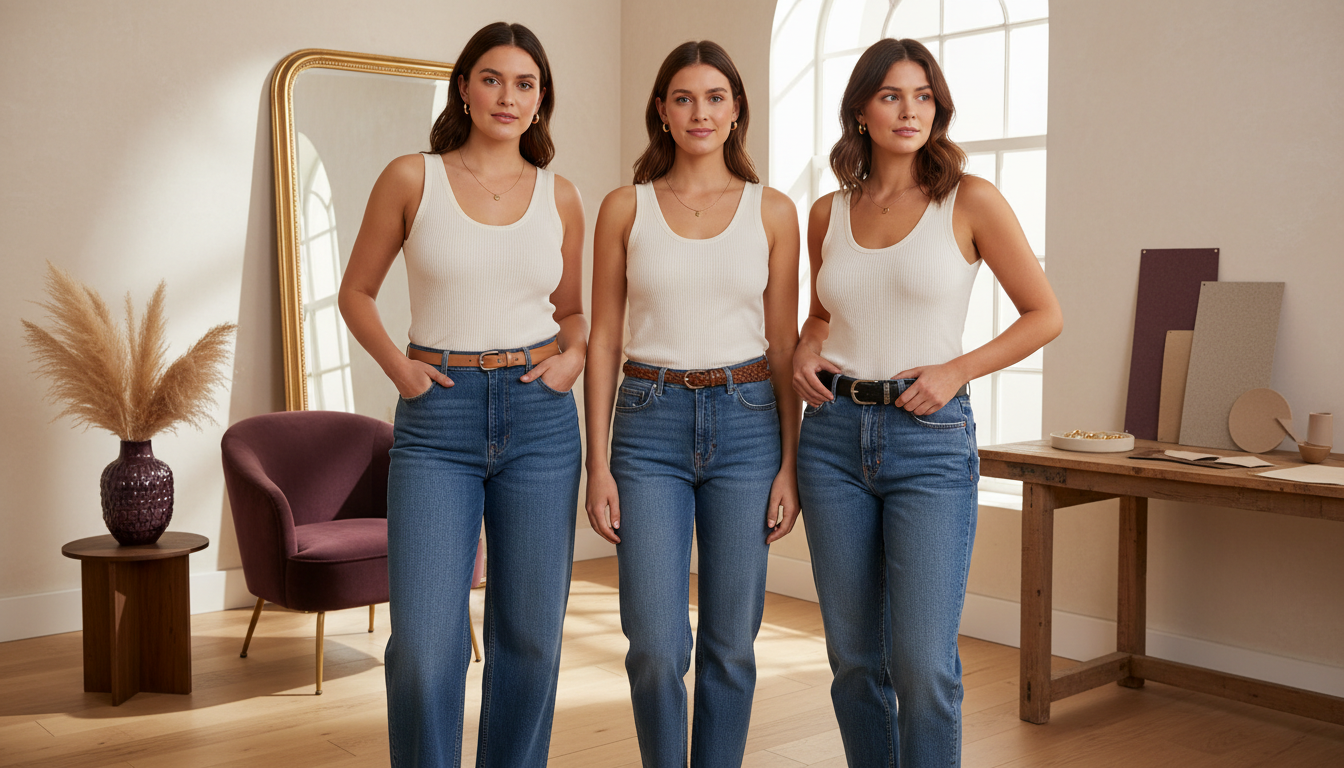
I like to frame accessories as your outfit’s punctuation. You don’t need many, but you do need the right ones. A sleek watch and one ring can be enough for a clean, modern look. A structured bag, a single delicate necklace, or a pair of small hoops can shift a basic jeans-and-tee combination from “I threw this on” to “this is my uniform.”
To simplify, I use a loose rule of three:
- Choose one anchoring piece (bag or shoe) that sets the mood.
- Add one jewelry moment near your face (earrings or necklace).
- Decide whether you need one more element (belt, watch, or scarf) or if it’s done.
Color and metal also matter. Busy outfits often need quieter accessories in familiar tones, like black, tan, or metallics that match your undertone. Minimal outfits can handle bolder bags or sculptural jewelry. When you plan accessories with the same clarity as clothes, you get more variety from fewer garments and cut down on impulse statement buys that only work once.

Thoughtful accessories act as punctuation, turning basic combinations into a considered personal uniform.
If you want these principles to translate into real outfits, I can review what you’re actually wearing this week and help you lock in a wardrobe that feels clear, confident, and easy to dress from every morning.
See your outfits with a stylist’s eye
Upload an outfit to Mira and, in seconds, I’ll flag subtle mistakes, explain why they’re not working on your body, and suggest cleaner, more confident alternatives.

Quick Fixes
Styling is much easier when you focus on a few leverage points instead of reinventing everything. You don’t need a full wardrobe overhaul to look sharper next week. You just need small, repeatable moves that correct the common errors I’ve walked through and give your existing pieces more range.
Start with foundational checks. Book a proper bra fitting or at least reassess your size using the signs we covered. Identify your best hem lengths, then choose 2–3 frequently worn pants or skirts to tailor first. Get in the habit of balancing volume: every time you reach for a loose top, deliberately pick a slimmer bottom, or vice versa.
Next, clean up your shoe and accessory habits. Try a week without defaulting to heavy ankle straps and notice how your dresses feel. Choose a simple daily accessory formula, like hoops + watch + structured bag, and repeat it. Break up one matching set in your closet and style each piece with neutrals you own.
These adjustments may feel small, but they compound. You spend less time second-guessing, you return fewer “almost right” items, and your mornings move faster because you understand why something works or doesn’t. That clarity is what builds genuine style confidence, not just a larger pile of clothes.
See your outfits with a stylist’s eye
Upload an outfit to Mira and, in seconds, I’ll flag subtle mistakes, explain why they’re not working on your body, and suggest cleaner, more confident alternatives.