The Ultimate Guide to High-Waisted vs. Low-Waisted Bottoms
Understanding Rise - What rise means, how it affects proportions
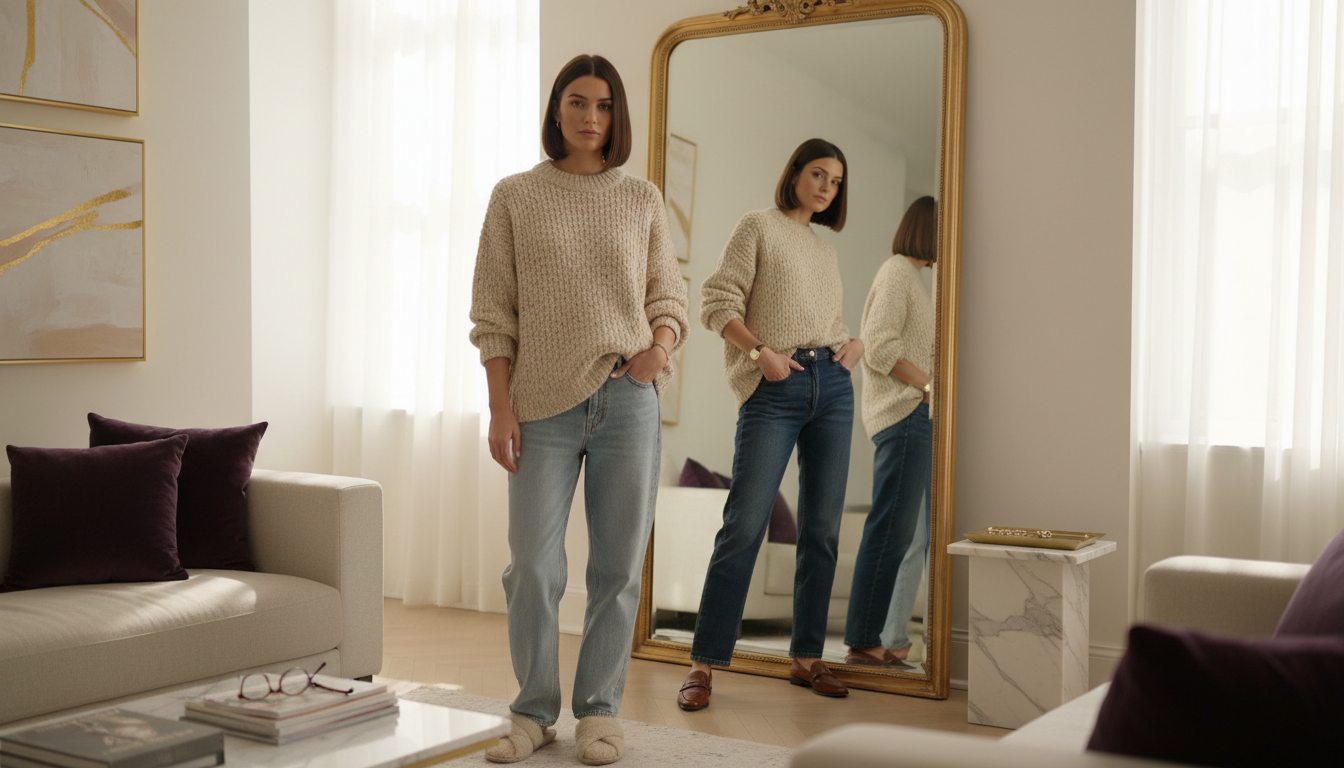
When I talk about rise, I’m talking about the distance from the crotch seam up to the top of the waistband. On a product page, you’ll usually see this measured in inches, often buried in the size chart. That single number quietly decides how long your torso looks, where your waist appears, and whether you feel held or squeezed. If your jeans constantly feel “off” even when the size is right, the rise is usually the missing variable.
I like to think of rise as the hinge between your top and bottom halves. A higher rise pulls your visual waist upward, making legs look longer and the torso shorter. A lower rise does the opposite, visually lengthening your torso and shortening the legs. Neither is inherently better; it’s about which direction you need the eye to travel. Once you know that, trend cycles get a lot less stressful.
To decode rise quickly when shopping online, I use a simple framework:
- 7–8”: low-rise
- 8–10”: mid-rise
- 10–12”+: high-rise
Measure one pair of jeans you like from crotch seam to waistband and compare it to those ranges. That 60-second test immediately filters out most “almost right” options and saves you from random experimenting and avoidable returns.

Measuring from the crotch seam to the top of the waistband gives you the actual rise number, not just the marketing label.
High-Waisted (10-12”+) - Who it flatters, styling benefits, common issues
High-waisted denim usually means a 10–12” rise that hits at or above your natural waist. I reach for it when I want longer-looking legs, more midsection support, and a clean line under shorter or tucked tops. On many bodies, especially those with softer stomachs or curvier hips, a well-cut high rise feels like a built-in corset without the restriction. It’s also helpful when you like cropped knits or shorter jackets but still want coverage.
High rise tends to flatter:
- Long torsos that benefit from shifting the waistline up
- Hourglass and pear shapes that like waist definition
- Rectangles who want a more defined midsection
The benefits are real, but so are the pitfalls. If you have a short torso, a very high rise can eat all your vertical space and make you feel boxy or crowded under the bust. On straighter waists, high-rise jeans often gape at the back or dig at the front because the waistband curve is wrong. I see a lot of muffin top complaints that are actually “too-tight waistband plus rigid fabric,” not a body issue. Solve it with a slightly lower high rise (9.5–10”), some stretch content, and a fit check: you should be able to sit without bracing or unbuttoning.
For ROI, treat high-rise jeans as a workhorse, not a trend piece. One or two pairs in a rise that truly suits your torso can cover most outfits with cropped, tucked, and slightly shorter tops, reducing the number of silhouettes you need in your closet.
Mid-Rise (8-10”) - The versatile middle ground
Mid-rise denim, usually 8–10”, is the quiet hero in most wardrobes. It sits somewhere between your hip bones and your natural waist, which is why it works on a wide range of torso lengths without announcing itself. I lean on mid-rise when I want jeans that pair with almost any top length and don’t require much thought in the morning. If you feel unsure about high waisted vs low waisted, mid-rise is the safest anchor.
Mid-rise tends to flatter most body types because it honors your natural proportions instead of aggressively shifting them. It’s friendly to short torsos (no ribcage digging) and long torsos (without exaggerating length the way very low rises can). Rectangles, apples, and athletic builds often feel especially comfortable here because there’s less pressure on the narrowest point of the waist. It’s also forgiving if your weight fluctuates a bit.
To maximize the versatility, I like this simple structure:
- One 8.5–9” everyday pair for tees and relaxed knits
- One 9.5–10” slightly higher mid-rise for tucking and polished outfits
Common issues with mid-rise are usually less dramatic: a bit of back gaping on curvier hips, or a waistband that cuts across the softest part of the stomach. Look for contoured waistbands and fabrics with slight stretch, and avoid sizing down “for snatch” if it compromises comfort. When you get the right mid-rise dialed in, you dramatically cut decision fatigue because nearly any top you own can meet it in a clean line.
Low-Rise (7-8”) - Comeback styling, who can wear it, modern approach
Low-rise denim typically lives in the 7–8” range, sitting several centimeters below your natural waist. The Y2K version exposed a lot of skin and worked on very few real bodies; the modern version can be far softer and more intentional. When I use low-rise now, it’s to create ease and nonchalance, not to showcase my hip bones. Think slouchy tailoring, relaxed knits, and a bit of negative space, rather than extremes.
Low-rise can work beautifully when you’re clear on the trade-offs. It visually lengthens the torso and shortens the leg line, which is ideal if you feel “all legs” or have a very short torso you’d like to balance. Athletic or straighter hips often find low-rise easier to fit because there’s less curve required through the waistband. If you have a fuller lower belly or high-hip fullness, the wrong low-rise can create bulging or constant adjusting, which is a sign to adjust the rise or the fabric, not your body.
To wear low-rise in a modern way, I focus on:
- Slightly slouchy cuts, not tight, rigid skinnies
- Higher-coverage tops that meet or lightly overlap the waistband
- Longer outer layers (blazers, trenches) to extend the vertical line
Common issues include underwear peeking when you sit, waistbands cutting across softer areas, and feeling underdressed. Solutions: choose a 7.5–8” “low-mid” rise instead of ultra-low, size for comfort when sitting, and pair with high-rise underwear or bodysuits for clean coverage. Treated this way, low-rise becomes a deliberate styling tool, not a risky trend you regret in photos.
For Short Torsos - Best rise choices to avoid truncating
If you have a short torso, your ribs, waist, and hips sit close together vertically. High-waisted jeans often look tempting because they promise long legs, but they can quickly crowd your upper body. When the waistband touches or nearly reaches your ribcage, there is no space left for your top to breathe. You end up feeling compact, even if your legs look endless. I see many short-torso clients who think they “can’t wear tucks,” when the rise is actually the problem.
For short torsos, I usually work within this range:
- 8–9” as the sweet-spot daily rise
- 9.5” max for anything labeled high-rise
- Avoid 11–12”+ unless the jean is intentionally slouchy and worn lower
Mid-rise is your best friend because it lets your natural waistline sit in a visually balanced spot without swallowing your torso. You still get leg length from choosing the right inseam and shoe, instead of asking the waistband to do all the work. If you do want a high-waisted vibe, I look for jeans with a softer waistband and a slightly relaxed fit through the rise, then style them with shorter but not cropped tops that end just at the waistband. This creates the illusion of a neat waist without cutting your body into tiny sections.
The ROI here is comfort and fewer returns. Once you stop forcing very high rises, your tops drape more cleanly, jackets sit better, and you can tuck without feeling like your bra and waistband are competing for space.

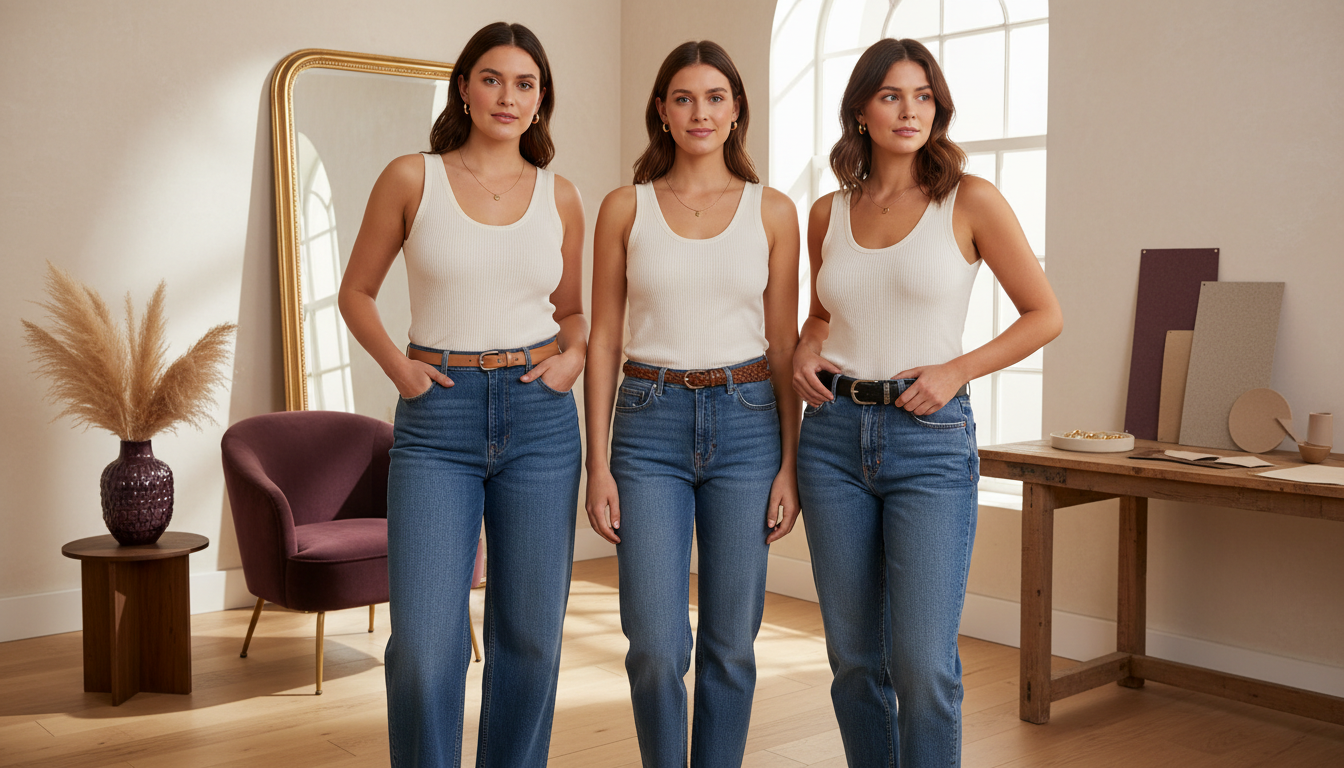
The same rise can sit very differently on a short torso versus a long torso, changing how your whole frame reads.
For Long Torsos - Using rise to create balance
With a long torso, there’s more space between your bust, waist, and hips, and legs can feel comparatively shorter. Here, the right rise lets you visually “borrow” length from your torso and hand it to your legs. I often reach for higher rises, not because they are always more flattering, but because they strategically shift your waist upward. The goal is an easy, vertical line from shoulder to toe.
For long torsos, this framework works well:
- 9.5–11” as the everyday rise range
- A true high-rise (10.5–11.5”) for leg-lengthening looks
- Reserve 8–9” mid-rise for relaxed or low-key days
High-waisted vs low waisted becomes a very practical choice for you. High-rise jeans let crop tops and shorter jackets feel balanced and intentional instead of overly revealing. Mid- to high-rise also supports tucking without leaving a long expanse of torso above the waistband. If you love low-rise, I’d pair it with a platform shoe or a slight heel and tops that end at or just below the high hip, so your leg line isn’t overly shortened.
In terms of ROI, one or two well-cut high-rise pairs can replace several “almost right” mid-rises that never quite balance your frame. You’ll notice photos feel more harmonious, and morning outfits come together faster because the proportions start working with you instead of against you.
For Different Body Types - Rise recommendations for rectangle, hourglass, etc.
Rise interacts with body shape just as much as torso length. When I look at someone in jeans, I’m reading not just where the waistband hits, but how it respects their natural curves. Two people can wear the same 10” rise and have completely different experiences depending on whether they’re more rectangle, hourglass, pear, or apple. So I adjust the jean rise guide by both vertical proportion and silhouette.
Here’s a streamlined approach:
- Rectangle / athletic: You often benefit from definition. A 9.5–11” mid-to-high rise can create a waist curve and anchor tucked or cropped tops. Avoid ultra-tight, ultra-high rises that create fake muffin top where there isn’t much natural curve.
- Hourglass: You typically look great in 9–11” rises that sit exactly at your narrowest point. Prioritize contoured waistbands and avoid very low-rise that cuts across the fullest part of the hip, which can look and feel precarious.
- Pear / triangle: A 9–10.5” rise usually balances best, high enough to clear the widest part of the hip but not so high that it digs into the softer lower belly. Watch for back gaping and choose brands that cut for curves.
- Apple / round midsection: I often like a 9–10” mid-rise that skims the fullest point rather than cinching aggressively at it. Softer waistbands and smooth, supportive fabrics are key.
Matching rise to body type reduces trial-and-error dramatically. Instead of buying five pairs “just to see,” you pre-filter by rise and waistband shape, which saves money, time, and emotional energy in the fitting room or at home.
Styling Each Rise - Top lengths, tucking strategies, footwear pairings
Once the rise is right, styling becomes much easier. I think of each rise as asking for specific top lengths, tucking strategies, and shoes to complete the proportion line. When those three elements agree, outfits look intentional even when they’re simple. This is how you move from “these jeans feel okay” to “this combination looks polished with almost no effort.”
For high-rise (10–12”+), I like:
- Cropped or waist-length tops that end near the waistband
- Full or French tucks with blouses and tees
- Footwear: sleek boots, low to mid heels, or clean sneakers to keep the leg line uninterrupted
For mid-rise (8–10”), almost anything works. Hip-length tees, relaxed sweaters, and shirts that hit mid-hip all pair cleanly. Front tucks give you definition without overexposing; full tucks work if the top fabric is light enough not to bulk. Footwear can be flexible: sneakers, loafers, ankle boots, or sandals all read balanced.
For low-rise (7–8”), I favor:
- Tops that meet or slightly overlap the waistband (no constant pulling down)
- Partial tucks on one side to hint at shape without exposing too much
- Longer outerwear that visually raises the leg line
Match shoes to your rise goal: if a rise shortens your leg, add a bit of height or keep shoes in a similar value to your jeans for a seamless line. This simple mental checklist lets you build outfits faster and reduces those “why does this look off?” mornings.

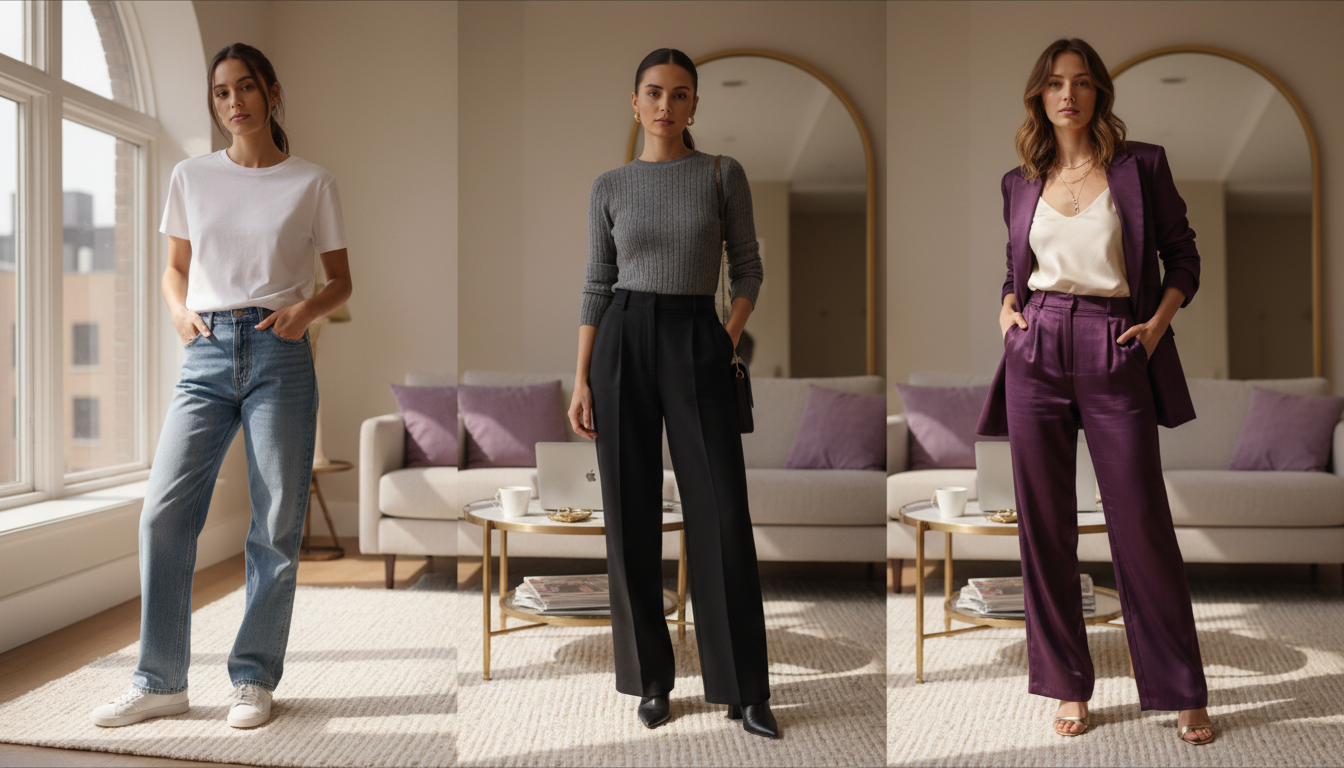
Top length, tucking style, and footwear shift the mood and proportions of each rise from casual to polished.
If you want this clarity translated into exact measurements, brands, and yes-or-no cart calls in real time, I can walk you through it in a single short session so your next pair actually earns its place.
Know your perfect rise, every time
In moments, I map your torso length, body type, and daily outfits into clear rise measurements and brand cues so shopping and mornings feel effortless.

Common Mistakes - Muffin top, gaping, visible underwear
Most jean frustrations are fit and rise issues, not body problems. When I see muffin top, back gaping, or visible underwear, I read them as data points. They’re telling you the rise and cut are misaligned with your shape. Once you know what to look for, you can fix the pattern instead of blaming your body or cycling through endless returns.
Here are the big three:
- Muffin top: Often a too-tight waistband or a rise that cuts through the softest part of your midsection. Try a slightly higher or lower rise so the waistband sits at a smoother spot, and avoid sizing down in rigid denim.
- Back gaping: Common on hourglass and pear shapes in straight-waist jeans. Look for contoured waistbands, “curvy” fits, or a small alteration at the center back instead of constantly pulling your jeans up.
- Visible underwear / exposure when sitting: Usually a sign the rise is too low for your comfort or the seat is cut too shallow. Opt for an extra half inch of rise, fuller coverage underwear, or styles labeled “mid-rise” that measure closer to 8.5–9” in reality.
Treat every problem pair as a lesson in what not to rebuy. Note the actual rise measurement, where it sat on your body, and what went wrong. Over a few purchases, you build your own denim “spec sheet,” which drastically cuts down on guesswork, returns, and that defeated feeling in the mirror.

Common fit issues like muffin top or gaping are usually about rise and cut, not about your body being the problem.
Know your perfect rise, every time
In moments, I map your torso length, body type, and daily outfits into clear rise measurements and brand cues so shopping and mornings feel effortless.