How to Balance Broad Shoulders (For All Genders)
Understanding Broad Shoulders - Inverted triangle body type, swimmer build, athletic frames
When I talk about “broad shoulders,” I’m looking at proportion, not clothing size. Broad shoulders usually mean your shoulder line is noticeably wider than your hips, giving you an inverted triangle or swimmer build. This is common if you swim, lift, climb, or simply have a naturally strong upper frame. On photos, I scan how far the shoulder seams extend relative to the outer hip bones and where the eye lands first.
You might notice you often feel “top-heavy” or that tops fit but bottoms feel visually smaller, even when they’re the right size. Jackets may pull across your shoulders while floating around your hips, or tees that technically fit can make you feel boxy. None of that means your body is difficult to dress; it means most mass-market cuts are designed around a straighter or more balanced frame. Once you understand your structure, you stop blaming your body and start adjusting the silhouettes instead.
The ROI of this awareness is real: fewer random “maybe it’s me” returns, less time spiraling in front of the mirror, and a sharper eye when scrolling product photos. I want you to see your shoulders as an asset that gives presence. My job is to help you shape outfits so that strength reads as intentional and elegant, not overwhelming. From there, every detail we choose will work to harmonize that strong upper line with the rest of your body.
The Styling Goal - Create visual balance between upper and lower body
With broad shoulders, the styling goal is simple: bring your visual weight into balance. That doesn’t always mean hiding your shoulders. It means distributing attention so your frame reads as harmonious from head to toe. When I analyze an outfit, I’m tracking where the eye stops first, second, and third along your body.
For you, the sequence I want is: face and neckline first, then mid-body, then lower half, not shoulders dominating everything. I do that by managing three levers: silhouette, contrast, and detail. Silhouette controls how volume is placed; contrast controls where light and dark create emphasis; detail controls where texture, shine, and pattern draw the eye.
In practice, that often leads to a clear framework:
- Keep the upper body slightly cleaner and more vertical.
- Add or at least match volume in the lower half.
- Place the most noticeable patterns, pockets, or color blocking away from the shoulders.
When this balance is right, outfits feel calmer and more proportional. You’ll notice photos of yourself look more polished with less effort, and shopping becomes more about checking these three levers than guessing. That’s the kind of clarity that saves time in the morning and keeps your cart curated instead of chaotic.
Neckline Strategy - V-necks, scoop necks, open collars (avoid boat necks)
Necklines are the fastest way to influence how broad shoulders read. On a strong upper frame, I reach for shapes that create vertical space and soften that horizontal line. V-necks, open collars, and deeper scoop necks pull the eye down the center of the body, which visually narrows the shoulder span. Even subtle depth matters; the goal isn’t exposure, it’s direction.
Here’s the framework I use when assessing necklines for broad shoulders:
- Favor V-necks (sharp or soft) that end around the bustline or mid-chest.
- Choose scoop necks that are slightly deeper rather than very wide.
- Use open shirts (two buttons undone) to mimic a V shape.
- Be cautious with high crew necks unless the rest of the outfit adds strong lower volume.
Boat necks, wide square necks, and very high, tight crews all stretch a straight line from shoulder to shoulder. On your frame, that exaggerates width and can make your neck look shorter. If you love a higher neckline, I balance it with:
- Longer vertical necklaces or scarves.
- Darker, matte fabric on top with lighter or more detailed pieces on the bottom.
Dialing in necklines has immediate ROI: tops start working harder for you, you can filter product pages much faster, and you stop “almost loving” pieces that subtly fight your proportions. Once you notice how a neckline either cuts across or flows down your frame, you’ll understand exactly why certain tops have always felt off.

Sleeve Solutions - Raglan, set-in, avoid cap sleeves and heavy shoulder details
Sleeves can quietly make or break shoulder balance. With broad shoulders, I want the seam and shape to respect your natural structure instead of extending or chopping it. Raglan sleeves, where the seam curves from collar to underarm, soften the shoulder line beautifully. Classic set-in sleeves that sit right at your shoulder edge (not beyond) also work well because they align with what you already have.
Cap sleeves and strong puff or structured shoulders are where things usually go wrong. Cap sleeves end at the widest point of the shoulder and upper arm, so they visually widen and cut your arm in an awkward spot. Overbuilt shoulder details, thick epaulettes, or dramatic shoulder pads stack extra width where you have plenty already. On an inverted triangle frame, these details quickly shift the look from powerful to top-heavy.
Here’s the decision checklist I use for you:
- Check where the shoulder seam lands; it should meet, not hover past, your natural edge.
- Prefer soft or relaxed sleeves that drape slightly down the arm.
- Let any volume in the sleeve fall closer to the wrist than the shoulder head.
Three-quarter and long sleeves that narrow at the cuff can also refine your line, especially when paired with an open neckline. This level of precision sounds small, but it pays off: you’ll instantly spot which tops and jackets are worth trying, instead of ordering three options that all subtly widen your frame and then returning them.

Adding Lower Body Volume - Wide-leg pants, A-line skirts, patterns on bottom half
Because your shoulders already carry presence, I like to let the lower half rise to meet them. That doesn’t mean bulky or shapeless; it means intentional volume that balances your proportions. Wide-leg pants, straight or slightly flared jeans, and A-line skirts all help visually broaden the hip area so your shoulders feel integrated into the whole silhouette. The eye reads the outfit as a considered shape rather than a strong top sitting on narrow lines.
I often build a simple rule set for clients with broad shoulders:
- On top: slimmer to gently relaxed fits.
- On bottom: at least matching, often greater, volume than on top.
- Patterns: keep stripes, florals, and bold prints more active on the lower half.
High-rise wide-leg trousers, pleated front pants, fuller midi skirts, and even relaxed cargo or utility pants can be excellent tools. For denim, I usually skip ultra-skinny cuts and move into straight, kick-flare, or wide-leg silhouettes. If you prefer slim bottoms for comfort, then I compensate with:
- Longer hemlines on top to skim the hips.
- Stronger visual interest around the waist or hip area.
Once you internalize this, shopping speeds up dramatically. You’ll stop fighting for the “perfect top” and instead recognize that what your wardrobe is missing might be structured wide-leg pants or an A-line skirt that balances the strong line you naturally have above.

Strategic Details - Where to place visual interest (hips, not shoulders)
Details decide where people look first. On broad shoulders, I rarely let the most dramatic detail sit right at the shoulder head. Instead, I shift attention to the mid-body and hips. That can be as subtle as a belt in a contrasting tone or as bold as patterned trousers. When I review an outfit, I literally track what my eye notices in the first two seconds; those are the details controlling your proportions.
Think of details as levers you can pull:
- On top: keep embellishment, heavy ruffles, and shiny textures minimal near the shoulders.
- At the waist: use belts, wrap details, or interesting closures to draw the eye inward.
- On the bottom: pockets, pleats, prints, or tonal blocking help build presence.
Necklaces, scarves, and earrings also play a role. I prefer vertical or mid-length necklaces that echo that downward movement we want from necklines. If you love statement earrings, I keep shoulder lines clean so the focus remains on your face. For bags, crossbodies that sit at the hip or structured totes carried at your side help reinforce the lower half visually.
When you place details with intention, your outfits start doing the work for you. You no longer feel compelled to “hide” your shoulders, because the overall look is balanced and considered. That translates into quicker yes/no decisions in fitting rooms and less second-guessing before events.
Outerwear - Unstructured blazers, open cardigans, avoid shoulder pads
Outerwear can either exaggerate broad shoulders or refine them beautifully. I like to treat jackets and coats as framing devices for your upper body. Unstructured or softly tailored blazers that follow your natural shoulder without heavy padding create definition without adding extra width. When worn open, they create two vertical lines that visually lengthen and narrow your torso.
Cardigans and light coats are especially useful. I look for:
- Fluid fabrics that drape rather than stand stiffly.
- Minimal shoulder padding or none at all.
- Hem lengths that hit around hip to mid-thigh to echo your lower volume.
Trench coats with softer shoulders, collarless coats, and wrap-style outerwear can be excellent for you. I’m more cautious with sharp-shouldered blazers, moto jackets with thick shoulder quilting, and anything that has exaggerated epaulettes. Those details stack right on top of your broad frame and can make you feel armored rather than intentional.
The way you wear outerwear also matters: leaving blazers and coats open, rolling sleeves slightly to show wrist, or adding a belt at the waist all pull focus inward and downward. Once you find two or three outer layers that balance your line, they become high-ROI pieces. You’ll throw them over simple basics and instantly feel more put-together without rethinking the whole outfit.
For Women - Specific styling tricks
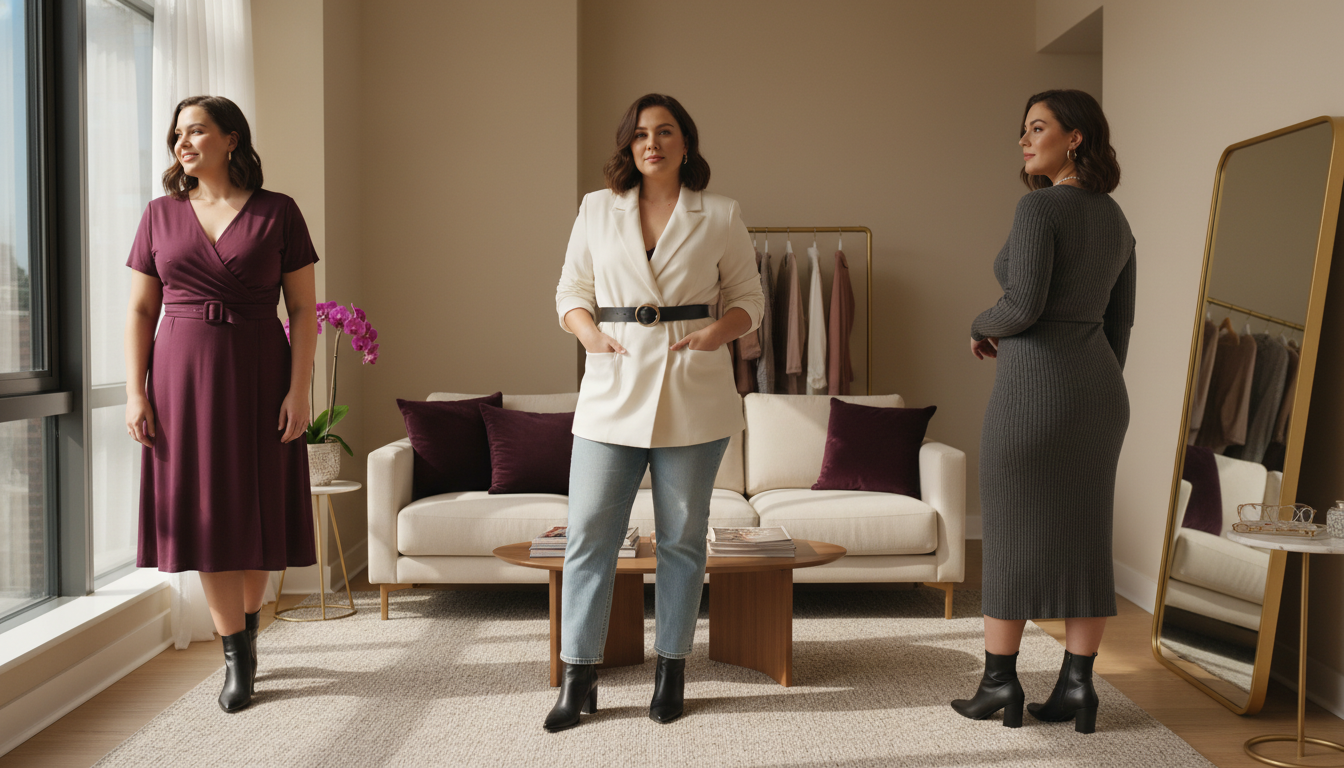
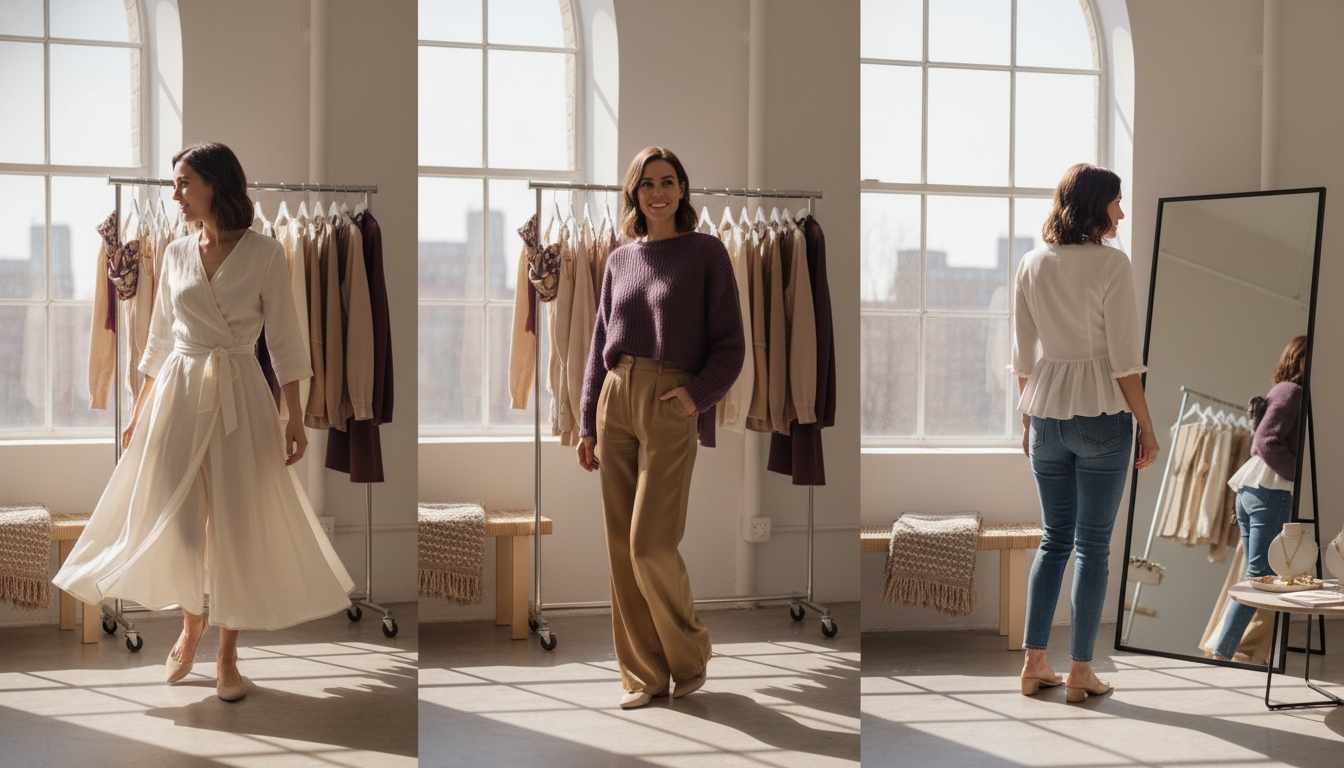
For women with broad shoulders, small shifts in shape create a big payoff. I like to lean into softly structured pieces that emphasize your waist and build some movement around the hips. Wrap tops and dresses are powerful for you because they create diagonal lines across the torso and define the waist without clinging to the shoulders. Skater, A-line, and bias-cut skirts all help the lower half visually echo your upper presence.
Here are a few reliable moves I use often:
- Choose dresses with V or surplice necklines and fuller skirts.
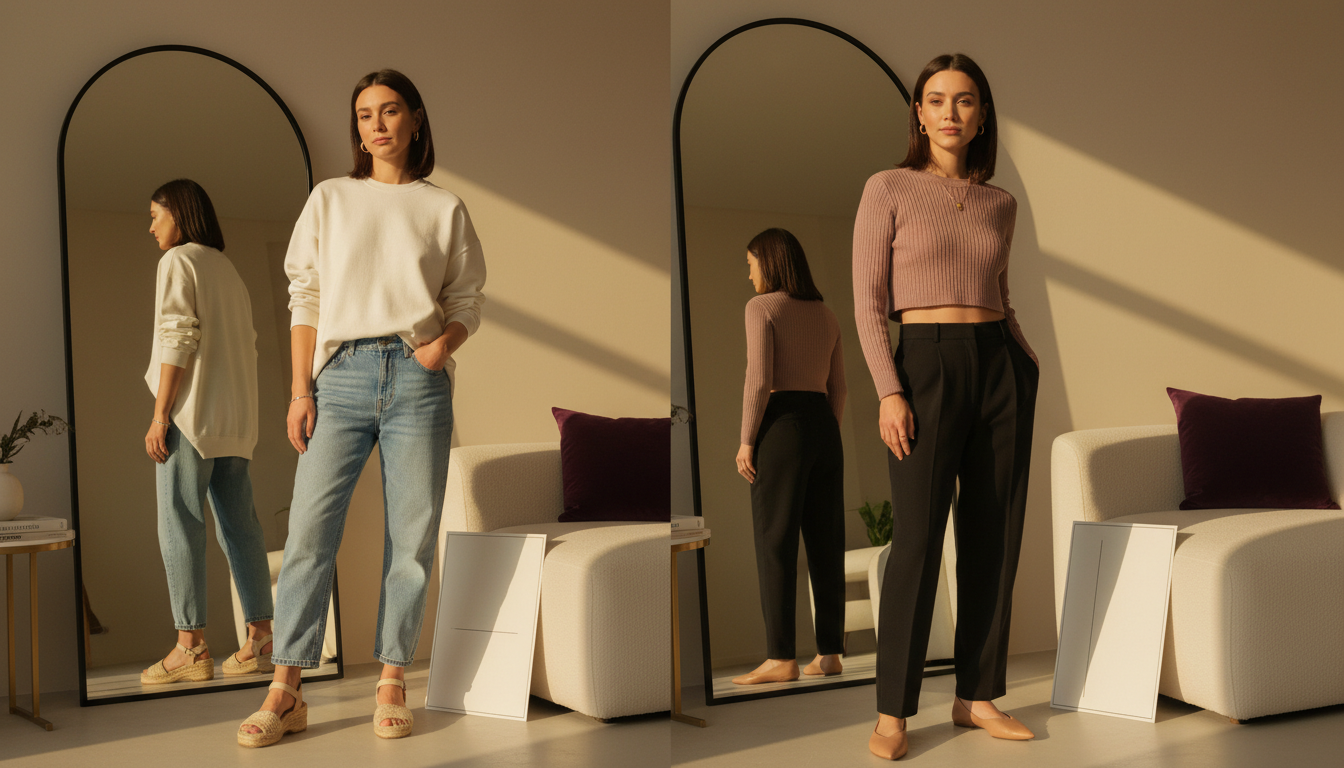
- Pair slim knits or tanks with wide-leg trousers or pleated midi skirts.
- Use mid-width belts to anchor the waist, not very tiny ones that disappear.
- Favor fluid fabrics on top and slightly weightier fabrics on bottom.
For tops, I usually keep shoulder details quiet. Dolman sleeves that start lower on the arm can work if the fabric is soft and not bulky. If you love blouses, look for gathers closer to the neckline rather than puff at the shoulder head. Denim-wise, straight, flare, and wide-leg shapes generally feel more harmonious than jegging-tight fits.
The ROI is emotional and practical: you stop battling dresses that feel “all shoulder” and start recognizing the silhouettes that always make you feel balanced. That means fewer last-minute outfit changes before a date or meeting, and more confidence that what you ordered will actually flatter your frame.
For Men - Specific styling tricks
For men with broad shoulders, the aim is to keep that strength but avoid the footballer-in-a-tee effect. I prioritize shirts and knitwear that skim, not choke, the upper body. Slightly tapered button-downs, open over a tee, create that vertical line we want. Polo shirts with a soft collar and a deeper placket are also excellent; they frame the chest without adding width at the shoulder seam.
A few clear guidelines I use:
- Pick shirts where the shoulder seam hits right on your shoulder edge, not beyond.
- Avoid tiny cap-like sleeves on tees and extreme muscle fits that hug only the chest and arms.
- Pair closer-fitting tees or henleys with straight or relaxed trousers, not painted-on skinnies.
- Use jeans and chinos with some leg volume: straight, athletic taper, or relaxed.
Jackets are key. Unpadded bomber jackets, chore coats, and softer blazers open at the front keep your frame powerful but approachable. I’ll usually skip heavy shoulder padding and super-structured suiting unless your lower half is equally substantial. For casual looks, a slightly heavier sneaker or boot at the base helps visually ground your upper build.
Once you adopt these tricks, shopping gets easier and faster. You’ll know exactly which product shots to swipe past, and you’ll see why some “slim” cuts feel off even if they technically fit. That clarity is what turns broad shoulders from something you manage into a feature you dress with intention.

If you want these principles translated into simple, personalized rules you can use in under a minute each morning or before you check out online, I can guide you there.
Turn broad shoulders into a balanced asset
In one focused session, I map your proportions and translate them into clear rules for necklines, sleeves, and silhouettes so getting dressed feels fast and certain every day.

What to Avoid - Horizontal stripes on top, embellished shoulders, tight bottom halves
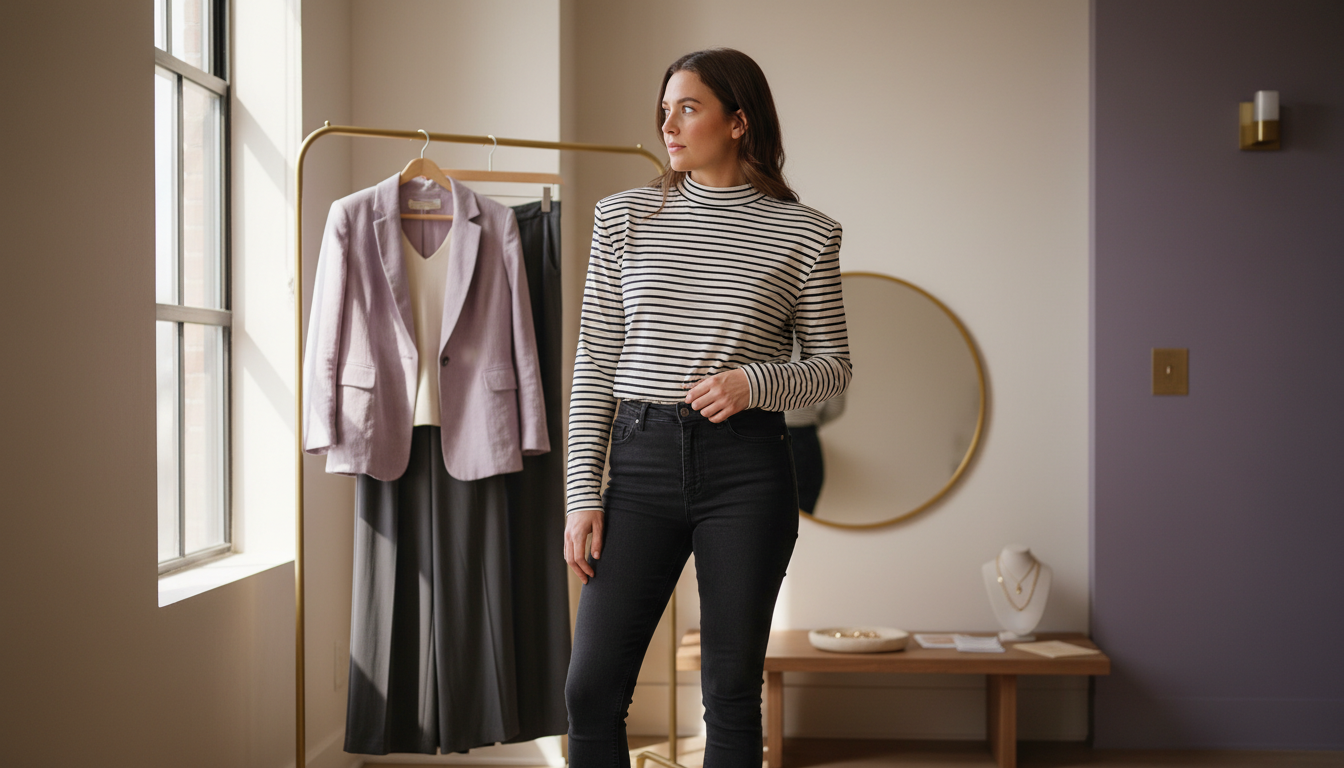
Avoid lists are powerful for saving time and money. With broad shoulders, there are a few consistent culprits that distort your proportions. Horizontal stripes across the chest and shoulders widen the area visually, especially in high contrast colors. Embellished shoulders, strong epaulettes, or heavy ruffles at the shoulder head concentrate attention exactly where you already have volume.
The other major trap is pairing all that upper presence with a very tight, narrow lower half. Sprayed-on skinny jeans, pencil skirts with no movement, or leggings styled as pants without enough top length can make your proportions feel top-heavy. It’s not that you can never wear slim bottoms; it’s that the rest of the outfit needs to compensate with longer hemlines, darker colors on top, or more visual weight at the shoes.
Here’s the quick mental checklist I want you to run before buying:
- Does this top create a straight, wide line across my shoulders?
- Is the most dramatic detail sitting on my shoulder head?
- Are my bottoms significantly slimmer than my top without added balance anywhere else?
If you hit yes on any of these, pause and reconsider. Training your eye around these “no” patterns dramatically cuts down on disappointing orders and stressful mornings. You’ll curate a wardrobe where nearly everything respects your frame, instead of fighting it.
Turn broad shoulders into a balanced asset
In one focused session, I map your proportions and translate them into clear rules for necklines, sleeves, and silhouettes so getting dressed feels fast and certain every day.