The Best Silhouettes for Rectangle Body Types
Rectangle Body Characteristics - Straight silhouette, similar shoulder/hip width, less defined waist
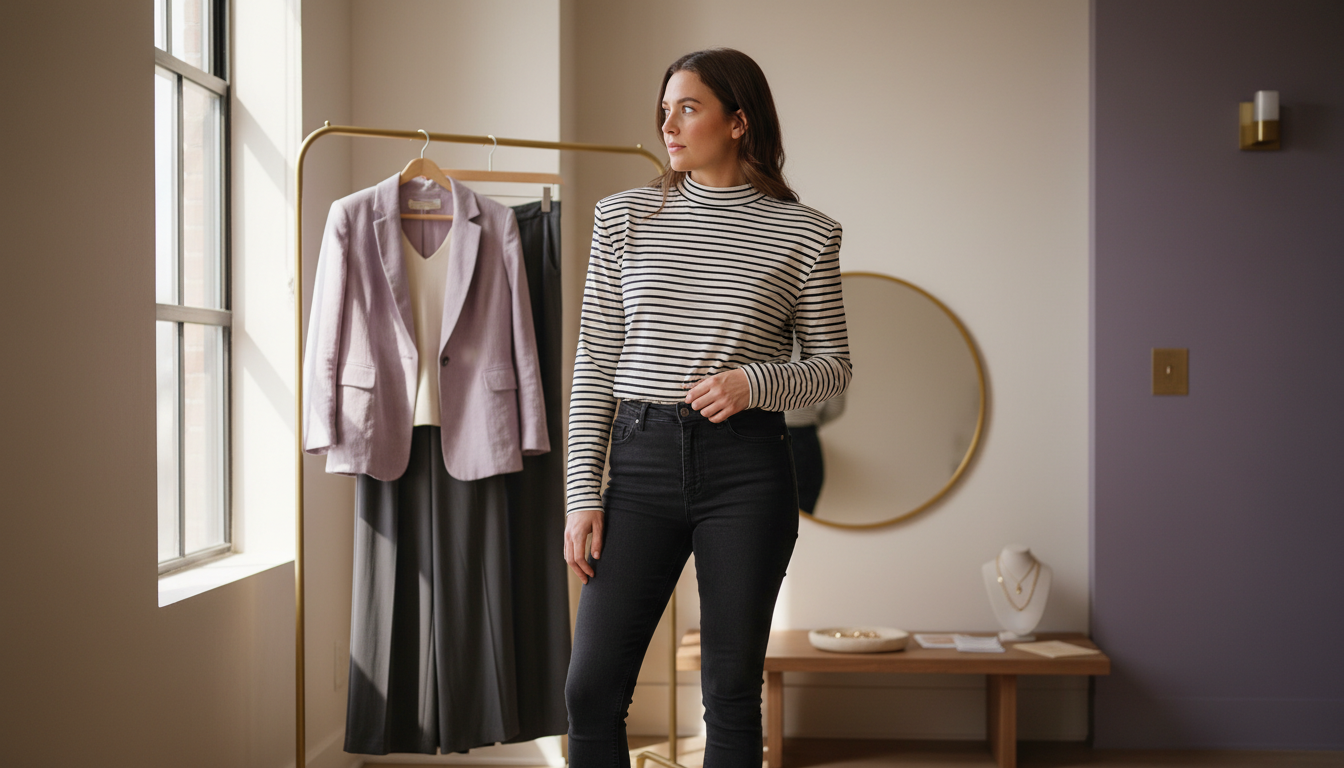
When I talk about a rectangle body shape, I’m looking for a straight, streamlined silhouette. Shoulders and hips sit at a similar width, with very little inward curve through the waist. You might feel like tops either hang straight down or cling in one flat line rather than nipping in and out. Many people call this an athletic or boyish build, but what I see is clean lines and a naturally minimal frame.
You might notice a few recurring fit issues. Jeans gape at the back because your waist isn’t as nipped in as the pattern assumes. Bodycon dresses feel more “column” than hourglass, even when they technically fit. Oversized pieces can quickly read boxy, while super-fitted styles may feel like they highlight the lack of curve instead of creating one. None of this means your body is hard to dress; it just means most clothing is drafted around curves you don’t naturally have.
The beauty of a rectangle shape is predictability. Fabrics usually skim without pulling, and your proportions can handle structure, layering, and clean tailoring very well. My goal is to help you see your body as a strong base for shape-building, not a problem to fix. Once you understand how to manipulate seams, volume, and placement, you can “draw in” curves visually whenever you want. That’s the skill that makes shopping calmer, returns lower, and outfits feel intentional instead of random.
The Styling Goal - Create curves and waist definition without looking boxy
For a rectangle body, the styling goal is simple: create the illusion of a defined waist and gentle curves while keeping your lines sleek. I’m not trying to turn you into an hourglass; I’m using cut and fabric to suggest shape where the body itself is straighter. When this is done well, people notice that you look balanced and put-together, not that you’ve used tricks. The outfit just feels harmonious.
I work with three levers: waist definition, controlled volume, and directional lines. Waist definition means anything that visually “interrupts” that straight column: belts, cinched seams, wrap ties, or strategic cropping. Controlled volume is about where we add fullness so it reads as curve, not bulk, typically around the hips or just under the bust. Directional lines guide the eye in or out, like diagonal seams, wrap fronts, and shaped princess seams.
A helpful mental checklist when you get dressed:
- Where is my waist in this outfit? If you can’t see it, define it.
- Where is the volume? Keep it focused, not everywhere at once.
- Where do the lines lead the eye? Aim them toward the waist or outward at the hips.
When you use this framework consistently, two things happen. First, you stop buying pieces that only reinforce your straightness in a way you don’t want. Second, your mornings speed up because you can quickly diagnose why an outfit feels off and correct it instead of starting over.
Winning Silhouettes - Belted styles, peplum, A-line, wrap, fit-and-flare
For a rectangle body, certain silhouettes reliably do the heavy lifting so you don’t have to overthink every outfit. Belted styles are the most straightforward: they literally create a waist where garments might otherwise fall straight. I like belts positioned at your natural waist or slightly above, never sitting low on the hips, which only emphasizes straightness. Look for dresses, coats, and jumpsuits with built-in ties or belt loops so the cinch feels integrated, not like an afterthought.
Peplum cuts are another strong ally. A subtle flared panel starting at or just above the waist adds volume over the hips, instantly suggesting curves. A-line shapes work in a similar way from the waist down: they skim the waist and open gently over the hips without clinging. Wrap silhouettes use diagonal lines to pull the eye inward at the waist and outward at the hip, creating movement and softness over a straighter torso.
Fit-and-flare is the most “set it and forget it” structure. Fitted through the bodice, defined at the waist, and then flaring over the lower body, it softens a rectangle frame without feeling childish if you choose clean fabrics and modern lengths. When you’re shopping, scan product photos and ask: Does this silhouette get narrower at the waist and then widen elsewhere? If yes, it’s worth a try-on. Over time, favoring these shapes shrinks your return rate because you’re no longer gambling on column styles that rarely deliver the shape you want.

Strategic Details - Waist emphasis, hip volume, textural interest
Once the base silhouette is right, details do the quiet refining. Waist emphasis can come from belts, elastic channels, drawstrings, seaming, or even color-blocking. I like pieces where that waist detail is built in: a trench with a structured belt, a blouse with a sewn-in tie, or trousers with subtle pleats leading into a fitted waistband. Each of these gives the eye a clear “pinch point” in the middle of your body.
To build out the illusion of hips, I use controlled volume. That might be gentle pleats at the front of trousers, patch pockets near the hip, or a peplum starting at the waist. Even a soft A-line skirt with a bit of swish adds the suggestion of curve without being fussy. The key is restraint: one area of volume at a time. If your shoulders are already straight and broad, keep them cleaner while you add interest lower down.
Texture is a powerful but often ignored tool. On a rectangle shape, pairing a smoother, more fitted top with a textured bottom (think twill, boucle, ribbed knit, subtle quilting) helps ground the look and visually fill out the lower half. You can reverse it too: a textured peplum top over sleek trousers. Ask yourself:
- Where is the focal point? Ideally around the waist and hips.
- Is texture balanced? One main textured area is enough.
These micro-decisions seem small, but they stack. The more your clothes do this shaping work automatically, the less you second-guess every mirror check and the fewer “meh” items linger in your closet.

Tops That Work - Crop tops, peplum, ruffles, diagonal lines
With tops for a rectangle body, I’m always thinking about where the hem hits and how the fabric moves around your waist. Crop tops that meet the top of high-rise bottoms are incredibly effective. They cut the visual column and place the focus right at your narrowest point, without needing to bare much skin. Even a slightly shorter sweater with a front tuck can mimic this effect and prevent that long, straight torso look.
Peplum tops, when clean and modern, give you both waist definition and hip volume in one piece. Choose versions that start the flare at your natural waist, not low on the high hip, or the proportion gets lost. Ruffles and soft draping can work well too, especially placed diagonally or across the bust and shoulder line. They soften the straightness and add a bit of romantic curve, as long as they don’t overwhelm your frame.
Diagonal lines are especially powerful for you. Wrap tops, surplice necklines, asymmetrical hems, and angled seams break up the vertical column and guide the eye inward. When you shop or build outfits, scan your top and ask:
- Where does this end on my torso? Aim for the waistline, not mid-hip.
- What direction do the lines flow? Diagonal or inward-curving seams are ideal.
Over time, you’ll notice that simple tees and long straight sweaters feel “off” because they ignore your styling goal. Swapping even a few of them for cropped, wrapped, or peplum shapes will immediately improve outfit balance and make jeans-and-a-top days feel more intentional.
Bottoms That Work - Wide-leg pants, A-line skirts, tapered trousers
For bottoms, I use shape to build the curve your body doesn’t naturally draw. Wide-leg pants are excellent on a rectangle frame when the waist is defined. Look for high-rise, flat-front or lightly pleated styles that fit snugly at the waist, then fall in a clean line from hip to hem. The contrast between a narrower waist and an easy, flowing leg visually rounds out the lower half.
A-line skirts are another reliable staple. Midi lengths that skim the body and open gently create movement and a sense of volume without heaviness. Pair them with a fitted or cropped top and you instantly get that waist-and-hip contrast. If you prefer trousers, tapered styles with a bit of room in the thigh that narrow at the ankle can also work beautifully, especially when paired with a slightly shorter or tucked-in top.
I like to keep a simple structure in mind:
- Waist: High or mid-high rise with a secure, defined waistband.
- Hip: A hint of volume via pleats, drape, or soft fabric.
- Leg: Either a clean wide leg or a gentle taper, not a rigid tube.
Avoid bottom shapes that are straight up and down from waistband to hem; they just repeat your natural line and miss the chance to add shape. When you commit to bottoms that help with shaping, you’ll notice try-ons get faster and your “bad buy” rate drops because almost every top you own sits better over a defined, balanced base.
Dresses - Wrap dresses, belted styles, textured fabrics
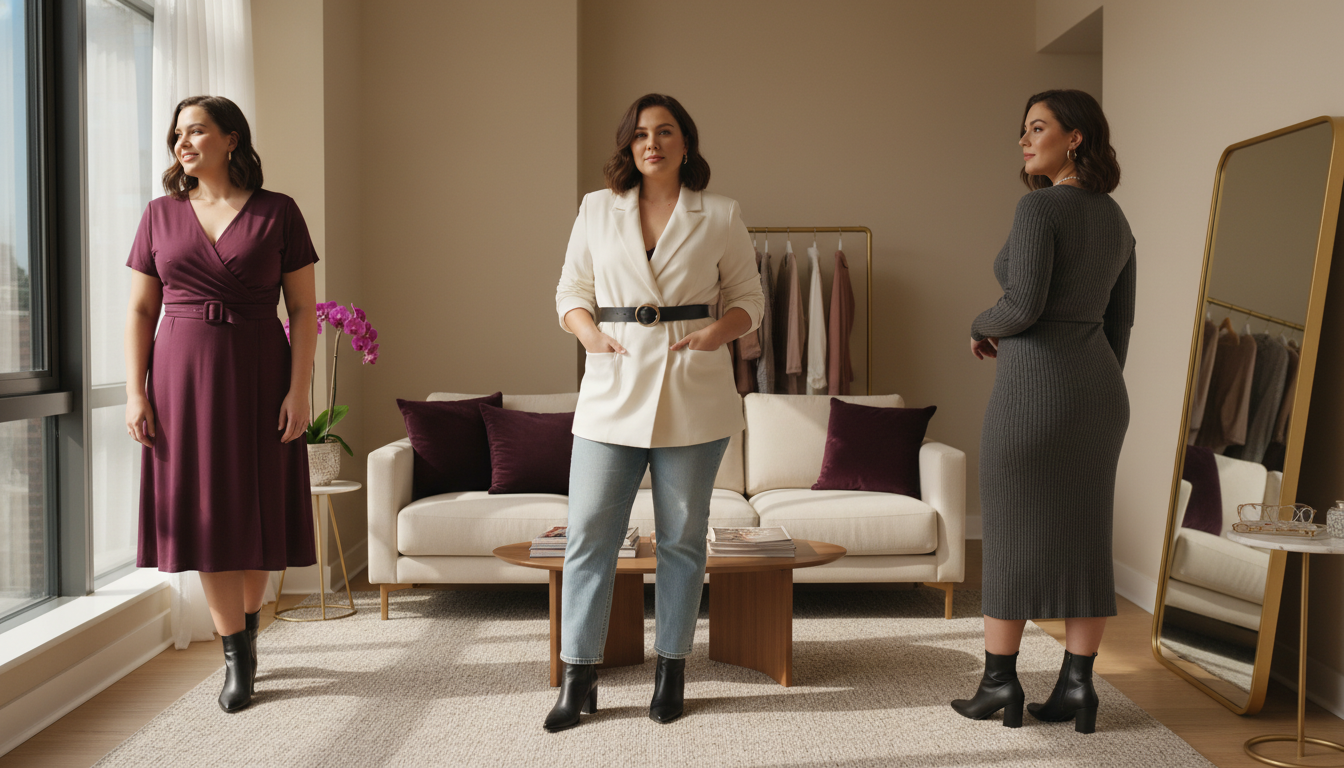
Dresses are where you can create the most impact with the least effort on a rectangle body. Wrap dresses are my first recommendation because they handle three jobs at once: they cinch the waist, create diagonal lines, and add soft volume over the hips. Look for versions that tie at your natural waist, not on the lower hip, and choose fabrics with enough weight to drape rather than cling. Jersey, soft crepe, and matte satin often work well.
Belted dresses are the next easiest option. Shirt dresses, trench-inspired pieces, and tailored styles with a structured belt instantly turn a straight torso into a more sculpted shape. I prefer belts in the same color as the dress for sophistication, or a slight contrast if you want to highlight the waist more clearly. Fit-and-flare cuts, as we covered earlier, are also ideal: fitted bodice, defined waist, then a skirt that opens up.
Textured fabrics matter more in dresses than most people expect. On a rectangle frame, a completely smooth column can emphasize straightness, while texture builds visual depth. Consider:
- Subtle ribbing in knit dresses to suggest shape.
- Jacquard, boucle, or crepe that holds a gentle structure.
- Tiered or paneled skirts that create movement.
If you keep a small rotation of these silhouettes in versatile colors, event dressing becomes far less stressful. You’ll know which shapes deliver instant polish, so you spend less time panic-ordering risky styles before a wedding or work event.
What to Avoid - Shapeless oversized, straight column dresses, matchy sets
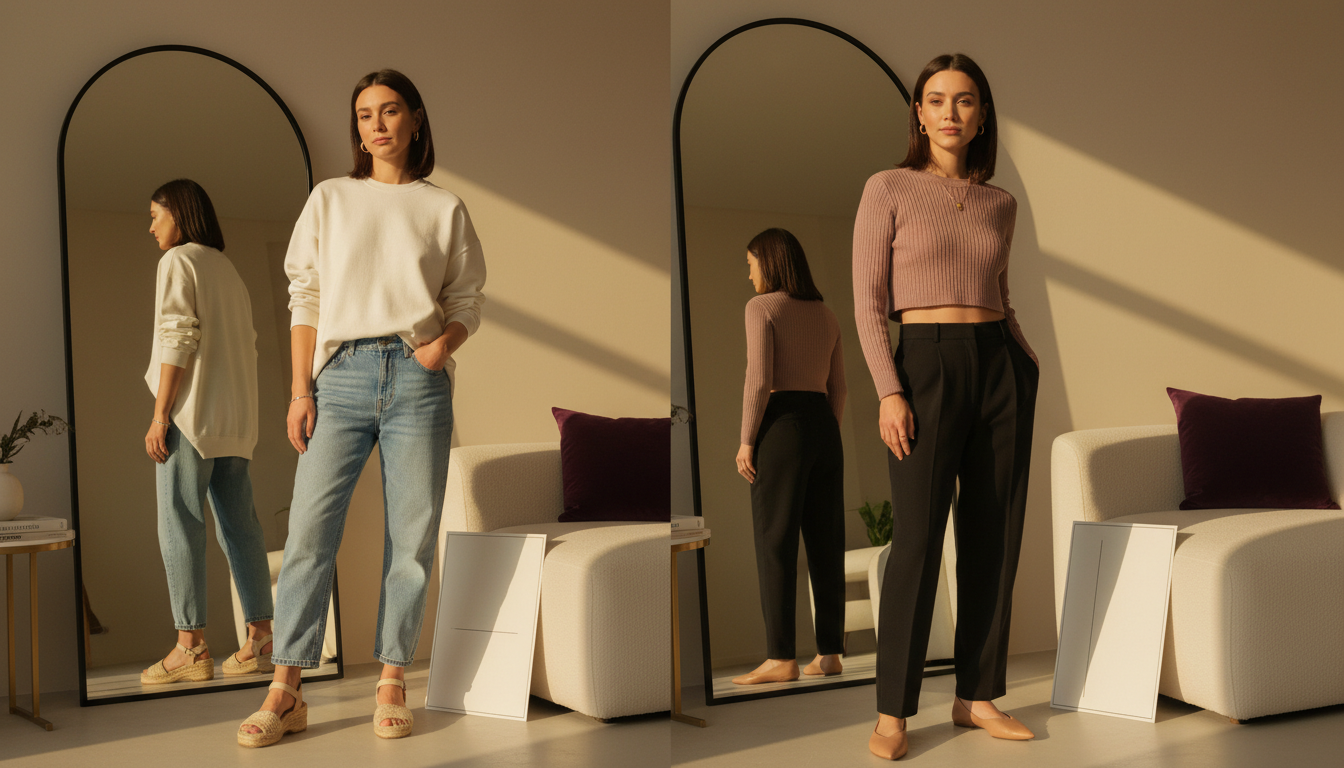
I’m not interested in strict rules, but there are categories that rarely serve a rectangle body when your goal is more shape. Shapeless oversized pieces are the biggest culprit. Long, boxy sweaters, drop-shoulder sweatshirts, and huge T-shirts that extend past the hips tend to swallow your frame and exaggerate the straightness. If you love an oversized element, balance it with a defined waist or a slimmer counterpart.
Straight column dresses are another style I approach carefully. They’re usually cut to fall in one line from shoulder to hem, which aligns with your natural structure but doesn’t create contrast. On you, that often reads as “tube” rather than “chic minimalism,” especially in very smooth fabrics. If you wear them, add a belt, a cropped jacket, or interesting texture to build dimension. Otherwise, they leave styling potential on the table.
Matchy sets can also be tricky. When a top and bottom are the same color, fabric, and cut, they create a single uninterrupted column. For many rectangle bodies, that erases the waist completely. Instead of skipping sets entirely, modify them:
- Tuck or tie the top to reveal the waistband.
- Add a belt in a similar tone to carve out a waist.
- Swap one piece (top or bottom) for a contrasting shape.
Being honest about these pitfalls saves you money and mental energy. You’ll stop chasing aesthetics that look appealing on the hanger or on a different body type but consistently disappoint when they arrive at your door.

If you’re ready to stop guessing what works on your body and start dressing with quiet confidence, I can turn everything you’ve learned here into a personalized, done-for-you plan in days, not months.
Turn your shape into a styling superpower
In under a week, I’ll translate your body structure into clear outfit rules, curated picks, and faster morning decisions so getting dressed feels calm and confident.

Outfit Formulas - 5 go-to combinations for rectangle bodies
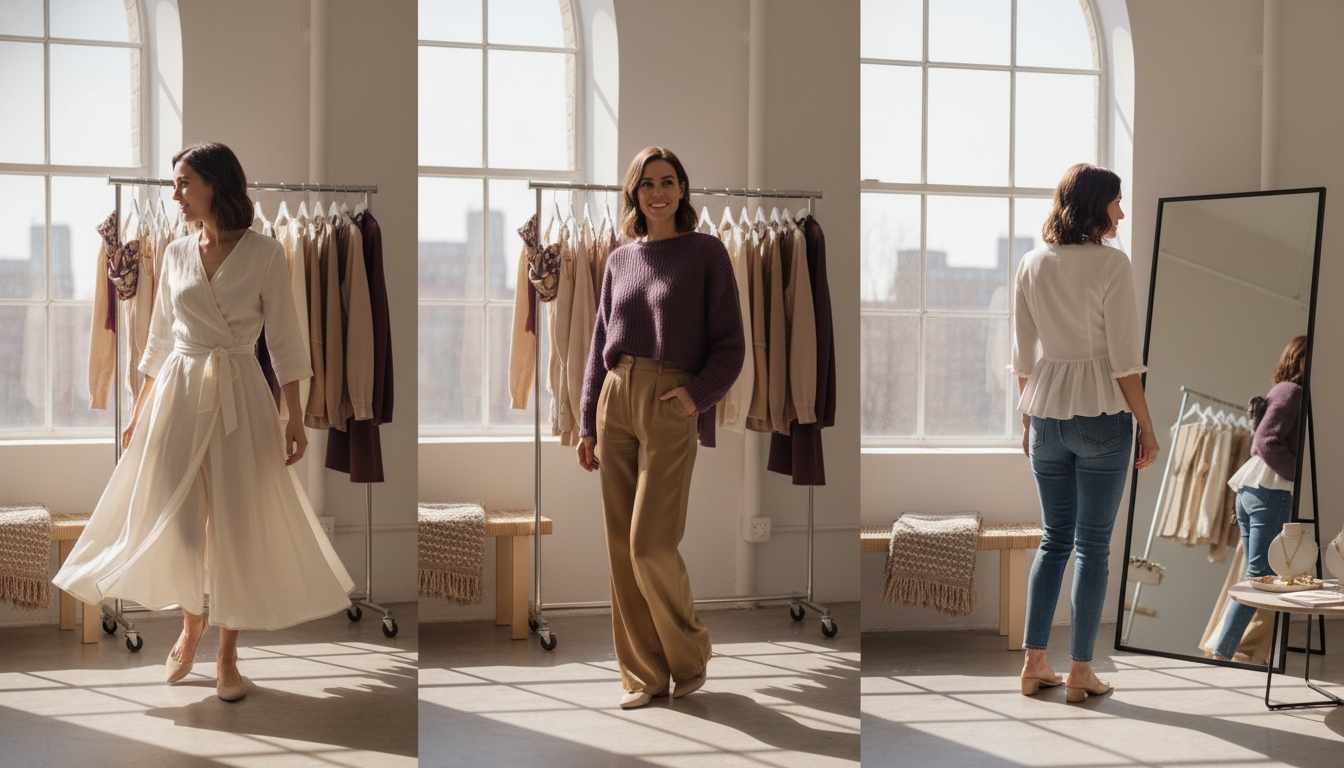
Outfit formulas are how I turn all this theory into fast, repeatable decisions. I want you to be able to get dressed in under five minutes and still feel considered. For a rectangle body, the best formulas repeat the same structure: defined waist, interest around the hips or skirt, and clean lines everywhere else. Here are five combinations I return to often.
- High-rise wide-leg trousers + cropped knit or tee + structured belt. This creates an immediate waist-and-leg contrast and works for office, dinners, or travel, depending on fabric.
- Wrap top + tapered trousers + sleek loafers or boots. The diagonals of the wrap sculpt your torso while the taper keeps the lower half refined.
- Peplum blouse + straight or slim jeans + ankle boots. The peplum adds curve where you want it; the slimmer jean keeps everything grounded.
- Fit-and-flare or wrap dress + minimal heeled sandal. One-piece solution for days you need zero fuss but still want a sculpted outline.
- Shirt dress with belt + textured crossbody bag + simple sneakers. Casual but shaped, perfect for errands or weekend brunch.
Use these like templates, not scripts. Swap colors and fabrics to match your style, but keep the proportions consistent. Over time, you’ll recognize which formulas feel like your personal uniform, which reduces decision fatigue and helps you instantly spot which new pieces online will actually earn their spot in your wardrobe.

Turn your shape into a styling superpower
In under a week, I’ll translate your body structure into clear outfit rules, curated picks, and faster morning decisions so getting dressed feels calm and confident.