Proportion Hacks: How to Look Taller Without Heels
The Proportion Principle - How visual lines create perceived height
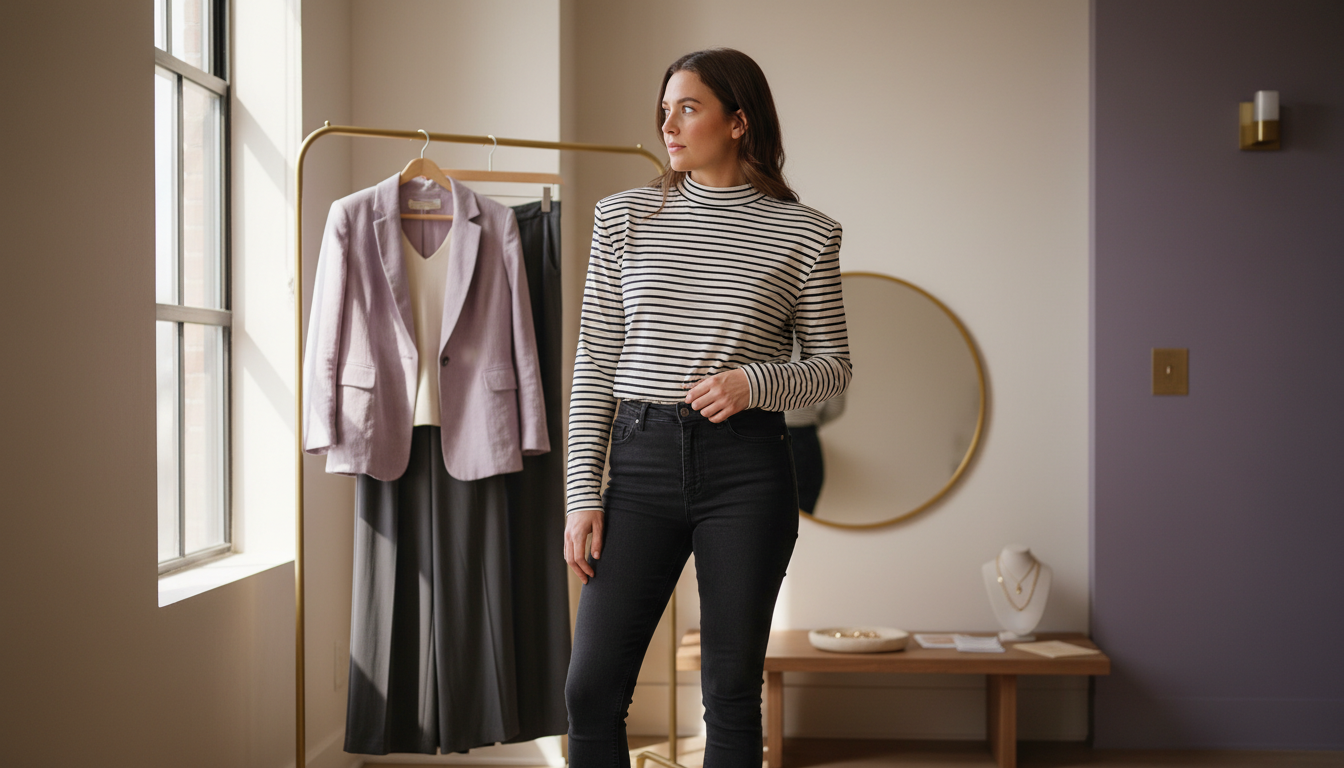
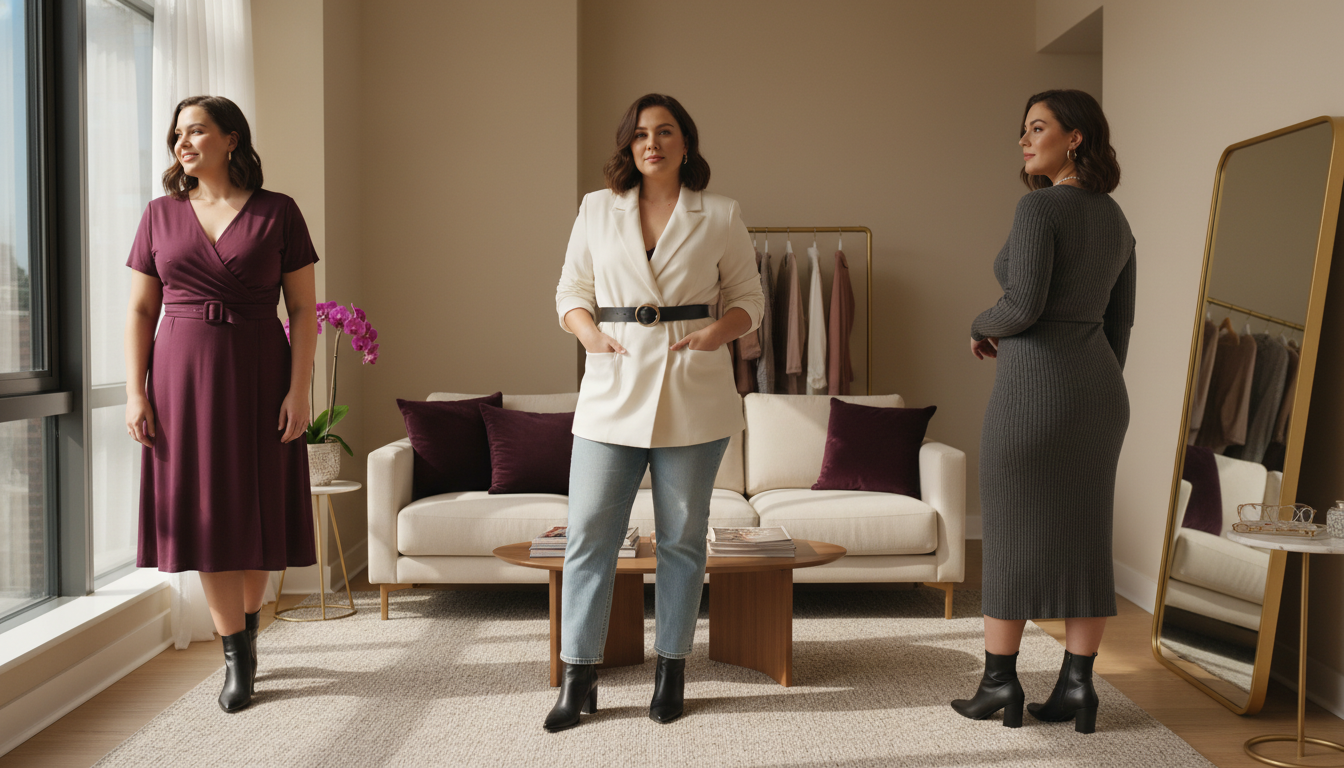
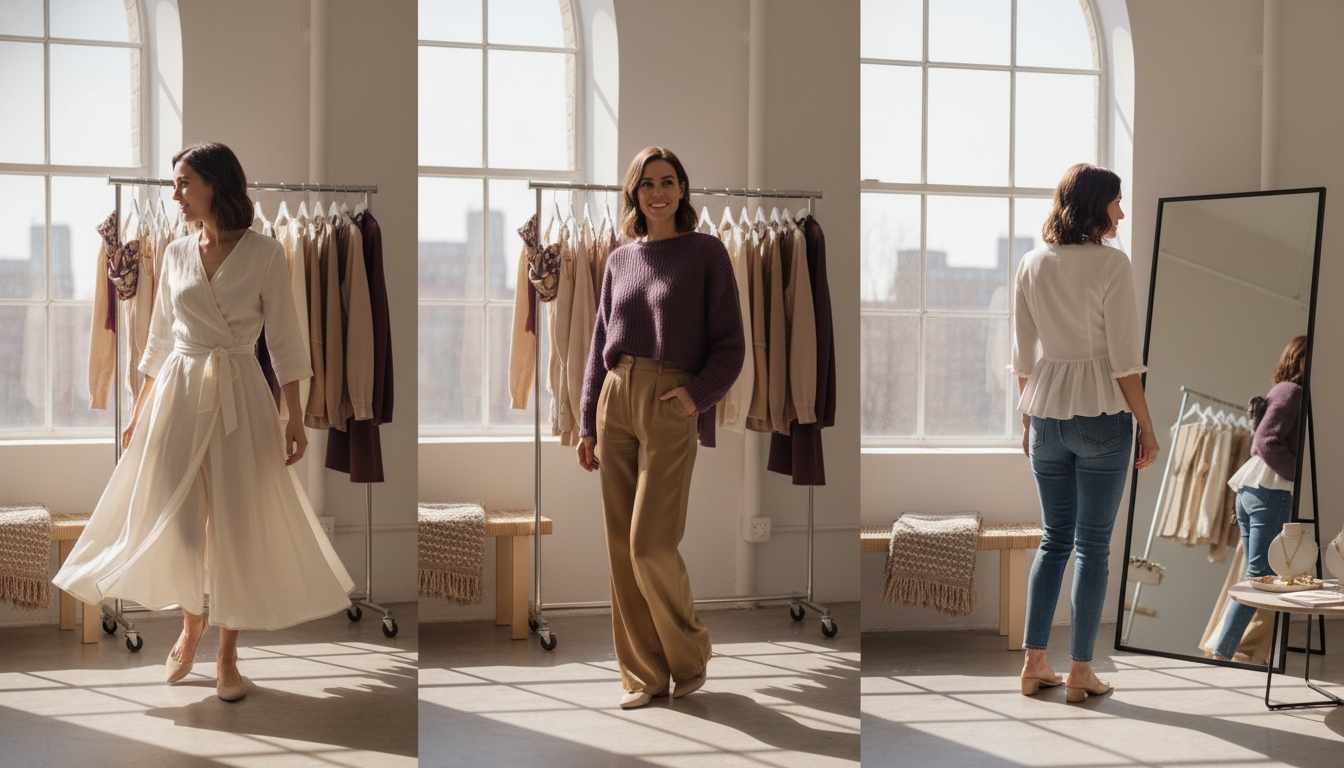
When someone looks taller than they are, it usually comes down to proportion, not genetics. Our eyes read outfits as a series of lines and blocks of color. If those blocks are chopped up or heavy at the wrong points, you look shorter and wider. If the lines are clean and directional, your frame looks longer and more streamlined.
I like to break this into three visual zones: shoulders to waist, waist to knee, and knee to floor. When the top zone is visually shorter and the bottom zones are longer, you gain perceived height. When the top is long and the leg line is short, the opposite happens. You can adjust these zones with where pieces start and end, not just with actual body measurements.
Think in terms of where lines land:
- Necklines and collars start the vertical journey.
- Hems, waistbands, and cuffs either interrupt or extend that journey.
- Strong horizontal lines at your widest areas make the eye pause and widen.
Every time you get dressed, ask yourself: where are the main horizontal cuts, and are they helping or fighting my leg line? Once you see outfits as shapes and lines instead of just items, it becomes much faster to decide what stays in your cart and what gets returned. You stop guessing and start designing how tall you appear.

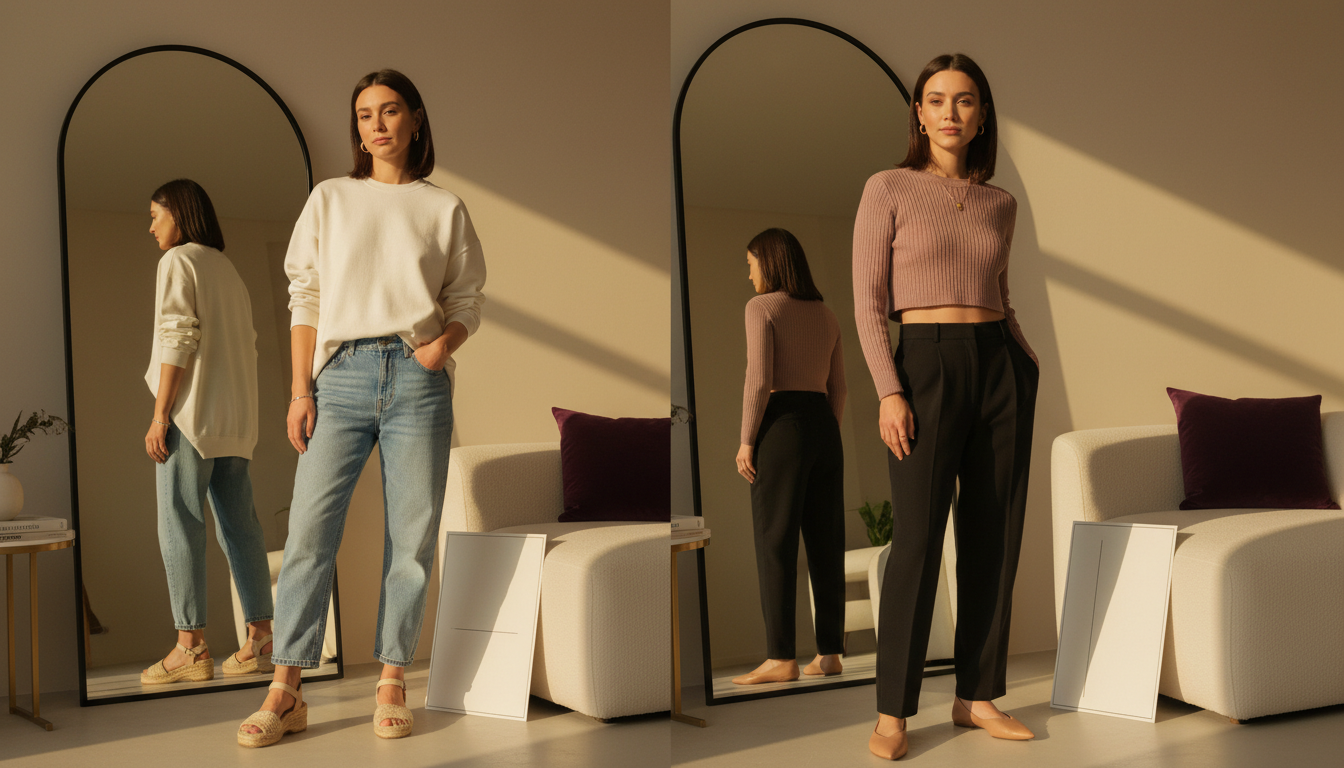
When your outfit creates a clear vertical path, the eye travels smoothly from head to toe and reads more height.
Monochrome Dressing - Head-to-toe color creates unbroken line
Monochrome dressing is one of the most reliable ways to look taller with zero extra effort. When your outfit is one color family from shoulder to shoe, the eye moves in a single vertical sweep instead of stopping at every change. That uninterrupted column quietly lengthens your frame.
This does not mean living in black. What works better on most people is a column of similar depth and undertone. Think soft camel, cool charcoal, deep navy, chocolate brown, or tonal creams. The key is low contrast between top, bottom, and ideally shoes.
Here’s how I like to build an elongating monochrome look:
- Choose a base shade (navy, chocolate, charcoal, cream, olive).
- Keep top and bottom within 1–2 steps of that shade, not opposites.
- Add texture (knit, denim, leather) instead of contrast to create interest.
If you want to wear color, do it either all over or mostly above the waist. A burgundy sweater with matching trousers reads taller than burgundy on top and stark white on the bottom. Once you start defaulting to tonal outfits, your morning choices shrink, your returns drop, and you still look intentional in every quick selfie.
High-Waisted Everything - Lengthening the leg line
High rise is one of the strongest tools you have for looking taller. By lifting the waistband higher on your torso, you visually shift where your legs “start.” Even if your actual leg length does not change, the brain reads more of you as leg and less as torso.
The sweet spot is usually at or slightly above your natural waist, where you naturally crease when you bend sideways. Ultra-high that cuts into your ribcage tends to look forced, and mid-rise that sits on the upper hip rarely lengthens enough on a petite frame. I pay attention to both the front rise measurement and where the waistband hits relative to your belly button.
To make high-waisted pieces work harder for you:
- Pair with shorter or tucked tops so the waistband is visible.
- Choose flat-front styles instead of bulky pleats at the stomach.
- Avoid heavy belts that cut your middle into tiny segments.
Skirts and trousers with a slim, clean waistband are particularly effective. When you combine a high rise with a monochrome column or a similar-tone top, the vertical line is even stronger. Over time, you can phase out low-rise and most mid-rise bottoms from your wardrobe, which simplifies shopping and keeps your closet naturally aligned with your goal of looking taller.
Vertical Details - Pinstripes, vertical seams, long necklaces
Once you understand proportion, you can use vertical details as subtle height multipliers. Anything that draws the eye up and down instead of side to side contributes to that elongated effect. These details are quiet, but together they add up.
Pinstripes are the most obvious version, yet the approach works with texture and seams too. A center front seam on trousers, a sharp crease, or a stitched line on a skirt all create a vertical path. Long cardigans worn open, plackets on shirts, and even a structured lapel can act as vertical guides.
I look for these vertical cues when I’m evaluating new pieces:
- Do the lines run up and down, or mostly across?
- Does the garment have a clear center line (buttons, zip, seam)?
- Can I wear it open to reveal a vertical inner column of color?
Accessories help as well. A long pendant that stops near your mid-rib or high waist, delicate drop earrings that frame the neck, or a slim scarf worn down the front all extend the line. When you consistently choose vertical over horizontal details, you build a wardrobe that makes you look taller without needing to think through every single outfit.
The Right Hem Length - Where pants and skirts should hit
Hem length can quietly undo a great outfit or complete it. On a petite or average-height frame that wants extra length, I treat hems as precision tools. Where fabric stops on your leg determines how much “visual leg” you get to keep.
For full-length pants, I prefer a skim rather than a puddle. The hem should almost graze the top of your shoe without pooling on the floor. That tiny break keeps the line long without swallowing you. Crops are trickier: a hem that hits at the widest part of the calf shortens you, while one that ends just above the ankle bone is more forgiving.
Use this quick hem guide when you try things on or decide on alterations:
- Wide-leg or tailored trousers: nearly floor length, with shoes on.
- Straight jeans: to the top of the shoe, slight break, no stacking.
- Midi skirts: at the narrowest part below the knee or mid-calf, not right at the widest point.
Mini lengths can work if the cut is streamlined and not overly flared. The key is that any strong horizontal line at your leg should sit at a narrower point, never the widest. Once you know your best hem points, you can send things straight to the tailor instead of debating returns, which saves time and makes each piece pull more weight in your wardrobe.

Where your pants and skirts end can quietly add or subtract inches from your visual height.
Crop Top Magic - Creating a higher visual waistline
Crop tops, when chosen thoughtfully, are not about showing skin. They are about controlling where the eye believes your waist lives. A slightly cropped top that ends near your natural waist instantly lengthens your legs, especially over high-waisted bottoms.
If you do not want midriff showing, you still have options. Look for tops that hit at the top of your waistband or overlap it by just a few centimeters. On you, that will read as a clean, modern proportion rather than a trend piece. The goal is a shorter top, not a tiny one.
Here is how I like to approach cropped proportions:
- Pair with high-waisted jeans, trousers, or skirts so no more than a sliver of skin appears, if any.
- Choose thicker fabrics or structure so the top does not cling.
- Prioritize higher necklines or longer sleeves if the body is shorter, to keep the look balanced and polished.
You can also create a “fake crop” by tucking a regular tee into your bra band or a snug camisole underneath, then blousing it out slightly. This gives you the leg-lengthening effect without buying new pieces. Over time, once you see how much taller and sharper you look in these proportions, your eye will naturally reach for shorter tops and retire the longline ones that chop you off at the hip.
Strategic Tucking - Half-tuck, French tuck, full tuck
Tucking is one of the fastest, zero-cost ways to adjust your proportions. A simple change in how you handle your hem can turn an outfit from boxy and shortening to streamlined and lengthening. I treat tucks as precision tools rather than afterthoughts.
The full tuck is the cleanest option for elongating your leg line. When you tuck your top fully into high-waisted bottoms, you define the waist and show more of your lower body. This works especially well with tailored trousers, structured skirts, and any moment you want polish. The key is to smooth excess fabric at the sides and back so you are not adding bulk.
The French tuck (front tuck) and half-tuck are useful when you want ease without losing your shape. A slight front tuck reveals the waistband and elongates the leg, while the sides and back drape softly. I like this for casual denim, softer knits, and button-downs you wear on rotation.
Use this mental checklist before you leave the house:
- Does my top hem cut across the widest part of my hip or thigh?
- If yes, can I try a front or full tuck instead and see how my leg line changes?
- Does the tuck create a clean vertical line in the front, or unnecessary bunching?
Once you start experimenting, you will feel how a two-second tuck changes the overall balance of your outfit. It saves you from thinking you need new clothes when you often just need a different proportion.

A few seconds of intentional tucking can transform a boxy outfit into a longer, more balanced silhouette.
If you want this level of proportion clarity on every outfit, I can walk you through it in real time so your mornings and your shopping both get dramatically easier within days.
Get instant proportion clarity on every outfit
Upload a few outfits to Mira and, in seconds, I’ll show you exactly where to tuck, hem, and refine so your wardrobe looks taller, sharper, and more intentional.

Avoid These - Ankle straps, low-rise, horizontal stripes, color blocking at widest points
Certain details fight every elongating trick you use. When your goal is to look taller and more streamlined, it is helpful to know which elements tend to shorten visually. You do not have to ban them forever, but I want you to use them with intention.
Ankle straps and high-contrast shoes cut the leg line right where you need continuity. On a petite frame especially, a chunky ankle strap creates a strong horizontal band that stops the eye. Low-rise bottoms do something similar at your torso level: they drop the starting point of your legs and lengthen the midsection instead.
Other elements that typically shorten your frame:
- Bold horizontal stripes across the hip, thigh, or bust.
- High-contrast color blocking where you are widest.
- Oversized tops that end mid-hip with no defined waist.
You can soften these effects by shifting where they land. If you love stripes, keep them narrow and close in color, or wear them on a tucked tee with a long outer layer to create vertical lines over them. If you like color blocking, place lighter or brighter shades higher on the body and keep the lower half darker and continuous. As you gradually phase out the most shortening pieces, you naturally reduce morning regret and random returns that never quite “feel right” once they arrive.
Footwear Choices - Pointed toes, nude shoes, minimal ankle breaks
Shoes are often the last thing you choose, but they have an outsized impact on how tall you appear. The shape, color, and where they hit on your foot either extend the leg line or slice it up. When you want more height, I look for shoes that visually disappear into your leg, or at least do not interrupt it.
Pointed or softly almond toes lengthen your foot and, by extension, your leg. In contrast, very round or square toes tend to truncate, especially in high-contrast colors. The goal is not extreme stilettos, but a refined shape that continues the vertical flow of your outfit.
Color matters just as much. A shoe in a nude-for-you shade, or one that matches your trouser or tight color, blends into the leg line and keeps that column intact. When you wear cropped pants, a lower-vamp shoe (more of the top of your foot visible) usually looks taller than something that climbs high over the arch.
Use these footwear cues when you shop or edit your closet:
- Prioritize pointed or almond toes over very round.
- Choose nude or outfit-matching shoes for maximum length.
- Minimize heavy ankle straps or bulky high-top sneakers when your hem already cuts high.
When your shoe choices automatically extend your proportions instead of competing with them, every outfit you build off them becomes easier. You save time in the morning, you spend less energy second-guessing, and your reflection looks consistently taller and more intentional.

Shape, color, and where a shoe hits your ankle can strengthen or break the visual line of your legs.
Get instant proportion clarity on every outfit
Upload a few outfits to Mira and, in seconds, I’ll show you exactly where to tuck, hem, and refine so your wardrobe looks taller, sharper, and more intentional.