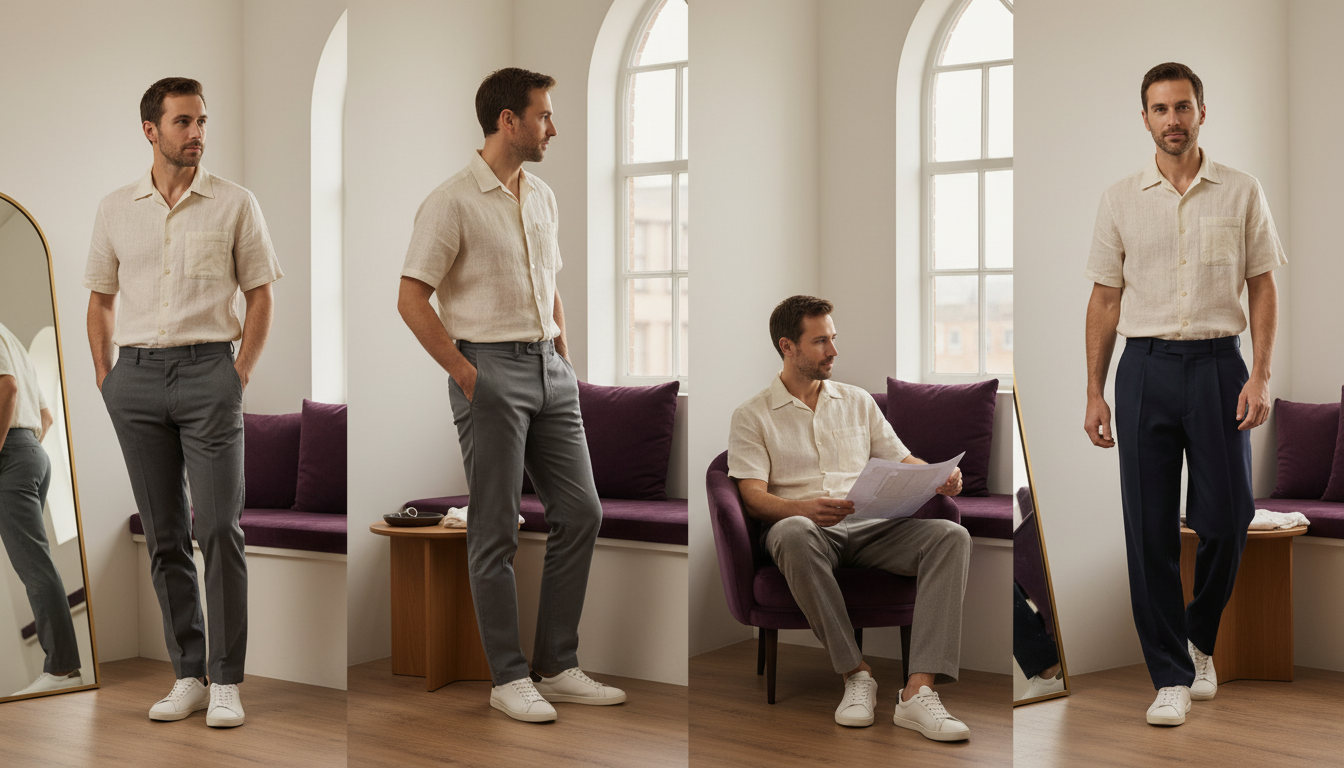
The Only 10 Items Every Man Needs in His Wardrobe
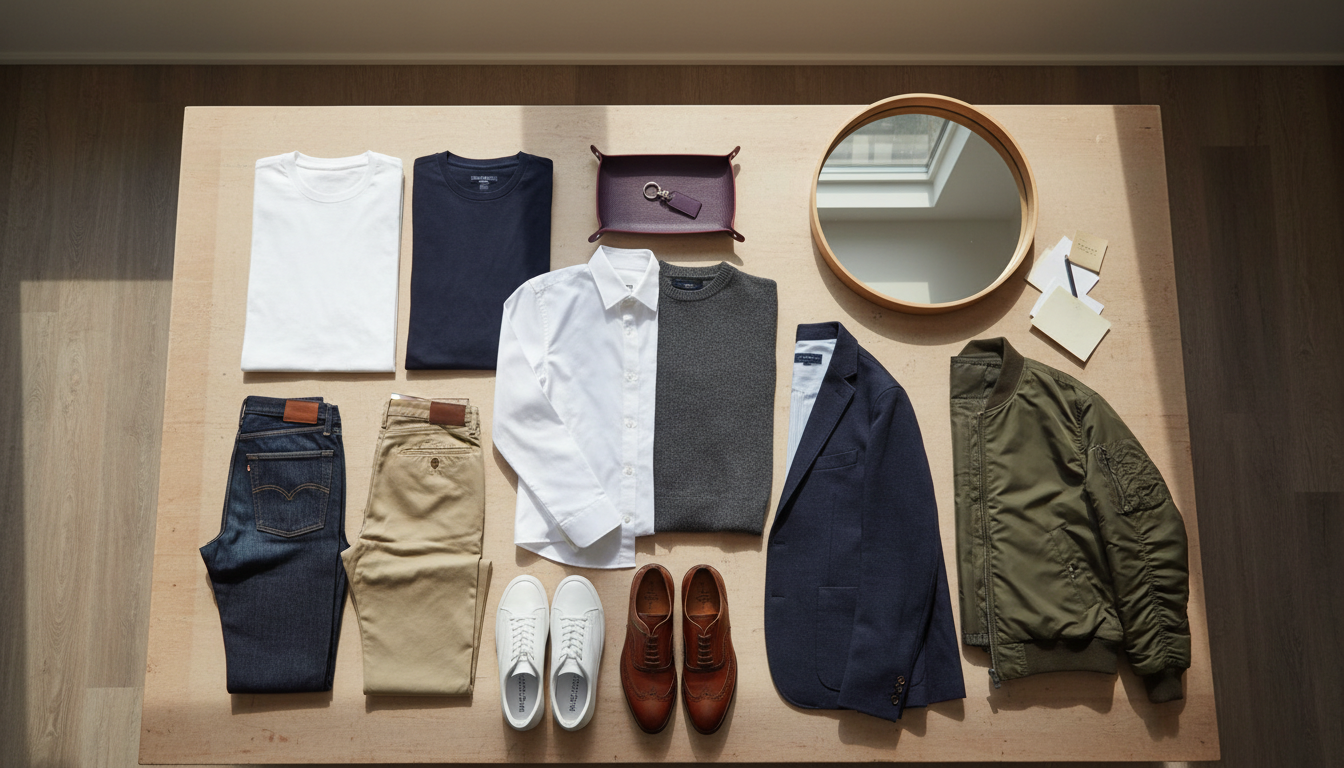
The Minimalist Approach - Why less is more for men’s style
When I talk about a minimalist wardrobe for men, I’m not talking about owning almost nothing. I’m talking about owning fewer, better pieces that carry more of the load. A clear set of mens wardrobe essentials turns getting dressed from a daily debate into a quick, almost automatic process. Instead of staring at a closet full of “maybes,” you reach for pieces you know fit, flatter, and work together. That’s where the real payoff is: less friction, more consistency.
I see the same pattern with busy, style-conscious men again and again. Closets are packed, but only 20–30% of items are worn on repeat. A minimalist wardrobe men can actually use focuses on the high-ROI pieces: items that dress up or down, span seasons, and anchor outfits. The test I use is simple:
- Can this piece work in at least three different outfits?
- Can it move between casual and slightly dressier settings with a few tweaks?
- Does it play nicely with your existing color palette?
If the answer is no, it doesn’t deserve prime real estate. The capsule wardrobe men benefit from most is intentional, not austere. You still get personality through small twists in texture, accessories, and shoes, but the backbone of your closet is stable. That stability saves you time every morning and cuts down on returns, because you’re buying to support a clear system instead of chasing one-off trends.
1-2: The Perfect White and Navy T-Shirts - Fit, fabric, neckline
A great white tee and a great navy tee quietly do more work than most statement pieces. When I’m refining a minimalist wardrobe men can trust, I start here, because these two tops plug into almost every scenario: under a blazer, with jeans, with chinos, layered under a jacket. The difference between “basic” and “elevated” is all in fit and fabric. If those are right, you look sharp even in the simplest outfit.
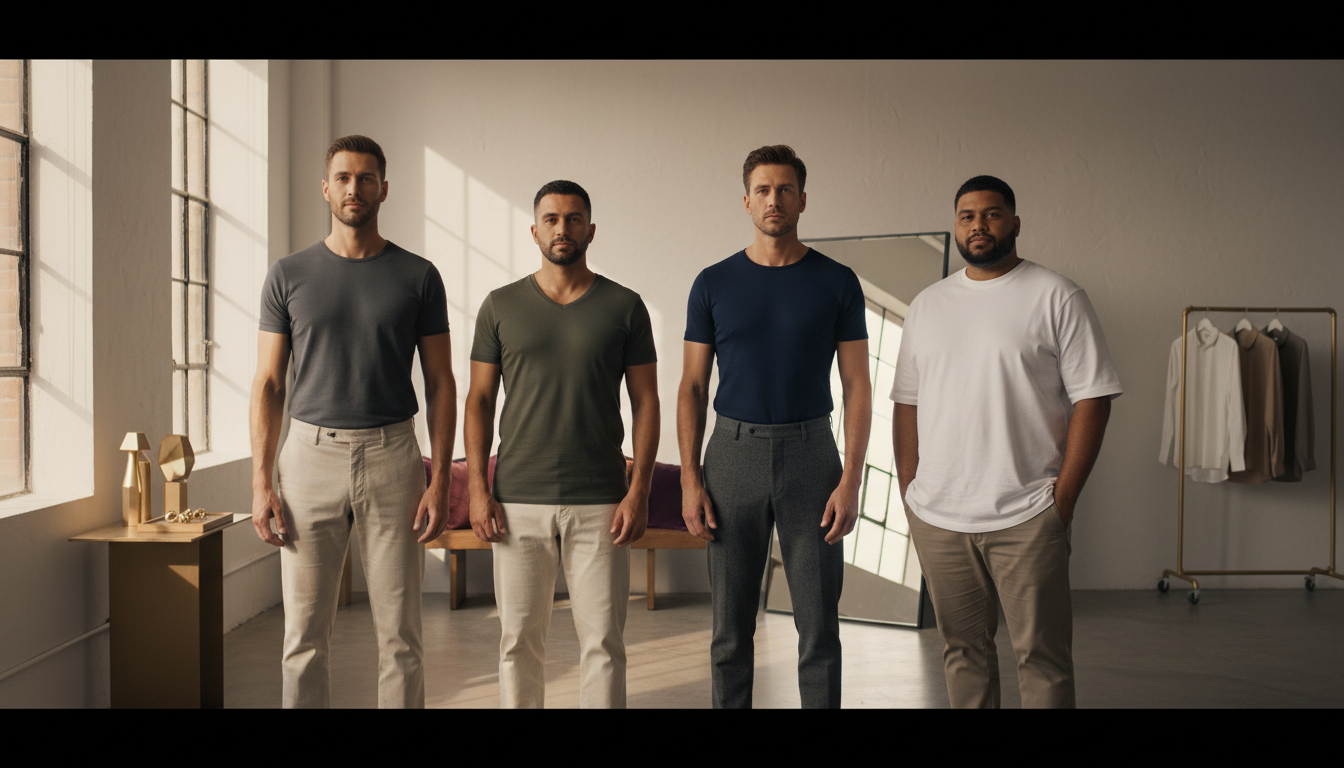
Here’s the fit framework I use: the shoulder seams should sit right at the edge of your shoulder bone, not drooping down your arm. Sleeves should hit around mid-bicep and skim, not squeeze, your arm. The body should gently follow your torso without clinging; you want a clean line when you stand naturally. Length-wise, the hem should land around mid-fly on your jeans or chinos so it doesn’t bunch when untucked.
For fabric, prioritize midweight cotton or a cotton-modal blend that feels soft but not flimsy. Ultra-thin fabric can show everything underneath and age quickly; very heavy fabric can feel stiff and boxy. I lean toward a crew neck for most men, because it layers better under shirts and blazers, and keeps the capsule wardrobe men build looking cohesive. If you have a longer neck or narrower face, a modest V-neck can work, but avoid deep cuts that feel dated. When you dial in these two tees, you’ll feel how much easier it becomes to assemble outfits in under a minute.

Use shoulder seams, sleeve length, and pant break as your quick fit checkpoints for every essential.
3: Dark Wash Jeans - Fit and versatility
Dark wash jeans are the anchor of a modern, minimalist wardrobe. They bridge casual and polished in a way few other pieces can. When I’m choosing jeans for clients, I want them to function like a neutral canvas: deep indigo or near-black, minimal distressing, and clean lines. That’s what lets you wear the same pair with a white tee on Saturday and an oxford shirt and blazer on Monday.
The key fit principles are simple but non-negotiable. Aim for a slim or straight-slim silhouette: close to the body through the thigh, with a gentle taper to the ankle, but enough room to sit comfortably. Avoid extremes, like very skinny or very loose, because they lock you into a trend and limit versatility. The waistband should sit around your natural waist without needing a belt to stay up. If you have to cinch, they’re too big.
Pay attention to the break at the ankle. I like a slight break or no break at all; that means the hem just kisses the top of your shoe or rests slightly on it. This looks clean with sneakers and dress shoes, which multiplies your outfit options. A dark, even wash without whiskering or heavy fading also photographs better, which matters for those office and social photos you’ll end up in. Invest a bit of effort in getting the fit tailored once, and your cost per wear drops dramatically over the life of the jeans.

Look closely at stitching, fabric weight, and leather finish to make each essential a long-term investment.
4: Chinos (Neutral) - Khaki, gray, or navy
If dark jeans are your everyday anchor, neutral chinos are your flexible upgrade. They immediately signal more intention than denim while staying relaxed enough for real life. In a capsule wardrobe men can rely on, one pair of chinos in a versatile neutral often pulls double duty for office, dates, and dinners. I typically recommend starting with khaki, light gray, or navy, depending on what you already own and your skin tone.
Fit here should echo your jeans: slim or straight-slim, clean through the seat and thigh, with a gentle taper. Watch for excess fabric pooling around the thighs or calves; that extra volume looks sloppy quickly. The rise should feel comfortable when you sit, without digging in. If you often feel stuck between sizes, prioritize a clean fit at the waist and tailor the leg.
Color is a strategic choice. Khaki works beautifully with white, navy, and light blue, and warms up a minimalist wardrobe without getting loud. Gray is slightly more modern and pairs well with both cool and warm tones. Navy is the most forgiving and easily swaps in for dress pants in smart-casual settings. Once you lock in your first pair, you’ll feel how often they solve the “not quite jeans, not quite suit” problem, saving you time before events and dinners where the dress code is vague.
5: Oxford or Button-Down Shirt - White or light blue
A crisp oxford or button-down in white or light blue is your instant polish lever. When I help men refine their mens wardrobe essentials, this shirt is usually what unlocks smarter office looks and more confident date outfits. It can sit open over a tee, tuck into chinos, or layer under a blazer, which means you get more range from one piece than from almost any trend item. The goal is ease and structure in balance.
Fit is where most people go wrong. The shoulder seams should meet your shoulders cleanly, with just enough room to move your arms comfortably. When you button the collar, it should feel snug but not constricting, especially if you sometimes wear a tie. In the torso, I look for a light skim over the body, not billows of extra fabric; if you can grab handfuls at the side, consider a slim or tailored cut.
Sleeve length should allow the cuff to hit at your wrist bone, with a small bit of fabric to bend your arms comfortably. White is the most versatile and works in almost every capsule wardrobe men build, but light blue is often more forgiving against different skin tones and feels less formal on its own. An oxford cloth (OCBD) gives you a slightly textured, casual feel; a smoother poplin reads more dressed up. Once you own one well-fitting shirt in this category, you’ll notice how often it rescues “too casual” outfits with almost no extra effort.
6: Knit Sweater - Crew or V-neck in neutral
A knit sweater in a neutral shade quietly solves multiple style problems at once: warmth, texture, and polish. In a minimalist wardrobe men actually wear, I like this piece to feel almost like armor for cooler days, but soft and approachable. Choose a crew or V-neck depending on your face shape and layering habits. Crews are more universal; V-necks can open up the chest slightly and frame a collar.
The fit should mirror your best t-shirt, just with a bit more structure. Shoulders should sit cleanly, sleeves should taper gently to the wrist, and the body should follow your torso without clinging to every line. Watch for excessive length, which can make you look shorter; you want the hem to land around the mid-fly or just below the waistband. If you plan to wear a shirt underneath, test it that way when you buy.
For fabric, I like merino wool, high-quality cotton, or a merino-cotton blend. They resist pilling better and regulate temperature, which means you stay comfortable indoors and out. Color-wise, charcoal, mid-gray, navy, or oatmeal integrate cleanly with most mens wardrobe essentials. This is also where a minimalist wardrobe men maintain well really pays off: with one or two sweaters in rotation, you notice wear more quickly and care for them better, which extends their life and keeps your outfits looking intentional instead of tired.

Rotate layers and fabrics around the same core pieces to adapt your capsule for summer and winter.
7: Tailored Blazer - Navy or charcoal
A tailored blazer is your instant upgrade tool. I’ve seen this single piece shift how men carry themselves, because it frames the shoulders, sharpens lines, and signals intention without trying too hard. In a capsule wardrobe men can stretch across work, dates, and events, a navy or charcoal blazer earns its place by pairing with jeans, chinos, and dress trousers. Think of it less as “formalwear” and more as structured outerwear.
Fit is everything here. The shoulder line should be clean and structured, with no dents or pulling; if the shoulders are off, walk away, because tailoring can’t fully fix it. The blazer should button comfortably without straining across the chest or stomach, and you should be able to slide a flat hand between your torso and the fabric. Sleeve length should show about a half-inch of shirt cuff when your arms are at your sides.
For length, aim for the blazer to cover your seat or land mid-seat, depending on your height and torso length. Too long looks dated; too short can veer into trend territory. Fabric-wise, a midweight wool or wool-blend is ideal for year-round use. Navy is slightly more versatile and casual; charcoal feels a bit more formal but incredibly sharp. Once this piece is in place, you’ll find you need fewer “special occasion” outfits, because dressing up becomes as easy as swapping in the blazer over your existing essentials.
8: Versatile Jacket - Bomber, harrington, or denim
Where the blazer sharpens, the versatile jacket relaxes. This is your everyday outer layer, the one you throw on for coffee runs, travel days, casual dinners, and weekends. In a minimalist wardrobe men actually live in, one great bomber, harrington, or denim jacket handles most casual outerwear needs. The trick is choosing a style that aligns with your lifestyle and body type.
A bomber works well if you like a slightly sporty, modern feel; look for a ribbed collar and hem, with a clean, non-bulky body. A harrington is a bit more classic and polished, with a simple stand collar and zip front that dresses up or down easily. A denim jacket leans more casual and adds texture, but keep the wash mid to dark to maintain versatility. In all cases, fit should be snug enough to sit close to the body over a tee or light knit, but not so tight that layering feels constricting.
Length should usually hit around the top of your hip bones, which keeps your proportions balanced and legs looking longer. Neutral colors like navy, olive, charcoal, or deep indigo integrate best into a capsule wardrobe men build around basics. This jacket is also where personal style can start to show: subtle hardware, pocket details, or a slightly unique fabric can add interest without disrupting the clean base you’ve set with the rest of your essentials.
9-10: Two Pairs of Shoes - Leather sneakers and dress shoes
Shoes are where many minimalist wardrobes quietly fall apart. Great outfits get dragged down by overly chunky sneakers or worn-out dress shoes. I like to anchor a mens wardrobe essentials list with two core pairs: clean leather sneakers and simple dress shoes. Together, they support almost every outfit in this capsule.
For leather sneakers, think low-profile, minimal branding, and a slim silhouette. White, off-white, or a soft neutral like light gray or beige works with jeans, chinos, and even some tailored looks. The shape should echo the clean lines of your clothes; avoid exaggerated soles or loud logos if you want longevity. These are your daily drivers, so comfort matters as much as appearance.
For dress shoes, start with a simple pair of derbies or oxfords in brown or dark brown if you mostly wear navy and gray, or black if your wardrobe leans very dark and formal. The toe shape should be gently rounded or slightly almond, not extreme in either direction. A slim, low-profile sole looks more refined and works better with tailored pieces and dark jeans. When both shoe styles are in place, you effectively double the number of outfits from your capsule wardrobe men can create, just by changing footwear. You also reduce panic before events, because you always have something appropriate to reach for.
The Mix-and-Match Matrix - How these 10 create 30+ outfits
Once these ten pieces are in your closet, the magic is how easily they link together. I like to think of it as a simple matrix: tops, layers, bottoms, and shoes. The white and navy tees, the oxford, and the knit sweater give you four core tops. Jeans and chinos give you two bottoms. The blazer and casual jacket offer two layers, and your sneakers and dress shoes round out the grid.
From there, combinations stack quickly. White tee + dark jeans + leather sneakers is your baseline casual look. Swap sneakers for dress shoes and add the blazer, and you’re ready for a smart dinner. Navy tee + chinos + bomber or harrington plus sneakers covers weekends and travel. Oxford + chinos + blazer + dress shoes becomes a reliable office or presentation outfit.
You can formalize this by running a quick exercise:
- List your tops in one column.
- List jeans and chinos in another.
- Add blazer and jacket as optional layers.
- Pair each combination with sneakers, then with dress shoes.
You’ll see how quickly the number of viable outfits climbs. This is the quiet power of a minimalist wardrobe men underestimate: you shop less often, but each new piece works harder. Morning decisions speed up, returns drop, and your style feels consistent instead of chaotic because every item is part of one clear system.

When each piece is chosen intentionally, ten items mix into dozens of clean, repeatable outfits.
If you want these principles translated into your exact body, lifestyle, and budget, I can walk you step by step so your next few weeks of shopping build a wardrobe you can rely on daily.
Build your essential wardrobe in days, not years
Let me guide you through every choice—from fit and fabrics to brands—so you lock in a sharp, low-stress wardrobe foundation within the next few weeks.

Build your essential wardrobe in days, not years
Let me guide you through every choice—from fit and fabrics to brands—so you lock in a sharp, low-stress wardrobe foundation within the next few weeks.