How to Style Dresses for Your Body Type (Women)
Why Dresses Are Tricky - One garment must flatter top and bottom simultaneously
Dresses are powerful because they solve an outfit in one move, but that is also what makes them tricky. One continuous piece has to flatter your shoulders, bust, waist, hips, and legs all at once, and any mismatch in proportion shows quickly. If the top fits but the skirt clings, or the skirt floats beautifully but the bodice pulls, the whole dress feels “off.” That is why you can own several dresses and still feel like none of them are quite right for your body.
When I analyze dresses for clients, I start by separating the body into zones: shoulders and bust, waist, and hips and thighs. A dress only works when the silhouette supports all three zones, or at least doesn’t fight any of them. The goal is balance, not perfection. Once you understand which silhouettes respect your natural lines, you shop faster, return less, and stop buying “almost” dresses that never leave the hanger. Let’s walk through how that plays out for each body type so you can spot your wins instantly.
You do not need to memorize every micro-trend. You just need a simple filter: what adds structure where you want it, and what adds softness where you prefer ease. As you read, notice which descriptions sound like your body and which silhouettes already hang in your closet. That overlap is where your most reliable dress wardrobe lives.
Rectangle Body - A-line, fit-and-flare, belted, wrap styles
If you have a rectangle body, your shoulders, waist, and hips are fairly aligned with minimal natural waist definition. You might feel that many straight-cut dresses make you look “boxy” or like the dress is wearing you, not the other way around. The aim here is to create gentle curves and a focal point at the waist without feeling overly cinched. Structure plus subtle shaping is your best combination.
I like three main strategies for rectangles:
- Use seams and belts to create a waist.
- Add soft volume at the skirt to hint at curves.
- Keep fabrics that hold their shape, rather than collapsing.
Fit-and-flare and A-line dresses are workhorses for you because they skim the torso and float out from the waist, creating a feminine outline without clinging. Wrap styles (true or faux) visually nip the waist and add diagonal lines that break up a straight frame. Look for: belted shirt dresses, dresses with vertical darts, and midweight fabrics that drape but don’t slouch. Avoid very stiff boxy shifts with no waist detail or extremely bodycon knits that highlight the lack of curves instead of suggesting them. Once you lean into these shapes, shopping gets quicker: you scan for waist detail first, then color and print second.

Seeing dress shapes side by side makes it easier to recognize the silhouettes that consistently flatter you.
Triangle/Pear Body - Dark bottom, detailed top, A-line, empire waist
If your hips and thighs carry more volume than your shoulders and bust, you likely have a triangle or pear body. You may recognize that trousers and skirts are often a size up from your tops, and many dresses that fit your hips feel loose at the top. The goal is to visually balance your upper and lower body so your curves look intentional and harmonious. You want space around the hips and interest around the shoulders and neckline.
For you, I prioritize these tactics:
- Keep the lower half clean, darker, and minimally detailed.
- Add structure, color, or detail to the top half.
- Choose skirts that skim, not grip, the hips.
A-line and soft fit-and-flare dresses are ideal, because they respect your curves without spotlighting every contour. Empire waist styles that release just under the bust can also work beautifully, especially in fabrics that glide over the hips. Look for dresses where the bust and shoulder area have elements like:
- V-necks or scooped necklines that open up the chest.
- Subtle shoulder detail, gentle puff sleeves, or textured bodices.
- Prints or color-blocking that is lighter or more active on top.
Avoid clingy jersey bodycon styles and straight-cut tube dresses that hug the hips but hang loose above. When you start filtering for balanced tops plus forgiving skirts, you waste less time trying on silhouettes that were never built with your proportions in mind.
Inverted Triangle - V-neck, volume on bottom, avoid cap sleeves
If your shoulders are broader than your hips, or your upper body feels visually stronger than your lower half, you likely have an inverted triangle shape. You might notice that sleeveless or cap-sleeve dresses make your shoulders look dominant, while many slim skirts feel underwhelming compared to your upper frame. The aim is to soften and streamline the top while building more presence at the skirt. Think: grounded, not top-heavy.
I focus on three key moves for you:
- Use V-necks and deeper necklines to break up shoulder width.
- Keep sleeves clean and avoid extra shoulder padding or stiff caps.
- Add volume, texture, or movement to the skirt.
A-line and fuller skirts, pleated midi dresses, and styles with tiers or subtle ruffles at the hem give your lower half more visual weight so the body reads as balanced. Wrap dresses with a V-neck and a slightly flared skirt are excellent because they define your waist and create a long line through the torso. Look for:
- Thicker straps or short sleeves that sit slightly off the shoulder, not perched on top of it.
- Skirts with movement: pleats, swish, or a bias cut.
Skip clingy pencil-skirt dresses paired with bold shoulders, and be careful with high necklines plus cap sleeves, which can make you feel broader than you are. Once you anchor your silhouette with volume on the bottom, it becomes easier to see which dress styles deserve a spot in your cart.
Hourglass - Wrap, fitted, belted, avoid shapeless
If your shoulders and hips are fairly aligned and you have a clearly defined waist, you likely have an hourglass shape. Your main challenge is often not finding curves, but protecting them from being swallowed by fabric. Many oversized or straight-cut dresses make you feel larger and less polished than you are because they erase the waist that gives your frame its balance. Your goal is to honor that waistline while keeping everything smooth and intentional.
For hourglass figures, I rely on these principles:
- Show, don’t squeeze, the waist.
- Choose fabrics that follow your curves without cutting into them.
- Keep the silhouette streamlined, not overly fussy.
Wrap dresses are a natural match because they highlight your midsection and glide over the bust and hips. Fitted knit dresses in a substantial rib, tailored sheath dresses with waist darts, and belted shirt dresses all support your shape. You can also wear many fit-and-flare styles, as long as the bodice is closely tailored.
Pay attention to:
- Seam placement at the smallest part of your waist.
- Necklines that balance your bust, like V-necks or squared necks.
Be cautious with completely shapeless smocks, baby-doll cuts that inflate your torso, and extremely bodycon styles in thin fabric that highlight every line of your undergarments. When you commit to silhouettes that frame your waist on purpose, you reduce dressing-room frustration and build a dress section that consistently feels like “you, but sharper.”
Round/Apple - Empire waist, A-line, structured fabrics, avoid clingy
If you tend to carry more volume through your midsection with slimmer legs and sometimes a fuller bust, you’re likely a round or apple shape. You might find that many dresses pull across the tummy while being loose at the hips, or that overly tight waists feel uncomfortable and restrictive. Your aim is to create a long, smooth line through the torso while quietly skimming the midsection. Comfort and polish can absolutely coexist when the structure is doing the work.
For apple shapes, I lean on a few specific strategies:
- Shift focus upward to the face and neckline and downward to the legs.
- Use gentle structure to give the torso definition without clinging.
- Let fabric fall from just under the bust or a slightly raised waist.
Empire-waist dresses that release over the tummy are often excellent, especially in woven fabrics with a bit of structure. A-line silhouettes that float away from the midsection while showing the forearms and lower legs help you feel light and balanced. Look for:
- V-necks or scoop necks that keep the chest area open.
- Seaming just under the bust or a softly shaped midriff panel.
- Fabrics like crepe, ponte, or structured cotton that skim instead of collapsing.
Avoid clingy jersey that wraps tightly around the stomach, and be careful with very stiff, straight shifts that create a blocky column. When you filter dresses by how they handle your midsection first, you save yourself from ordering “wishful thinking” styles that never feel comfortable on real days.

Structure versus drape can transform how a dress sits on your body, even in similar silhouettes.
Universal Dress Styles - Wrap dress, shirt dress, fit-and-flare
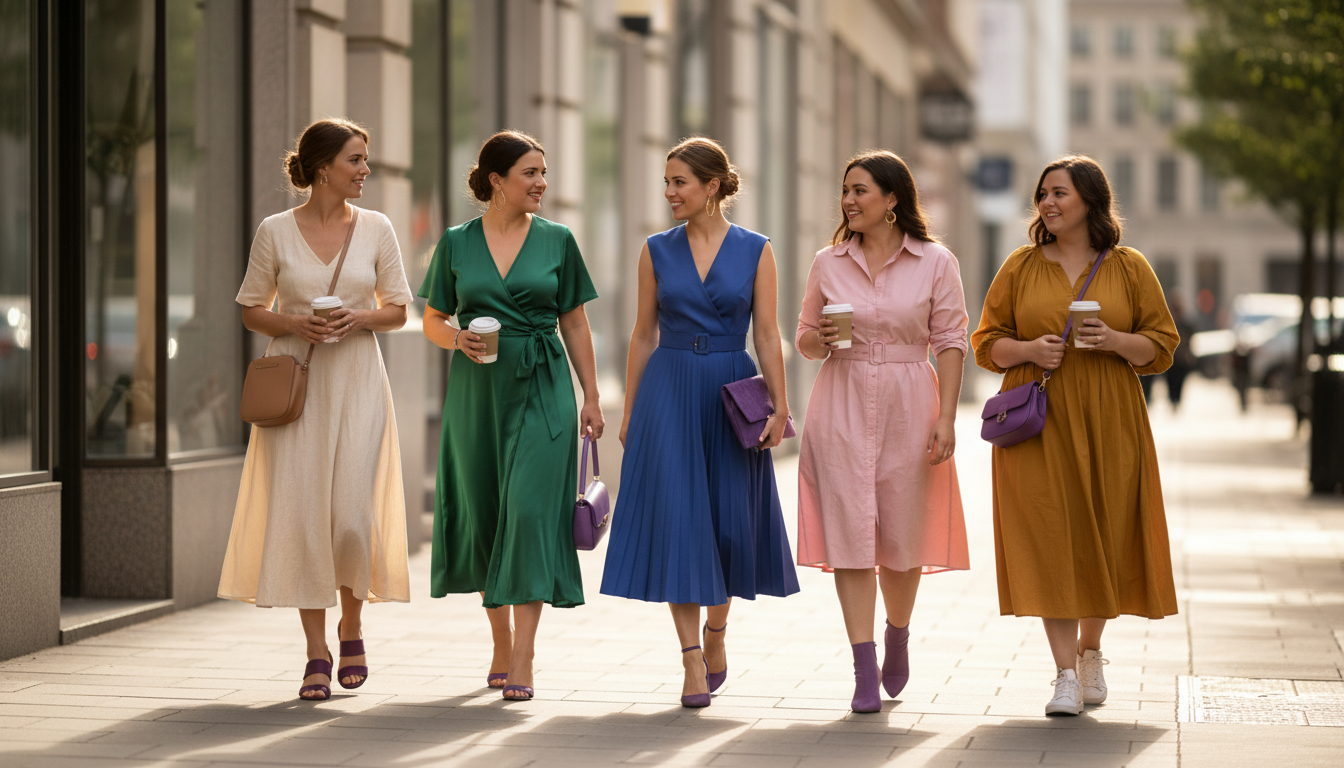
Some dress shapes work beautifully across many body types because they build in balance and adjustability. I consider these your low-risk options, ideal when you are shopping quickly or experimenting with a new brand. When you recognize these silhouettes on a product page, you can predict a higher success rate and fewer returns, even before you try them on. That alone saves time, money, and decision fatigue.
The three most universal categories I rely on:
- Wrap dresses (true or faux wrap)
- Shirt dresses with a defined waist
- Fit-and-flare styles with gentle shaping
Wrap dresses are forgiving because you can adjust the tie to match your torso length and comfort level. They create a diagonal line that flatters both curves and straighter figures. Shirt dresses offer structure through the collar and placket, and when they include a belt or internal drawstring, they can adapt to many waist positions. Fit-and-flare silhouettes suit rectangles, pears, hourglasses, and many apples if the fabric is substantial enough.
When you shop, use a quick scan:
- Is there a clearly defined waist or built-in shaping?
- Does the skirt have some movement without excess fabric?
- Can the fit be adjusted with ties, buttons, or belts?
If the answer is yes, you likely have a versatile, “safe bet” style that can serve across seasons with different shoes and layers. Over time, building a small roster of these universal shapes makes getting dressed in the morning feel more like choosing a mood than solving a math problem.

A few universal dress shapes create reliable options, so you can choose quickly and still look polished.
If you want this clarity applied directly to your closet and shopping carts, I can narrow your best dress shapes in one focused session so getting dressed feels quick and assured.
Find your go-to dress silhouettes fast
In moments, I analyze your proportions and curate dress shapes that actually love your body, so mornings and online carts feel calm and confident.

Detail Placement - Where to draw the eye based on body type
Details matter as much as silhouette because they control where the eye lands first. Ruffles, bold patterns, shiny buttons, and statement sleeves are like highlighters on the body. When they sit in the right places for your proportions, they create balance and focus; in the wrong places, they exaggerate the areas you are trying to downplay. I always ask: where do we want attention, and where do we want ease?
Use this simple framework:
- Rectangle: Place details at the waist (belt, seams, color-blocking) and subtly at the bust or hem to create shape.
- Triangle/pear: Keep detail high (neckline, shoulders, sleeves) and mellow over the hips and thighs.
- Inverted triangle: Soften the shoulders and add interest at the skirt (tiers, pleats, prints near the hem).
- Hourglass: Use detail to support the waist and neckline without overwhelming your natural curves.
- Round/apple: Focus on the face, neckline, and lower legs; keep the midsection clean and uninterrupted.
Patterns and color-blocking can do a lot of the work for you. A dress with a darker side panel and lighter center can visually carve a waist on a rectangle or refine curves on an hourglass. Vertical details like seams, buttons, and pleats lengthen the body, which is especially helpful for apples and petites of any shape. Horizontal details like flounces, drop waists, or bold stripes add width where they land, so choose their placement intentionally.
Before you buy a dress, pause on the product photos and ask, “Where does my eye go first?” If the answer is the part of your body you most enjoy showing, that dress is doing its job. If not, move on. This habit alone will quickly reduce try-on regret and leave you with dresses that feel aligned with how you want to be seen.

Thoughtful placement of seams, ruffles, and emphasis lines controls where the eye lands first on your body.
Find your go-to dress silhouettes fast
In moments, I analyze your proportions and curate dress shapes that actually love your body, so mornings and online carts feel calm and confident.