What to Wear to a Wedding as a Guest (Without Upstaging Anyone)
Decoding Dress Codes - Casual, cocktail, semi-formal, black tie, white tie
When a wedding invite lands and the dress code feels vague or intimidating, I want you to have a simple mental ladder of formality. Picture it as a scale from most relaxed to most polished: casual, cocktail, semi-formal, black tie, then white tie at the very top. The key is not memorizing every possible rule, but understanding the energy each level expects. Casual still means respectful: think elevated daytime, not gym clothes or distressed streetwear. Cocktail and semi-formal live in the middle, which is where most modern weddings sit.
Here’s how I break it down:
- Casual: Sundresses, neat separates, light unstructured blazers, refined sandals or loafers.
- Cocktail: Short or midi dresses, sleek jumpsuits, suits in lighter colors, heeled sandals, dressy flats.
- Semi-formal: Darker, sharper versions of cocktail; think more structure and slightly richer fabrics.
- Black tie: Floor-length gowns or very polished midi dresses, tuxedos or dark formal suits, refined heels.
- White tie: The most formal; full-length ballgowns, tails for men, and traditional, conservative accessories.
When you map any outfit against this ladder, you get quick clarity: ask yourself, “Does this look at least as formal as the couple’s likely photos?” That check alone saves you from last-minute panic and expensive emergency buys that never get worn again. You’re not aiming for perfection, just alignment with the setting, time of day, and the level of effort the couple is putting into the event.

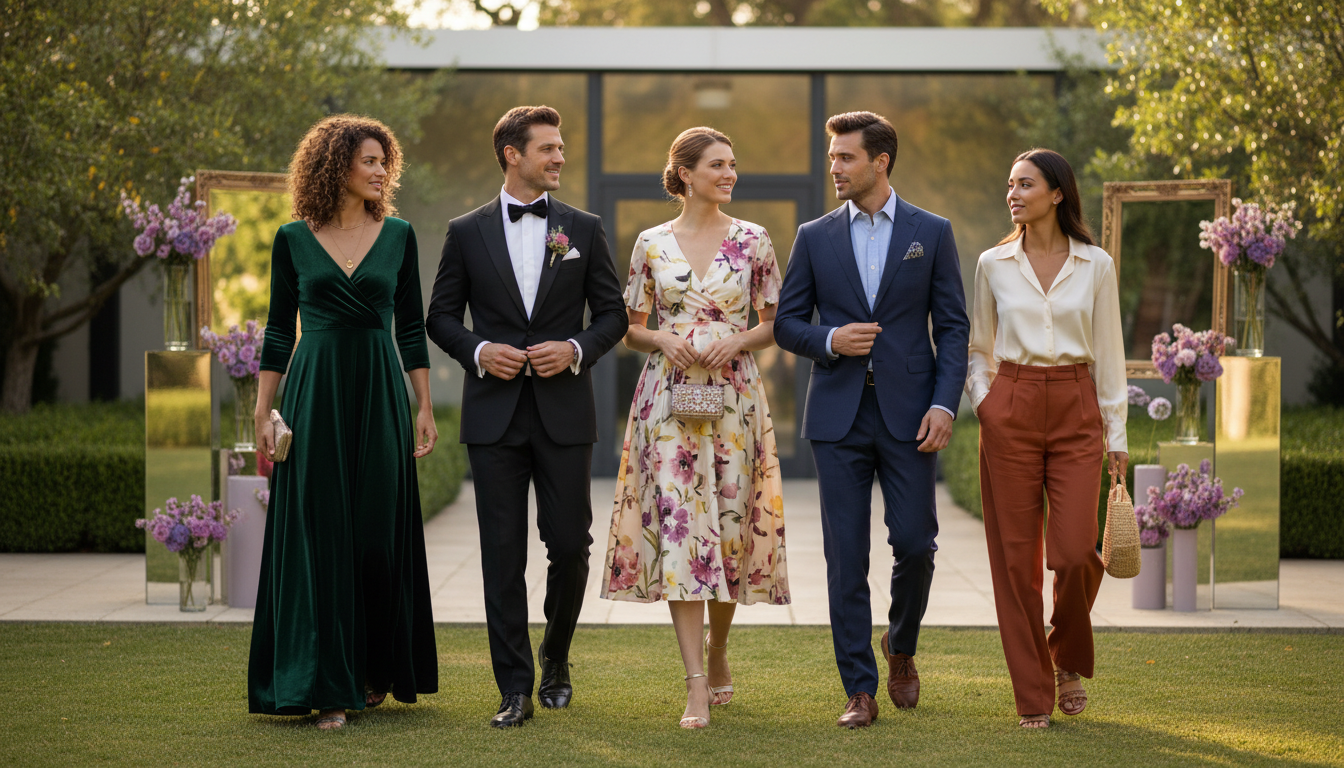
Mapping dress codes visually makes it easier to see how casual, cocktail, semi-formal, and black tie sit on the same ladder.
The Universal Rules - Avoid white/cream, respect cultural traditions, read the room
Regardless of dress code, there are a few universal rules I follow as non-negotiables for wedding guests. First, I avoid white, off-white, cream, and very pale blush that photographs as bridal, unless the couple explicitly asks for it. Even if it’s technically allowed, it pulls visual attention that should sit with the person getting married. I also avoid anything that looks like a bridal silhouette: no lacey white gowns, no long satin ivory slips, no veils or hairpieces that echo a bride’s styling.
Next, I always respect cultural and religious traditions tied to the ceremony. That might mean covered shoulders in a church, longer hemlines for certain communities, or specific colors to avoid or embrace. When in doubt, I:
- Skim the couple’s website for cues or explicit notes.
- Look up basic etiquette for the culture or faith mentioned.
- Default to slightly more coverage for the ceremony, with the option to remove a layer at the reception.
Finally, I “read the room” using context clues like venue, time, and the couple’s personality. A downtown gallery wedding at 8 p.m. calls for sharper silhouettes than a 2 p.m. garden ceremony. If you’re unsure, ask for a quick photo of what friends are planning to wear and calibrate; this saves you from feeling either like the only person in sequins or the only one in jeans. Etiquette isn’t about rules for their own sake; it’s a way to protect your own comfort so you’re not second-guessing your outfit all night.
For Women: Cocktail Wedding - Dress styles, colors, accessories
For a cocktail wedding, I want your outfit to feel polished but relaxed enough to actually dance and sit comfortably. Think structured, not stiff. The sweet spot is usually a dress or jumpsuit that hits somewhere between mid-thigh and mid-calf, with clean lines and at least one refined detail: an interesting neckline, an asymmetric hem, a subtle cutout, or a beautiful fabric. If dresses aren’t your thing, a tailored wide-leg trouser with a silky top and blazer is equally appropriate when styled intentionally.
When you’re choosing color, I like a simple framework:
- Daytime or outdoor: Softer tones, pastels, muted brights, and light florals.
- Evening or city venues: Deeper jewel tones, black, navy, rich burgundy, or metallic accents.
- If you’re unsure: Deep green, navy, and berry are nearly always safe and flattering in photos.
Accessories are where cocktail outfits often go wrong. I keep it focused: one hero piece, then supporting acts. For example, let your earrings be the statement and keep the necklace minimal or skip it. Choose a small structured bag you can carry easily, and shoes you can stand in for hours: block heels, elegant platforms, or sleek flats if your dress feels elevated enough elsewhere. This planning pays off in photos and in how long you last on the dance floor, without emergency blister bandages or a backup pair of random sandals in your tote.
For Women: Formal/Black Tie - Gown etiquette, jewelry, shoes
For formal and black-tie weddings, the energy shifts from “fun party guest” to “elegant extra in the couple’s photos.” I usually start by deciding on length: floor-length is safest, though a refined midi in a luxe fabric can still work for modern black tie, especially in the city. Avoid anything that reads as prom: too much tulle, overly shiny satin in bright colors, or obvious corset details. Instead, lean into clean long lines, subtle drape, and rich texture. Think column gowns, streamlined A-lines, or sleek slip dresses with structure at the bust.
Jewelry should echo the formality of the space. My rule: if the dress is simple, the jewelry can speak more; if the dress already has sequins, beading, or a bold neckline, let the jewelry whisper. A few easy pairings:
- Simple column gown + statement earrings + delicate bracelet.
- Slip dress + layered fine chains + small hoops.
- Gown with embellishment + classic studs + minimal ring.
Shoes matter more than you think, because they affect posture and how the dress falls. For gowns, I prefer a sleek stiletto or refined block heel that disappears visually under the hem but lengthens your line. Avoid very chunky platforms or casual sandals; they drag the look back toward daytime. If you need comfort, look for cushioned insoles and a mid-height heel rather than defaulting to informal flats. Planning these details upfront reduces last-minute panic-buying and helps you build a small rotation of evening shoes you can re-wear instead of a pile of “one-night” heels.
For Men: Cocktail Wedding - Suit colors, shirt/tie combinations
For men at a cocktail wedding, the goal is sharp but not corporate. I like to think in three levers: suit color, shirt texture, and tie personality. Start with a suit that fits cleanly through the shoulders and tapers gently at the waist; navy, charcoal, and mid-grey are the most versatile, while light grey or soft beige work beautifully for daytime or outdoor settings. If the invite feels more relaxed, a blazer and tailored trousers can replace a full matching suit, as long as the fabrics feel intentional, not like office leftovers.
Shirts are where you can subtly shift the tone. For a slightly dressier take, choose a crisp white or light blue poplin. For a softer cocktail feel, opt for a fine twill, subtle stripe, or even a band-collar shirt if the couple leans modern and the invite doesn’t say “semi-formal” or “black tie.” With ties, I use this simple guide:
- Daytime / garden: Lighter hues, matte textures (knit or silk), small patterns.
- Evening / city: Darker tones, deeper jewel colors, or classic black.
- More relaxed cocktail: Consider no tie with a well-cut shirt and pocket square.
Shoes should be clean, polished, and aligned with the formality of the suit: oxfords or derbies in black or dark brown for most venues, with loafers working for daytime or outdoor events. When you treat the outfit as a system instead of a group of random pieces, you avoid last-minute experiments that don’t quite land, and you get more mileage out of a few well-chosen staples.
For Men: Formal/Black Tie - Tuxedo vs dark suit, accessories
For black tie and formal weddings, I like you to decide one thing first: will you wear a true tuxedo or a very dark, very clean suit styled like one? A tuxedo is ideal if the invite explicitly says “black tie,” especially at a traditional venue or evening ceremony. Look for satin lapels, a single-button closure, and trousers with a stripe if you want a classic feel. If you choose a dark suit instead, keep it ultra-simple: deep navy or black, peak or shawl lapels if possible, and minimal visible stitching or trendy details.
Shirt choice is straightforward: a clean white dress shirt with a structured collar. For a tux, a pleated or bib front works beautifully; for a dark suit, a plain front is enough. Accessories are what separate “almost right” from “nailed it.” My framework:
- Tie: Classic black bow tie with a tux; sleek black silk tie or bow tie with a dark suit.
- Pocket square: White, neatly folded; no flashy colors here.
- Shoes: Black patent or very well-shined leather oxfords.
If the invite says “black tie optional,” you can flex slightly: a dark suit with a tie and pocket square is usually sufficient, especially if the couple is on the modern side. Keep belts minimal or skip them with side adjusters or braces for a cleaner line. This level of discipline means you can invest once in a black-tie setup and then reuse it for years with tiny tweaks, instead of buying a new, slightly off-theme outfit for every formal event.
Seasonal Considerations - Fabrics and colors for different seasons
Season is one of the fastest ways to filter your wedding guest options, especially when you’re staring at a full closet and feeling like nothing fits. I think first in terms of fabric, then color. For spring and summer, prioritize breathable materials: linen blends, cotton poplin, chiffon, silk, and lightweight wool. These fabrics move with you, photograph beautifully in natural light, and keep you from overheating during outdoor ceremonies or crowded dance floors. Avoid heavy polyester that traps heat, even if the dress looks airy.
In fall and winter, I look for richness and structure. Think velvet, satin with some weight, crepe, wool suiting, and jacquard. These fabrics hold their shape, pair well with outerwear, and feel intentional indoors and out. For color, use a simple palette guide:
- Spring: Soft pastels, fresh greens, light blues, floral prints.
- Summer: Clear brights, warm corals, bold florals, crisp whites for men’s shirts and accents.
- Fall: Rust, burgundy, forest green, navy, bronze.
- Winter: Deep jewel tones, black, silver, rich metallics.
Layering also shifts by season. In cooler months, plan for a coat or wrap that matches the formality of your outfit; a puffer over a gown rarely feels right. In warmer months, a light blazer, shawl, or polished cardigan is enough. Working this way gives you a repeatable framework: check season, choose fabric, then choose color. That reduces indecision and keeps returns low when you’re shopping online, because you’re filtering out anything that doesn’t actually serve the weather and light you’ll be in.

Choosing colors by season keeps your wedding guest outfits aligned with the light, weather, and venue mood.
Common Mistakes - Overdressing, underdressing, inappropriate choices
Most wedding-guest stress comes from a few predictable mistakes, not from some secret rulebook everyone else got. Overdressing is common when people panic and overcompensate. You see this when someone wears a fully sequined ballgown to a backyard ceremony or a tux to a simple beach wedding. It pulls attention and can make you feel oddly out of place all night. To avoid this, I always line my outfit up against the venue and time: if my look would feel appropriate at a gala but the wedding is in a barn, I dial it back.
Underdressing shows up as denim, casual sneakers, graphic tees, or very short club-style dresses at anything above “casual” dress code. Even if no one says anything, you’ll likely feel underprepared in photos and during key moments like the ceremony or speeches. Another major mistake is wearing anything that competes with the couple: bridal-adjacent whites, extremely revealing cuts for conservative settings, or loud novelty prints that dominate the frame. My filter here:
- Ask: “Would I be comfortable standing next to the couple in their formal photos in this?”
- Consider religious or cultural expectations, especially for ceremony spaces.
- Test the dress-code ladder: does my outfit sit roughly where it should on that scale?
I also avoid shoes that can’t survive a full event, bags that are too big and casual, and outfits that require constant tugging or adjusting. Every time you adjust your clothes, you’re pulled out of the moment. Getting this right once or twice creates a mental archive you can lean on, so each new invite feels easier and you stop buying “just in case” pieces that never see daylight again.

The right accessories refine a look instantly; the wrong ones can drag a polished outfit back to casual.
If you want this clarity every time a wedding invite hits your inbox, let me double-check your outfit so you move from guessing to effortless yes-or-no decisions in seconds.
Walk into every wedding already approved
Upload your wedding guest look to Mira and get clear, tailored feedback in seconds so you arrive confident, appropriate, and fully put together.

Outfit Formulas - 3 complete looks for women, 3 for men
When you’re busy, you don’t need endless inspiration; you need reliable formulas you can plug into your own closet. I like to keep three go-to frameworks for women and three for men that you can adapt to color, season, and venue. Think of these as templates, not strict prescriptions. Once they’re set, you can scan your wardrobe or any online cart against them and instantly see what’s missing.
For women, try these:
- Daytime cocktail: Midi floral or solid dress in a breathable fabric + block-heel sandals + small structured crossbody + delicate earrings.
- Evening cocktail / semi-formal: Solid jewel-tone midi or sleek jumpsuit + heeled sandals or pointed pumps + clutch + one statement piece of jewelry.
- Black tie: Floor-length gown or refined slip with a wrap + strappy heels + compact evening bag + minimal but elevated jewelry.
For men, use:
- Daytime cocktail: Light grey or beige suit + white or pale blue shirt + brown loafers or derbies + subtle patterned tie or open collar.
- Evening cocktail / semi-formal: Navy suit + crisp white shirt + dark tie in a matte texture + black or dark brown oxfords.
- Black tie / formal: Black tux or ultra-dark suit + white shirt + black bow tie + polished black shoes + white pocket square.
Once these formulas live in your mind, they shorten decision time dramatically. You’ll know whether you’re missing a key piece (like evening shoes or a dark tie) before the invite rush hits, which means fewer frantic same-day deliveries and fewer returns on items you bought without a clear role.

Building a few complete outfit formulas for different dress codes makes future wedding invites feel simple instead of stressful.
Walk into every wedding already approved
Upload your wedding guest look to Mira and get clear, tailored feedback in seconds so you arrive confident, appropriate, and fully put together.